Meridiam Controls Cable, Route Stalls
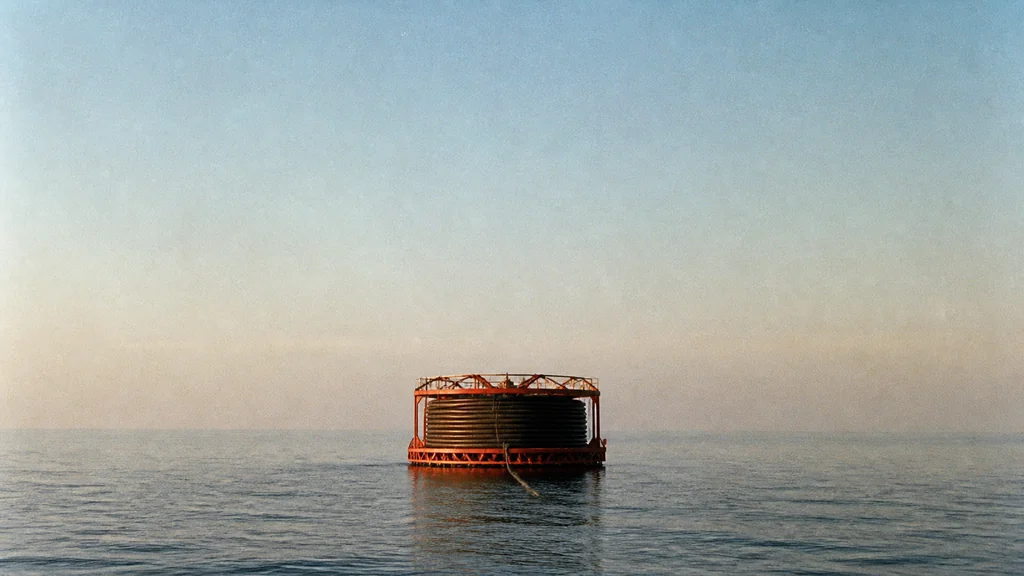
New ownership cannot yet put the cable into contested waters.
Cumadóireacht íomhá · tobriefNo survey vessel has gone back to the seabed between Crete and Cyprus. Three weeks after a French infrastructure fund took control of the cable project meant to end Cyprus's electrical isolation, the water is still quiet. The Great Sea Interconnector (GSI) now has a stronger sponsor. It has not yet answered the two questions that decide whether large European infrastructure gets built: who carries the cost, and who has the power to restart work at sea.
What Meridiam bought
On 5 August, Greek Prime Minister Kyriakos Mitsotakis said Meridiam, the Paris-based infrastructure investor, would take a 66% stake in the GSI project company. Greece's transmission operator ADMIE, which runs the country's high-voltage grid, keeps 34% and remains the technical lead (Greek PM, Capital, Politis).
That changes the governance. It does not put cable on the seabed. The acquisition price, the board make-up and the rules for cost overruns were not found in the public record (Dnews). Two French companies now sit inside the scheme: Meridiam as sponsor, Nexans as cable contractor. That gives Paris commercial weight along the route, but owning the project company is not the same as underwriting the project.
The budget is about €1.9bn. EU grants from the Connecting Europe Facility, the Brussels pot used to co-finance cross-border energy links, cover roughly €657m (Enerdata, Balkan Green Energy News). The rest, more than €1bn, has to come from investors, lenders and, over time, electricity customers through tariffs. A reported European Investment Bank request of around €1bn is still being assessed. It is not an approved loan (Proto Thema, CNA).
Cyprus gets the cable — and much of the bill
Cyprus is the country that stands to gain the most obvious prize: an electricity connection to the European grid. Its consumers are also where much of the bill is expected to land. Under EU cost-sharing rules for cross-border energy projects, roughly 63% of the Greece-Cyprus section falls to Cyprus, paid through future tariffs rather than in one upfront cheque (Politis, Kathimerini Cyprus).
That is where the politics begins. ADMIE says it has already spent about €251m. Cypriot regulators have so far recognised only about €82m of that. The gap is not an accounting footnote; it is the raw material for future tariff disputes (Proto Thema). Energy Minister George Papanastasiou says Nicosia is waiting for the EIB assessment before deciding whether the state puts equity into the project (SigmaLive). Opposition parties AKEL and DISY want the Meridiam-ADMIE terms published, along with Cyprus's total commitments (Kathimerini Cyprus).
Cyprus has also reportedly tied its own €125m contribution to visible progress offshore: a NAVTEX, the maritime notice that allows survey vessels to operate in international waters, and a restart of seabed work (Capital). By mid-August, no confirmed NAVTEX had been issued (Philenews).
What the cable tests
The GSI is more than a submarine cable. It is a test of how far EU priority status and EU grant money can carry a project when the route runs through waters Turkey contests, when national regulators have to agree who pays, and when the financing stack is still unfinished. The chain of authority is clear enough: Meridiam controls the project company, ADMIE operates it, Cypriot regulators decide what consumers can be charged, the EIB decides whether to lend, and a NAVTEX decides whether work can resume. Any link in that chain can stop the project moving.
Reports describe coordination between Mitsotakis, Cypriot President Nikos Christodoulides and Emmanuel Macron on restarting surveys, possibly with French vessels (Les Echos). No French sovereign guarantee was found. The next real evidence will not be another ownership announcement. It will be a NAVTEX number, a vessel name and survey equipment in the water between Crete and Cyprus. Until then, the project has improved its ownership structure without advancing its construction.
Details about this article
- Model:
- claude-opus-4-6
- Generated:
- 8/24/2026, 1:48:35 AM
- Pipeline run:
- eu_pipeline_20260824_005006
- Watermark:
- SynthID (Google's invisible watermark)
- Human review:
- None before publication