Meridiam Faces GSI Tariff Test
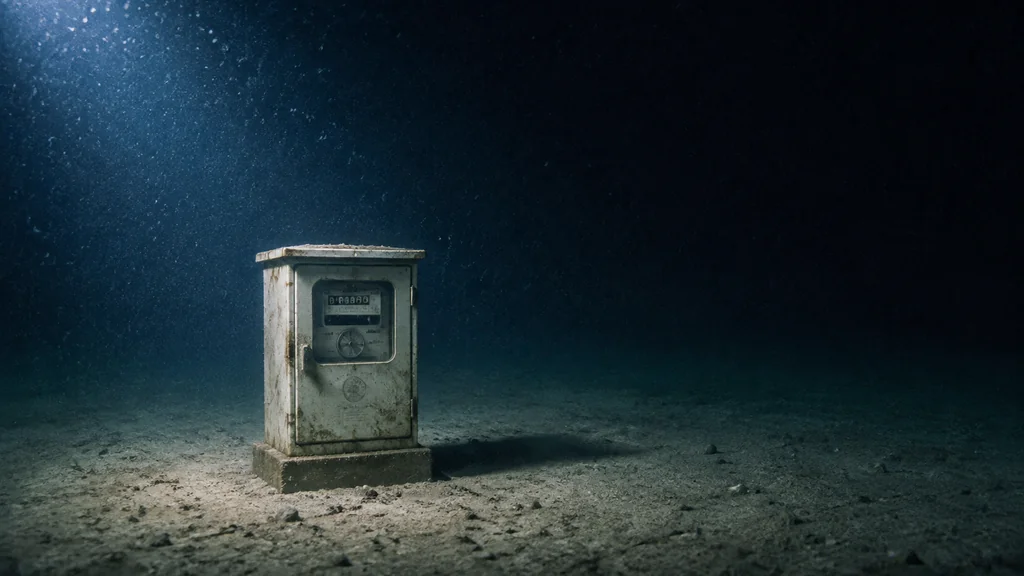
Cyprus begins counting the cost before the current can cross.
Cumadóireacht íomhá · tobriefMeridiam has taken control of the company behind the Great Sea Interconnector, the planned undersea electricity cable linking Crete and Cyprus. The deal signed on 5 August gives the French infrastructure investor 66% of the project company, while ADMIE, Greece's transmission operator, keeps 34% and remains in charge of the technical side (Enerdata, energynews.pro).
That matters because ownership is part of the financing story. Meridiam makes the project look more bankable. What it does not yet prove is that the cable will be financed, built, or paid for without a fight over tariffs.
What changed and what didn't
The project company is a special-purpose vehicle, or SPV: a ring-fenced entity that holds the rights, contracts and future income attached to the cable. Meridiam's majority stake means a long-term private infrastructure investor now stands behind the scheme, rather than leaving it dependent on ADMIE's balance sheet alone.
That is the sort of structure lenders usually like. Meridiam's business is regulated infrastructure held over decades, with revenue recovered through charges set or approved by public authorities. For a cable of this scale, that profile is useful.
But Meridiam has not bought a completed route, signed-up lenders, a settled tariff regime, or visible manufacturing momentum. Nexans, the cable-maker, qualified its deep-sea technology for depths of 3,000 metres in late August, which helps answer the engineering question. Yet its January statement referred to "schedule rearrangement", and its H1 2026 results did not tell investors that GSI execution had begun.
The revenue question lenders need answered
The real decision now sits with the tariff. Greece's energy regulator, RAAEY, was still consulting until 11 September on the number that matters most: how much the project company will be allowed to recover from electricity users over time.
That promise is what banks lend against. Until regulators define the formula, lenders cannot price the risk properly, and no bank can make a firm commitment.
Part of the formula is the WACC, the weighted average cost of capital. In plain English, it is the return regulators allow investors and lenders to earn through electricity system charges. ADMIE has proposed lowering the assumed debt share during construction to 50%–60%, from an earlier 60%–80% range (OT, Sigmalive).
That sounds technical, but the politics are plain enough. A lower assumed debt share usually means a higher allowed return. That helps equity investors such as Meridiam, but it also pushes more of the cost towards electricity users.
Cyprus is deciding whether consumers start paying before the cable exists
Cyprus is where the project tightens. Energy Minister Michalis Damianos welcomed Meridiam's arrival, but said final decisions depend on European Investment Bank due diligence. That process remains a study request, not an approved loan.
No cabinet or regulator decision has been published setting out who pays which share. That absence matters because the argument is no longer only about engineering. It is about whether Cypriot households start paying before the cable exists.
Cypriot reporting says the government will pay €125 million during construction once a NAVTEX is issued. A NAVTEX is a maritime notice authorising survey work at sea. The same reporting says two instalments are already being treated as outstanding.
That NAVTEX has not been published. Coverage points to a possible October issuance, with unfinished surveys passing through waters where Turkey has signalled objections. Greek foreign minister George Gerapetritis said Greece would not seek Turkey's permission. That states Athens's position clearly. It does not remove the operational risk of surveying contested seabed.
Who gains, who carries the cost
Regulated assets are attractive because approved costs are repaid over time by future users, not only by shareholders. Meridiam has gained control of exactly that kind of asset, supported by about €657 million in EU grant funding (CINEA, Euronews).
ADMIE reduces its financing exposure while keeping engineering fees and the operator role. If the cable works, Cyprus ends its electrical isolation from the continental European grid, with access to cheaper imports and stronger supply security.
The heavier risk falls on Cypriot consumers and taxpayers. Cost recovery allows the project company to earn back approved spending through electricity charges before the cable delivers a single electron. That is normal in infrastructure finance. In this case, it is being applied to a project routed through contested waters, with an estimated cost above €1.9 billion (Euronews).
The full contractual terms covering overruns, security delays and refinancing remain unpublished. That is the gap lenders, regulators and consumers all need closed.
The ownership change is real. RAAEY's consultation closes on 11 September, and Cyprus's tariff and EIB decisions will show whether Meridiam's capital can bring enough institutions with it to move the cable from a shareholder agreement into the Mediterranean.
How was this article?
Help us get better
Help us get better
Details about this article
- Model:
- claude-opus-4-6
- Generated:
- 9/3/2026, 2:06:35 AM
- Pipeline run:
- eu_pipeline_20260903_005007
- Watermark:
- SynthID (Google's invisible watermark)
- Human review:
- None before publication