Poland Holds Firm on €123 Billion
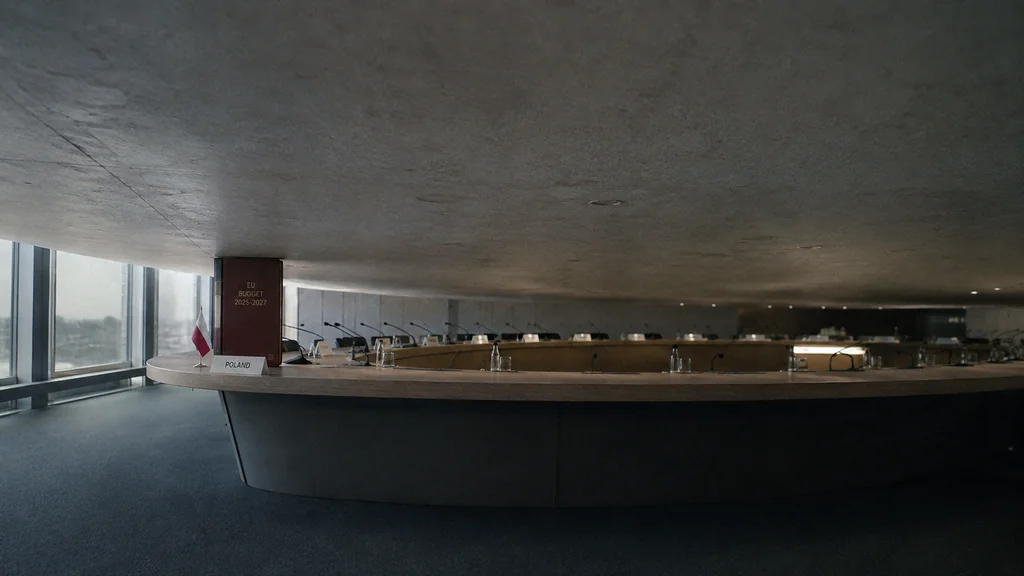
Poland’s demand leaves Europe’s shrinking budget room with nowhere to move.
Cumadóireacht íomhá · tobriefPoland has put down its marker early: the €123 billion it expects from the EU’s next seven-year budget is not up for trimming (gov.pl, Polskie Radio). Germany and five other wealthy member states want the European Commission’s near-€2 trillion spending plan cut by hundreds of billions. The multiannual financial framework, the EU’s binding seven-year spending ceiling, needs unanimity from all 27 governments. Any capital can stop the show.
European Council president António Costa will be in Warsaw on 9 September as part of a four-week tour of capitals, sounding out leaders before an October summit. Ireland, holding the rotating Council presidency and chairing the member-state talks, wants agreement by December (Euronews, European Movement Ireland). As we reported when Berlin gathered its counter-bloc last week (To Brief), the timetable is tightening and the sides are settling in.
What Poland's envelope actually covers
The €123 billion is not just money for roads, bridges and regional projects. Poland’s Ministry of Development Funds says the package would bring together cohesion grants, farm subsidies, border management, migration funds, climate compensation and new defence-linked spending in a single national plan (gov.pl). A cut would therefore land across several systems at once: farmers, border police and regional infrastructure would all feel it.
Polish media estimate that Warsaw would pay about €73 billion into the EU budget over the period, leaving a net gain of roughly €50 billion if the full allocation survives (Next Gazeta, Interia). Poland is not isolated. Romania’s president told Costa that cohesion and agriculture must remain substantial (Mediafax), while Bucharest says 17 member states oppose cuts of roughly 10% to farm and regional spending in the Commission draft (RRI). Spain is in the same camp, arguing that new defence and competitiveness priorities should not be paid for by eating into farm subsidies (Infobae).
What net contributors want instead
Chancellor Friedrich Merz brought Denmark, the Netherlands, Austria, Finland and Sweden together on 27 August. Their joint statement said the Commission’s proposal must be reduced "by several hundred billion euros in a balanced manner", with all spending headings, including agriculture and cohesion, contributing to savings (Bundesregierung). The six also reject fresh common EU borrowing (ORF). With national budgets under pressure, Merz has called the Commission’s proposed increase of up to 60% "unaffordable" (FAZ).
Lithuania shows why the argument is messier than a simple split between countries defending farm and regional money and countries demanding more for defence. President Gitanas Nausėda told Costa in Vilnius that the budget must reflect Europe’s changed security reality, with more funding for defence and military mobility. But he also said new priorities "should not be solved by weakening cohesion policy" (Delfi). Eastern member states want both. That leaves little room for a neat transfer from one budget line to another.
The maths that won't add up
Defence, competitiveness, Ukraine commitments and €149.3 billion in repayments on pandemic-era borrowing all need money (European Parliament). If Poland’s envelope is protected, if Spain and Romania shield farm spending, and if defence grows, the choices narrow quickly. Net contributors pay more, the EU finds new sources of revenue, or other programmes are cut.
Budget commissioner Piotr Serafin says he is optimistic a deal can be reached during Ireland’s presidency (Irish Times). Costa has warned that failure to agree before programmes expire in 2028 would interrupt funding across the continent (Brussels Times).
Optimism will help the mood in the room, but it will not balance the budget. Until governments decide whether the EU raises new revenue, accepts deeper cuts or borrows again, Poland’s red line and Germany’s red line remain under the same ceiling. One of them will have to give.
Details about this article
- Model:
- claude-opus-4-6
- Generated:
- 9/6/2026, 1:40:01 AM
- Pipeline run:
- eu_pipeline_20260906_005005
- Watermark:
- SynthID (Google's invisible watermark)
- Human review:
- None before publication