PPC’s €24 billion Balkan grid bet
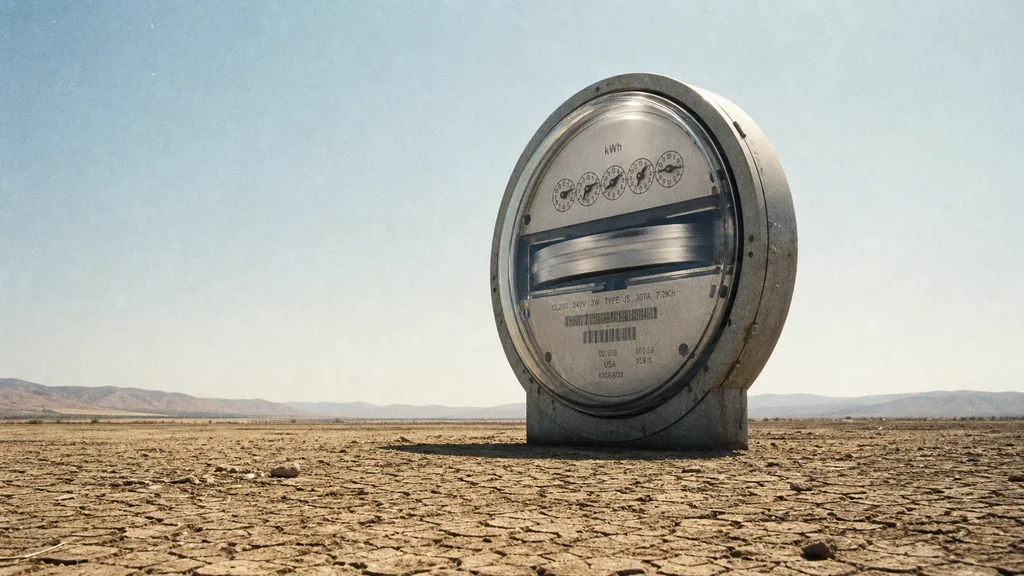
The regional energy transition begins as a monumental cost measured against a silent landscape.
Cumadóireacht íomhá · tobriefThe company once known as Greece's state electricity monopoly is trying to become something larger: the infrastructure backbone for a region whose energy transition is being slowed less by politics than by wires, substations and ageing local networks.
PPC, now a listed group operating across southeast Europe, has set out a five-year plan to spend roughly €24.2 billion on power plants, grids, storage and data centres (PPC Group). That is about €4.8 billion a year, up from €3.4 billion under its previous plan. By 2030, it wants to lift renewable capacity from 7.2GW to roughly 19GW.
For Irish readers, the logic is familiar enough. The energy transition is no longer just about building wind farms or solar parks. It is about whether the system underneath them can take the power. In southeast Europe, that weakness is acute. Distribution networks are old, coal plants are being retired, and flexible replacement capacity is not arriving quickly enough.
PPC is making a large bet that it can build what the region lacks, and that regulators and investors will allow it to recover the cost.
Consumers Pay First, Benefit Later
The central issue is not only what PPC builds, but who pays for it and when.
Distribution networks are regulated assets. PPC spends money on the grid, the energy regulator approves an allowed return, and customers pay through network charges on their electricity bills (ANRE). That means Romanian and Greek households are likely to see the cost before they see the benefit. Fewer outages, more renewable connections and lower wholesale prices may come later. The bill comes first.
PPC says 54% of the investment will come from operating earnings, 31% from new borrowing, and 15% from a share issue of about €4 billion (PPC Group). S&P has raised PPC's credit rating to BB with a stable outlook, pointing to the equity raise and revised plan (Parapolitika).
At the end of 2025, PPC's leverage ratio stood at 3.2 times net debt to EBITDA, the earnings measure lenders use to judge how much debt a company can carry. That was below its own 3.5x ceiling (PPC Group). But BB is still two notches below investment grade, so PPC will continue to borrow more expensively than its western European peers.
The plan is credible on paper, but it depends on execution. PPC invested €2.8 billion in 2025, with 87% going to renewables, flexible generation and distribution (PPC Group). First-quarter 2026 EBITDA rose 40% year on year to €0.7 billion (The Diplomat Romania).
Spending the money is the easier part. Turning construction into stable revenue is harder. Assets backed by long-term contracts or regulated returns can produce predictable income. Electricity sold into volatile spot markets without a fixed buyer is a different proposition.
Romania Is the Execution Test
Romania is where PPC's regional strategy becomes concrete.
In 2023, PPC bought Enel's Romanian distribution, supply and renewables operations for about €1.9 billion, gaining roughly 3 million customers and 534MW of renewable capacity (Reuters). Romania now accounts for around 22% of PPC's group earnings, according to analyst estimates (ProtoThema).
That acquisition is already being translated into physical work. Rețele Electrice România, PPC's distribution arm, operates about 136,000km of lines across Romania. It has launched a tender worth up to 387 million lei for high-voltage upgrades across Bucharest and ten counties, covering substations, line extensions and network reinforcement (Rețele Electrice România).
Europe's Grid Gap Behind the Bet
PPC's plan sits inside a wider European failure to invest quickly enough in the plumbing of the power system.
The European Parliament estimates that the EU needs about €584 billion in grid investment by 2030. More than 40% of distribution networks are already over 40 years old (European Parliament). Connection queues are stopping new renewable projects from reaching the grid (WindEurope). Distribution operators say local grids remain under-funded, even as they take on the load from rooftop solar, electric vehicles and heat pumps (EU DSO Entity).
Southeast Europe has a sharper version of the same problem. Greece and Bulgaria have announced a joint push to speed up energy-market integration (BTA), but cross-border links remain thin and coal retirements are moving faster than replacement capacity.
PPC has made the most concrete private-sector infrastructure commitment in southeast Europe's energy transition. Equipment suppliers and contractors benefit as soon as spending starts. Shareholders gain if regulated returns come through.
What is still missing is a verified country-by-country capex split, or a clear public timetable for permits and grid connections. The real test is how much of the cost regulators allow PPC to pass on to household bills, and how quickly new substations and lines connect the projects already waiting in the queue.
Stocks in this story
Details about this article
- Model:
- claude-opus-4-6
- Generated:
- 7/15/2026, 2:24:58 AM
- Pipeline run:
- eu_pipeline_20260715_005006
- Watermark:
- SynthID (Google's invisible watermark)
- Human review:
- None before publication