Romania’s Pay Bill Risks €770 Million
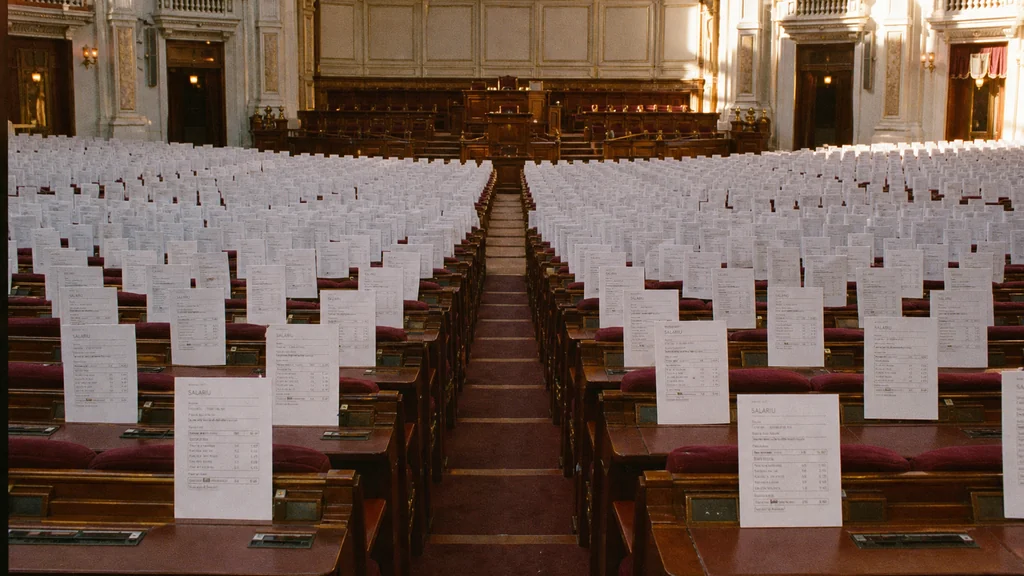
Thousands of salaries await one law Romania has yet to afford.
Cumadóireacht íomhá · tobriefRomania is not being told by Brussels what to pay its teachers, doctors or civil servants. That is not how the EU budget works, and the Commission has no authority to sign off Romanian salary scales. The pressure comes through a different lever: Bucharest wrote public-sector wage reform into its own recovery plan, and around €770 million in EU grants now depends on whether that reform is judged credible.
Prime Minister Ilie Bolojan confirmed on 19 August that the Commission had returned the draft law with "observations" and "requests for clarification" (Agerpres). Romanian outlets have described the move more sharply, saying Brussels had "rejected" the text, but there is no public Commission document using that language (Euronews Romania). The difference is not pedantry. This is still a negotiation before a deadline, not a final refusal.
Romania created its own leverage problem
The Commission’s leverage comes from the Recovery and Resilience Facility, the EU’s post-pandemic fund that pays out grants and loans when governments complete reforms they promised in advance. Romania chose to put public-sector wage reform into its national plan. The Council of the EU approved that plan. The Commission’s job now is to check whether Bucharest has delivered before the money is released (EUR-Lex, European Commission). The European Court of Auditors describes the model neatly: payments follow milestones, not invoices (ECA).
The argument is about arithmetic as much as politics. Romania’s Finance Ministry is understood to favour a version that would add about 8 billion lei to payroll costs in 2027 (Știrile ProTV). Coalition bargaining has pushed that estimate towards 12 or 16 billion lei, without matching savings elsewhere (RFI Romania). Brussels wants to know who pays the difference. With public debt above 60% of GDP, finance minister Alexandru Nazare has warned that "fiscal discipline is an obligation, not an option" (Bursa).
Why the law is politically hard to finish
The reform is meant to tidy up a pay system that has become crowded with exceptions. Interim labour minister Dragoș Pîslaru has said the law would eliminate 87 of 151 existing bonuses and cap performance pay (Agerpres). That sounds clean in a spreadsheet. It is much messier when the affected groups are health workers, teachers and civil servants who have learned to treat allowances as part of normal income.
The unions have not been brought fully inside the tent. Health unions have not agreed to the package. Education workers fear frozen incomes. An adviser to President Nicușor Dan has said Dan will not sign a law that cuts pay in health and education (Digi24).
Bucharest now has a tight sequence to complete before 31 August: coalition agreement on the cost, an extraordinary parliamentary session to adopt the law, and fiscal simulations convincing enough for the Commission. PNL, the junior coalition party that controls the parliamentary calendar, supports using an extraordinary session (Mediafax). PSD leader Sorin Grindeanu, whose party holds most coalition seats, says his party has not even received the draft or the simulations. Without PSD, the law goes nowhere.
The precedent that goes beyond Bucharest
The wage law represents about €770 million within a larger fifth payment request worth €2.84 billion, submitted on 15 August (Radio Romania, Romania Insider). The wider problem is bigger again: six unfinished legislative measures are tied to about €4.5 billion in recovery funding (Brussels Times). All milestones must be completed by 31 August, with final disbursements closing by December (Commission guidance).
Spain’s sixth recovery payment showed one way through this kind of dispute. The Commission can validate most of a request while withholding the part that has not been proven (RTVE, La Moncloa). That is the likely template if Romania clears most of its milestones but fails on wages.
For the Commission, the Romanian case is about more than one country’s pay bill. If it releases the money on weak evidence, other capitals will conclude that the final RRF deadline can still be bargained down. If it withholds the money, Bucharest carries the political cost of having written a reform it cannot yet pass. Romania has eleven days to make the Commission’s decision harder.
Details about this article
- Model:
- claude-opus-4-6
- Generated:
- 8/20/2026, 1:53:05 AM
- Pipeline run:
- eu_pipeline_20260820_005007
- Watermark:
- SynthID (Google's invisible watermark)
- Human review:
- None before publication