Six States Seek Refinery Windfall Tax
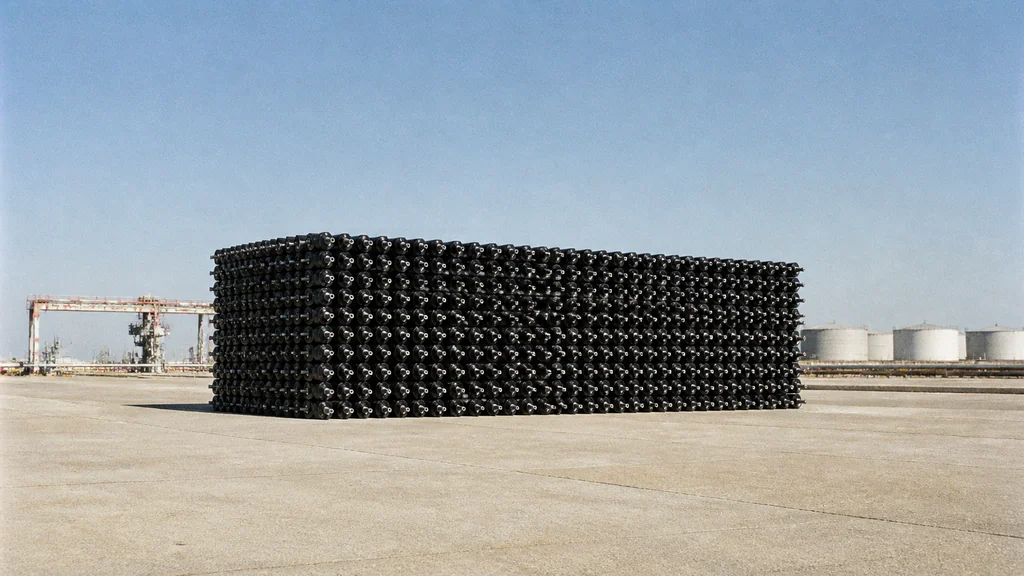
Refinery margins multiply long before drivers reach the pump.
Cumadóireacht íomhá · tobriefSix finance ministers want Europe to take another look at oil-company windfalls. Germany, Italy, Austria, Poland, Portugal and Spain have written to Ireland, which currently holds the rotating presidency of the EU Council, asking that the issue be put on the agenda when finance ministers meet in Dublin (Business Recorder/AFP, DW).
That gives Dublin an awkward but familiar role: chairing a conversation on tax in a Union where everyone agrees something is wrong until the moment a legal text asks who pays. The letter, driven by Germany's Lars Klingbeil, says oil companies are making profits and refining margins that have moved well beyond the rise in crude prices (Les Echos, n-tv). A request for a discussion, though, is still a long way from a tax.
Why six ministers cannot make a tax
EU tax measures require unanimity. All 27 member states must agree, and the European Commission first has to put forward a formal proposal (Article 113 TFEU, Article 115 TFEU). Any one government can stop the process. For now, there is no Commission proposal and no draft legal text in circulation (Council decision-making).
The six ministers do have a precedent to point to. In 2022, during the energy shock, the EU adopted a temporary "solidarity contribution" under Regulation 2022/1854. It required member states to take at least 33% of fossil-fuel companies' taxable profits above a benchmark set 20% higher than their average over the previous four years. The measure covered surplus profits in crude oil, natural gas, coal and refining. It was not a per-litre tax on fuel. The current letter reportedly wants to build from that model.
The tax case starts inside the refinery
The argument begins before petrol or diesel reaches the forecourt. Refining margins are the difference between the cost of crude oil and the price of the finished fuel produced from it. When that gap widens, drivers can end up paying more even if crude prices are not rising at the same pace. ECB analysis traced that pattern during the recent price shock (ECB).
Bank Austria estimated that Austrian fuel prices in July would have been roughly 10 cents per litre lower without the widening in margins (Leadersnet). Barclays put European refining margins at five to six times their normal level, naming Austria's OMV among the companies benefiting (Investing.com). Refiners can therefore make more money even when crude itself is not doing all the work.
The distribution is fairly plain. Drivers lose when margins widen. Oil companies and their shareholders gain. TotalEnergies bought back nearly 1.6 million shares for about €120 million over five trading days in mid-August (ZoneBourse). Governments could gain revenue if a levy survives. Drivers benefit only if the design stops companies recovering the cost through higher wholesale prices.
Some signatories are already acting alone
Portugal has approved a temporary 33% solidarity contribution on 2026 oil-sector profits above a baseline, drawing directly on the 2022 EU design (Xinhua, Jornal Economico). Poland went for a harsher tool: a 60% levy on extraordinary fuel-sales profits, expected to raise about 4 billion zloty and cover 20 to 30 companies, including state-controlled Orlen. President Nawrocki blocked it and sent it to the Constitutional Tribunal. Warsaw is now looking at a workaround: temporarily lifting corporate tax for large energy firms to 30% in 2027 (Money.pl, Polsat News).
France is the obvious absence from the letter. It is home to TotalEnergies and already operates a broad surtax on large-company profits, covering about 300 firms and reportedly raising €7.3 billion this year (TF1 Info). Paris is willing to tax large companies, but has not joined a targeted oil levy that would point directly at one of its own national champions.
Would drivers actually pay less?
A surplus-profits tax is calculated after the accounting period and only on profits above a benchmark. It is not automatically added to every litre in the way excise duty is. Polish economists made that point in response to the president's argument that the levy would simply appear at the pump (Radio ZET). But firms with pricing power can rebuild margins through wholesale prices, and Austria's attempt at a pump-price cap showed how companies can blunt an intervention through timing and price rises before a measure begins (trend).
The case for action is stronger than the politics around it. ECB and market data show refining margins have moved beyond what crude prices alone explain, and some oil companies are sending the proceeds back to shareholders. But the policy is still only a sketch. Six ministers are not 27 votes, there is no legal text saying who pays or how much, and identifying the rent is easier than stopping it being passed back to drivers.
Details about this article
- Model:
- claude-opus-4-6
- Generated:
- 8/23/2026, 1:52:42 AM
- Pipeline run:
- eu_pipeline_20260823_005006
- Watermark:
- SynthID (Google's invisible watermark)
- Human review:
- None before publication