Slovalco restarts on Slovak power aid
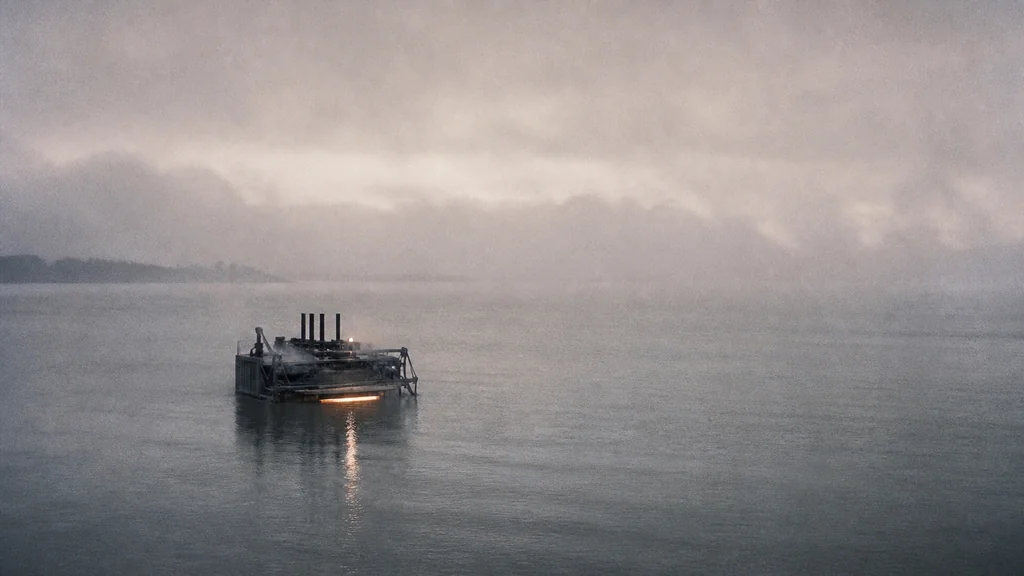
Europe’s aluminium returns where public power keeps flowing.
Cumadóireacht íomhá · tobriefThe first electrolysis pots at Slovalco's aluminium plant in Žiar nad Hronom came back to life this week, three years after electricity prices made primary production impossible. The restart is a Slovak story on the surface, but the bargain behind it is now familiar across Europe: if governments want energy-heavy industry to stay, they are being asked to provide cheaper power, relief from carbon-related costs, and support with no clear finishing line.
75,000 Tonnes, Not 175,000
Slovalco is bringing back 75,000 tonnes of annual production from a plant with total capacity of about 175,000 tonnes. The restart involves investment of at least €100 million. The other 100,000 tonnes remain a question for another day, dependent on power contracts that have not yet been signed and on conditions after 2030.
Prime Minister Robert Fico presented the move as restoring up to 17% of European primary aluminium production. That figure rests on the plant's full capacity, not the 75,000 tonnes now committed, and compares it with EU-only primary output, which has fallen to roughly 950,000 tonnes a year as smelters have closed across the continent. Wider European output was running at about 3.6 million tonnes in the first half of 2026. On either measure, the actual restart is much smaller than the political line suggests.
Cheap Power Is Becoming Industrial Policy
Primary aluminium means new metal made from ore through electrolysis, rather than recycled from scrap. It is an electricity business as much as a metals business: producing a tonne takes roughly 14 megawatt-hours, and power typically accounts for 30–40% of production costs. That is why smelters close quickly when prices jump, and why they rarely come back without the state beside them.
Slovalco's support comes in two parts. The first is a long-term supply deal with Vodohospodárska výstavba, Slovakia's state-owned hydropower company, for roughly 100 MW of steady, round-the-clock electricity. Smelters cannot cheaply stop and start, so they need baseload power at a price well below the market. The price itself has not been disclosed; the state utility classified the contract volumes and pricing as trade secrets.
The second part is a redesign of how Bratislava compensates smelters for carbon-related electricity costs. Under the EU's Emissions Trading System, power generators buy permits for their emissions and pass those costs into wholesale prices. That makes electricity dearer for big industrial users even when the factory itself is not producing extra emissions. In July, the European Commission approved Slovakia's revised scheme, nearly tripling the programme budget from €250 million to €710 million and increasing the share of eligible costs the state can cover from 75% to 80%. Slovalco also received relief from the nuclear-fund levy and other charges (Teraz). Slovak press reports put the annual cost of industrial relief from the Environment Fund at about €75 million.
Slovakia is not an outlier. The Commission cleared similar carbon-cost schemes for Czechia, France, the Netherlands, Austria and Spain in the same period (Brussels Times). Spain's Alcoa San Cibraó restarted all 512 pots by April 2026, protecting more than 1,000 jobs, but its future still depends on wind farms that have not yet been built and €72 million in expected CO₂ compensation. Germany's federal economics ministry argues that cheaper industrial power keeps suppliers, factories and skilled work in the country. Critics say the current supports are too small to change the economics: ARD reported that one scheme would reduce an example industrial power price from 18 to 17.6 cents per kilowatt-hour.
Who Pays, Who Gains
The benefits are easy to locate. Slovalco's majority owner, Norwegian aluminium group Hydro with 55.3%, and co-owner Penta Investments get a productive asset back. More than 200 workers in Žiar nad Hronom keep their jobs. Downstream manufacturers get a European supply of primary metal in a market where imports cover 70–80% of EU demand.
The costs are more widely scattered. Carbon-cost compensation uses ETS auction revenue that could otherwise go into green programmes or deficit reduction. The state utility commits power on undisclosed terms, giving up whatever it might have earned by selling that electricity on the open market. And this is not a once-off capital grant. It is a recurring promise to keep electricity costs low enough for the plant to operate. Slovalco shows that a restart can be done when the state keeps underwriting the power bill. Its owners have drawn the same conclusion: they will not commit to the second half of the plant without another round of guarantees.
Details about this article
- Model:
- claude-opus-4-6
- Generated:
- 8/29/2026, 1:45:52 AM
- Pipeline run:
- eu_pipeline_20260829_005007
- Watermark:
- SynthID (Google's invisible watermark)
- Human review:
- None before publication