Ceuta Answers Hold Up EU Funds
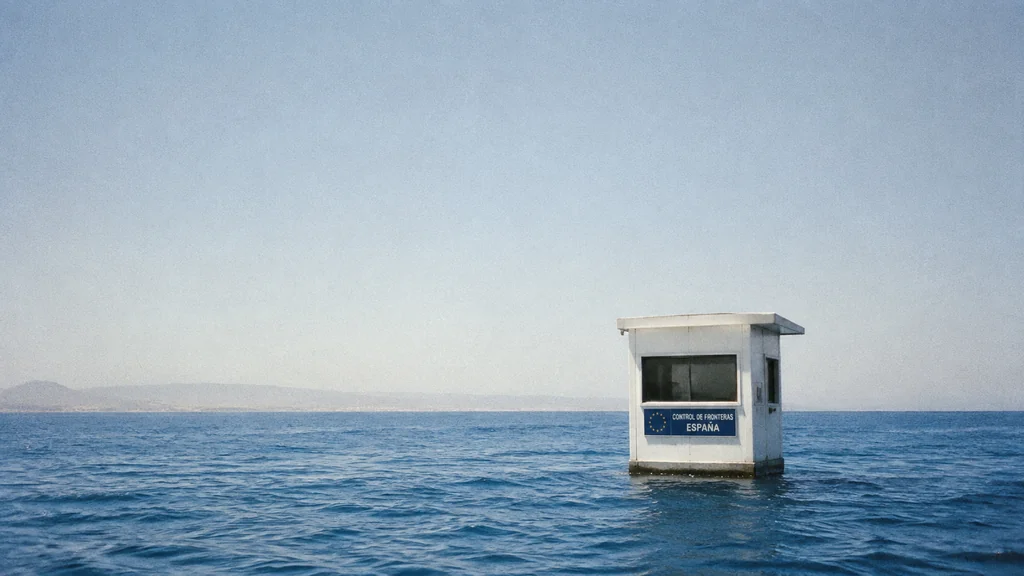
Spain’s unanswered request leaves Ceuta stranded at Europe’s frontier.
Cumadóireacht íomhá · tobriefSpain asked Brussels for emergency funding for Ceuta on 24 August. More than a week later, the request is still sitting in the European Commission because Madrid has not supplied the basic follow-up detail: what, precisely, it wants the EU to pay for, and how the money would be spent (El Español, Brussels Signal). The European Commission, as the EU’s executive arm, cannot sign off on emergency money without that paper trail. Each week the file remains incomplete gives other capitals more room to present Ceuta as a weakness in Europe’s open-border system.
Three pots of money, only one stuck in Brussels
Part of the confusion is that Spanish and EU reporting have folded three different streams of money into one story. They need to be separated.
The first is the EU emergency request itself, made through two Home Affairs crisis funds: AMIF, which covers asylum and migration costs, and BMVI, which supports border management (EFE, AMIF Regulation). The amount clearly tied to that request is more than €32 million (RTVE). El Mundo has reported that the Commission could ultimately approve more than €100 million, but neither Madrid nor Brussels has confirmed a figure.
The second is Spain’s own €44.51 million expansion of humanitarian credit for Ceuta, announced by migration minister Elma Saiz, which Madrid wants partly covered through EU mechanisms (ABC). That is a Spanish budget decision, not an EU grant. The third is Pedro Sánchez’s €309 million national package for Ceuta, approved by the Council of Ministers (Heraldo). Only the first pot is waiting on Brussels.
Why Brussels insists on detail, even now
The Commission has not put a public checklist on the table. But the gaps are clear enough from the record: Spain still has to specify which costs are eligible, what exactly would be funded, whether any of it overlaps with national spending, and what EU personnel would be expected to do in Ceuta (Eleconomista, EUobserver).
That is not Brussels hiding behind procedure for the sake of it. A European Parliament briefing on the Home Affairs funds found recurring problems across member states with monitoring, data quality and administrative capacity (European Parliament). Emergency money can move quickly in the EU system, but it still needs a file that can survive audit.
Spain’s request for operational help is caught in the same machinery. Interior minister Grande-Marlaska asked for 10 extra Frontex Standing Corps officers, an extension of Operation Minerva, interpreters from the EU Asylum Agency and Europol support against smuggling networks (Moncloa). Commissioner Magnus Brunner promised a swift decision on 29 August, but by 3 September there was still no published deployment timetable or arrival date for staff. The Commission had offered extra Frontex support as early as 6 August, provided Spain made a formal request (Commission briefing). Madrid did not do so until late August.
The Schengen cost of waiting
The delay has consequences beyond Spain. Italy cited Ceuta when it reintroduced temporary border checks on air and sea routes from Spain on 1 August, before extending them to 16 September (Commission Schengen register, ANSA). Spain says Ceuta’s particular legal status prevents onward movement to the mainland (Spanish Foreign Ministry). Italy moved anyway. Interior minister Matteo Piantedosi pointed to 3 arrests and 21 entry refusals, though Italian media noted there was no way to verify whether those refused had actually travelled through Ceuta (ANSA).
In the Netherlands, parliamentary questions from FVD and JA21 turned the transfer of minors from Ceuta to mainland Spain into a domestic argument about possible onward movement inside Schengen, the EU’s passport-free travel zone (NRC).
Madrid’s case is that Ceuta does not threaten Schengen. Other governments are behaving as though it might. Brussels cannot approve emergency funding on an incomplete application. Until Spain answers the Commission’s questions, the vacuum will be filled by other capitals, each with its own politics and its own reading of the crisis.
Details about this article
- Model:
- claude-opus-4-6
- Generated:
- 9/4/2026, 6:38:58 AM
- Pipeline run:
- eu_pipeline_20260904_005006
- Watermark:
- SynthID (Google's invisible watermark)
- Human review:
- None before publication