Spain Seeks EU Help In Ceuta
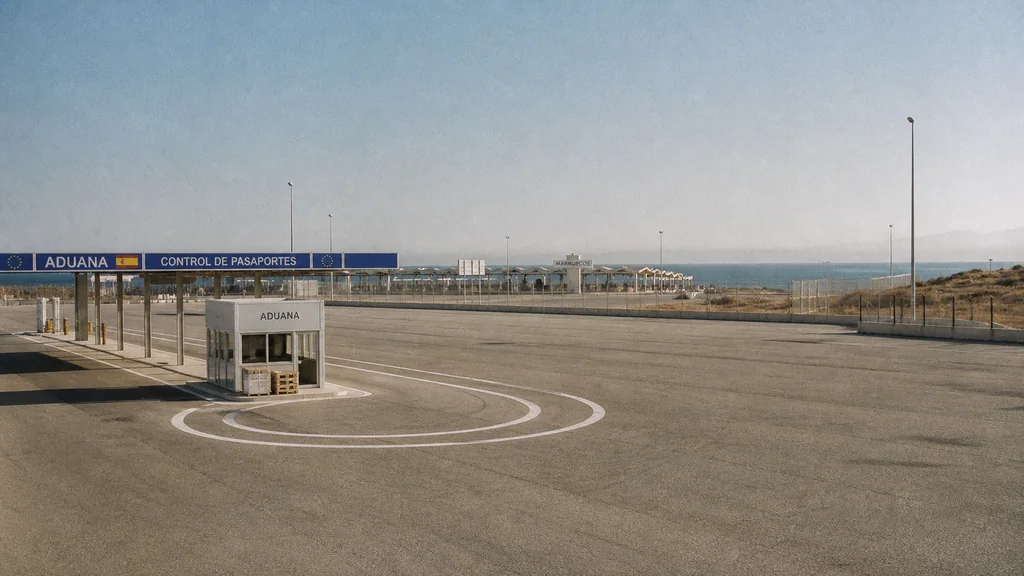
Europe can accelerate Ceuta’s files, but Morocco still controls the exit.
Cumadóireacht íomhá · tobriefSpain has now done what Brussels had been waiting for it to do. On 28 August, Interior Minister Fernando Grande-Marlaska formally asked the EU to help process the migration backlog in Ceuta, the Spanish enclave on the north African coast. The request has three parts: Frontex officers for border processing, Europol intelligence on smuggling networks, and asylum-interview support from the EU Asylum Agency (RTVE, eldiario.es).
The move comes a month after roughly 72,000 people crossed from Morocco into Ceuta (El Español). Thousands are still there. Overcrowding has led to violence, blocked access to food and sexual-assault cases involving minors, as we reported earlier. For weeks, Madrid tried to manage the crisis as a national emergency while Brussels kept an offer of help on the table. That stage is finished. Migration Commissioner Magnus Brunner confirmed on 29 August that the Commission was already working on a response (Notimérica, Morocco World News).
What Spain wants, agency by agency
Madrid’s request is narrow, not symbolic. From Frontex, the EU’s border and coast guard agency, Spain wants 10 standing-corps officers to speed up triage. That means identifying and classifying people still in Ceuta without regular status. Spain also wants Operation Minerva, the Frontex operation covering ports around the Strait of Gibraltar during the peak travel season, extended beyond its scheduled 2 September end date. It has asked for EUROSUR satellite imagery near the Moroccan border and for a Guardia Civil patrol vessel to remain under Frontex arrangements into 2027 (RTVE, El Español).
From the EU Asylum Agency, the body that helps member states run asylum systems, Spain wants interview support and interpreters. Because space in Ceuta is so constrained, Madrid has said some of this work could be done remotely (Morocco World News). From Europol, the EU police cooperation agency, it wants continued intelligence work on smuggling networks (Heraldo). Spain has also reminded Brussels that it requested more than €32 million in emergency migration funding on 24 August and wants a quick decision (El Español).
Added hands, same authority
The important point is what this does not do. Spain is not transferring legal responsibility to Brussels. Under EU law, Frontex, Europol and the EUAA work under the authority of the host state (Frontex Regulation, EUAA Regulation). Madrid still decides who can seek asylum, who is detained and who is returned. Frontex can help with aircraft and paperwork channels once Spain has made valid return decisions, but it cannot decide that an individual should be removed (Return Directive).
The order matters. Each person has to be identified. Age and vulnerability have to be assessed. Protection needs have to be checked. Any asylum procedure has to run its course before return can be organised. EU agencies can make that chain move faster. They cannot lawfully remove links from it. The European Ombudsman’s findings on EUAA work in Greek hotspots show why: even support interviews can shape outcomes when vulnerabilities are missed (European Ombudsman).
The real blockage may not be in Brussels at all. Returns depend on Morocco issuing travel documents, accepting readmission and cooperating on safe handover. No EU agency can make that happen on its own. Ten extra Frontex officers may clear a processing queue, but a cleared queue without Moroccan cooperation becomes a longer list of return decisions that cannot be carried out.
Schengen politics without secondary movement
Ceuta was quickly pulled into domestic migration politics elsewhere in Europe, even before there was evidence of movement north. Spain’s Foreign Ministry said none of the people who entered irregularly had left Ceuta for mainland Spain (Spanish Foreign Ministry). The Commission said the same (Euronews).
That did not stop Italy imposing temporary Schengen checks on arrivals from Spain (Sky TG24), Denmark’s prime minister suggesting the EU consider suspending Schengen cooperation with Spain (Berlingske), or France reinforcing its Spanish border under an internal-control regime already in place since 2015 (Public Sénat). Those moves were driven by political reflex, not documented spillover.
Spain is asking Brussels for capacity, not surrendering sovereign border decisions. Brunner can move quickly, and the agencies can add people, systems and intelligence. They cannot erase the legal procedure or the Moroccan cooperation on which any workable outcome in Ceuta still depends.
Details about this article
- Model:
- claude-opus-4-6
- Generated:
- 8/30/2026, 1:49:07 AM
- Pipeline run:
- eu_pipeline_20260830_005006
- Watermark:
- SynthID (Google's invisible watermark)
- Human review:
- None before publication