Lithuania Guards Energy Lifelines
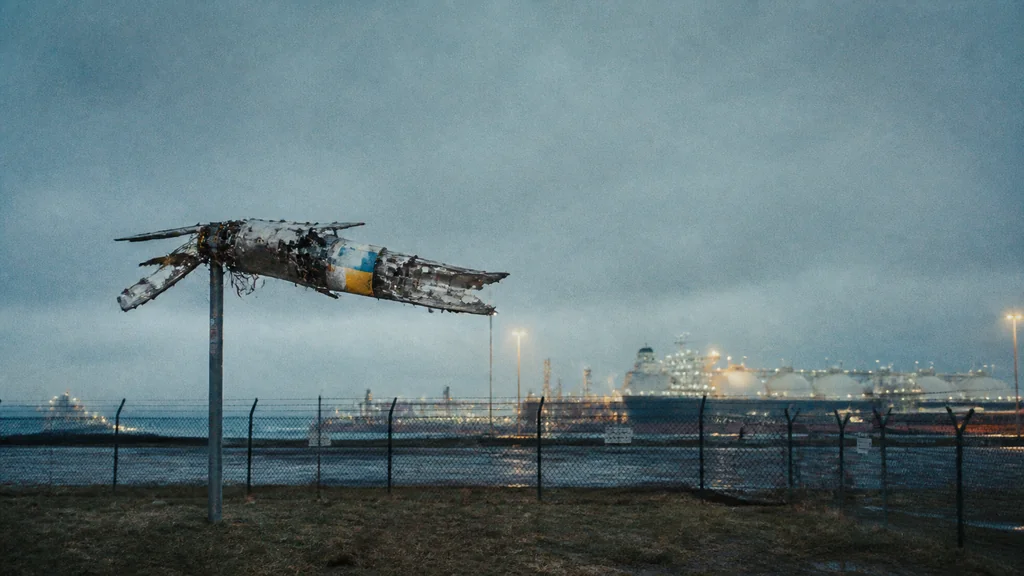
The evidence points everywhere before the alliance can decide where to look.
Cumadóireacht íomhá · tobriefThe soldiers at Lithuania's Klaipeda liquefied natural gas terminal are not there for theatre. They are guarding one of the pieces of infrastructure that allowed the Baltic states to prise themselves away from Russian energy dependence. Latvia has tightened protection around a dam on the Daugava River and its underground gas storage. Poland's gas-grid operator is on heightened alert. Estonia is pressing for stronger crisis capacity, though it has not publicly put guards around energy sites.
The precautions are real. The attack they are meant to deter remains, for now, a warning rather than an event.
The warning and the gap it exposes
Lithuanian defence minister Robertas Kaunas has said military intelligence had information that Russia was considering attacks on Baltic critical infrastructure, possibly using captured or rebuilt Ukrainian-made drones so that wreckage at the scene would point towards Kyiv rather than Moscow (LRT, Kyiv Independent). He was careful about the limits of the intelligence: Lithuania had observed planning activity, but had identified no date, no target list and no final Russian decision (Bloomberg).
The danger lies in the few minutes between seeing a drone and deciding who sent it. Russia could recover Ukrainian drone parts from strikes on its own territory, rebuild them into a weapon for use against allied soil, and leave Ukrainian-looking debris behind (Euronews, Euromaidan Press). The purpose would be to create confusion inside NATO, the 32-member military alliance, while governments argue over how much proof is enough before they respond (NV/Reuters).
NATO can share radar data and send jets into the air. A member state can seek alliance consultations when it feels under threat. But Article 5, the collective-defence clause, still requires political agreement that an armed attack has taken place. Debris by itself does not press the button (NATO). The power to shoot down a drone, attribute a strike and escalate the response remains with national governments. Each country acts under its own rules and at its own speed. That is the space a false-flag operation is built to use.
Four countries, four alarm systems
Lithuania has made the most visible move. Kaunas signed a July 17 order sending up to 30 military personnel to guard four sites until August 19: the Klaipeda LNG terminal, which is central to Baltic gas supply; the LitPol Link electricity interconnector with Poland; and two inland energy facilities that help balance the grid (LRT English). The pattern is plain enough: gas entry, cross-border electricity and the systems that keep power flowing. These are the assets that allow the Baltics to operate without relying on Russia.
Latvia has stepped up security at the Daugava dam near Riga and Incukalns gas storage (Delfi Latvia). Defence minister Raivis Melnis said Latvia had no information that attacks were being prepared against specific Latvian targets (la.lv). Much of the extra guarding has been in place since Russia's full-scale invasion of Ukraine in 2022.
Poland's response is being driven more through companies than through a single military order. Orlen is examining alternative gas import routes, Gaz-System is operating on heightened alert, and a military unit has begun securing an electricity connection with Ukraine that helps stabilise Ukraine's war-damaged grid (Ukrainska Pravda). Poland is also examining its own failure to detect and warn properly about a Russian cruise missile that crossed its airspace on July 30 (TVN24).
Estonia is taking a different line in public. Interior minister Igor Taro has argued that the likeliest threats are non-military and that Estonia's crisis preparedness does not yet match the security environment (ERR English). There is no public record of newly disclosed guards being placed around energy assets.
When the drone actually arrives
Romania has already shown what one version of the answer looks like. On July 24, Romanian F-16s shot down a Russian Shahed-type drone over Romanian territory (Romania Insider). That requires rules of engagement agreed in advance and a government willing to authorise fire. Swedish defence analysts have described the Baltic false-flag scenario as "fully reasonable" in grey-zone terms (SvD).
Four NATO members are now hardening sites on their own terms, under their own laws and at their own pace. The unanswered question for the alliance is whether national shootdown rules and attribution procedures have been settled before a drone reaches a power plant, or whether Moscow is being allowed to learn, site by site, how much room still exists between allied alarm systems.
Details about this article
- Model:
- claude-opus-4-6
- Generated:
- 8/11/2026, 10:41:26 AM
- Pipeline run:
- eu_pipeline_20260811_005006
- Watermark:
- SynthID (Google's invisible watermark)
- Human review:
- None before publication