Warsaw Makes Border Troops Permanent
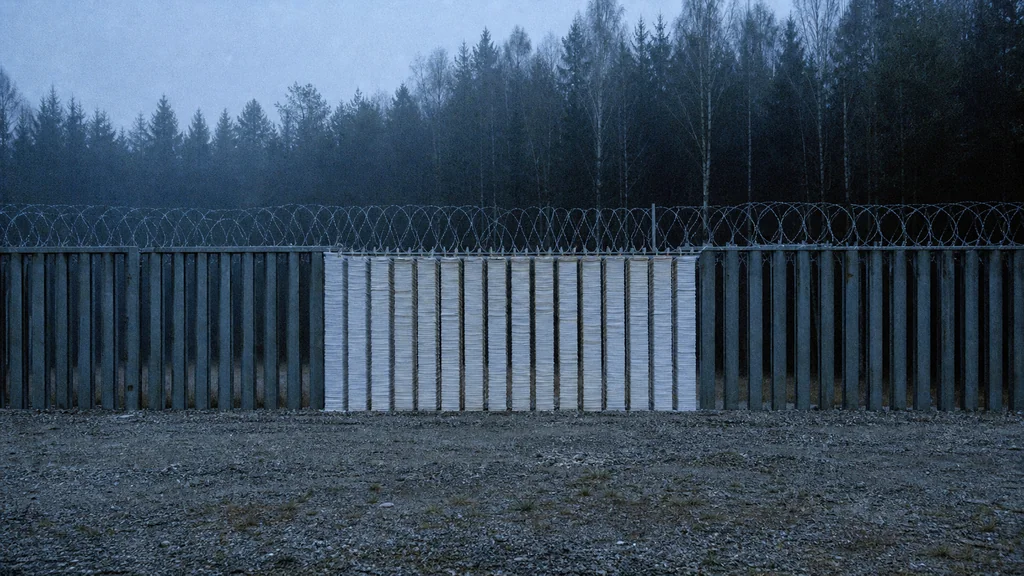
Poland’s military shield at the frontier remains a physical reality without a legal foundation.
Kompożizzjoni tal-immaġni · tobriefConcrete barriers and razor wire now mark Poland's frontier with Belarus. Thousands of soldiers patrol the line, supporting the civilian Border Guard against organised smuggling networks and drone incursions. In July, Warsaw made that military role permanent through the Border Defence Component, or KOP, built around the renamed 20th Przemyśl Brigade (InfoPodkarpacie). KOP is tied to Tarcza Wschód, the "Eastern Shield" programme to harden Poland's eastern border with ditches, surveillance towers and physical obstacles.
For Malta, this is not a distant Polish story. It is another example of how EU border policy is shifting from administration to security. We know the other side of that argument well: when migration, policing and defence are mixed together, the legal detail matters as much as the political message.
A Name Without Rules
Poland's Interior Ministry still says the Border Guard, with 17,200 officers, is the agency legally responsible for the frontier (MSWiA). Soldiers reinforce it through patrols and surveillance, but they do not replace it. The public documents reviewed for this piece show no dedicated KOP budget, no manpower ceiling beyond one brigade, and no clear rules on who commands soldiers when they encounter migrants, drones or smugglers.
That gap is not theoretical. If a soldier at the fence meets someone claiming asylum, whose instruction prevails: the military chain of command or the civilian border authority? Poland's leading defence outlet points to a second problem. Soldiers kept on static fence duty lose time for combat training, weakening readiness for the kind of large-scale war NATO is now openly planning for (Defence24).
What Latvia and Finland Learned First
Latvia has tested a version of Poland's model for longer. Its National Armed Forces have supported the State Border Guard for five years under sustained migration pressure linked to Belarus (Sargs.lv). The military presence stabilised the border line, but it did not end the pressure. Latvia's border guard chief says smugglers are becoming more aggressive (LSM). Officials still describe gaps in sensors and cameras, with counter-drone systems planned by the end of summer.
Five years in, Latvia's bottleneck is not simply the number of people on patrol. It is technology and investigative capacity: the ability to see, identify, trace and prosecute networks using the border as an instrument.
Finland chose a different structure. Its Border Guard sits under the Interior Ministry in peacetime, but formally belongs to the national defence system. Helsinki adopted explicit legal triggers for closing the border and restricting asylum when migration is weaponised by a foreign state, requiring specific government decisions rather than open-ended military deployments (Finnish Interior Ministry). Poland has published no comparable rules setting out who commands soldiers at the border, what they may do, and who checks for abuse.
Patrols Alone Don't Defend a Flank
NATO allies are already acting on the harder lesson: a defended Polish border means little if reinforcements cannot reach it. Under German military planning, up to 800,000 allied troops and 200,000 vehicles could transit Germany within six months during a NATO contingency (SR, Bundesregierung). Lithuania is building the Rūdninkai military base near the Suwalki corridor, the narrow land bridge between Poland and the Baltic states, with European Investment Bank financing for roughly 4,000 troops and a rail spur planned for heavy equipment (EIB, JP.lt).
These countries are not debating Poland's acronym. Their money is going into mobility, bases, rail and logistics. The diagnosis is the same: the eastern flank's weakness is reinforcement speed.
One question remains open. Under EU law, putting soldiers at a border does not suspend asylum obligations. The EU Charter of Fundamental Rights, the bloc's binding bill of rights, prohibits refoulement, meaning states cannot return people to places where they face persecution. The EU's new migration rules also require procedural safeguards and independent monitoring (EU Charter, European Commission). KOP has published no oversight framework for encounters between soldiers and people at the fence.
Poland's hybrid-security problem is real. Belarus has used migration pressure, smuggling routes and drone incidents to test the EU and NATO border. But KOP becomes a capability only when Warsaw produces a legal mandate, assigned units beyond one brigade, recurring funding, sensor and counter-drone procurement, and accountability for what happens at the fence.
Latvia has spent five years showing that soldiers alone do not solve this. Poland now has to show it has learned the lesson.
Details about this article
- Model:
- claude-opus-4-6
- Generated:
- 7/15/2026, 2:35:23 AM
- Pipeline run:
- eu_pipeline_20260715_005006
- Watermark:
- SynthID (Google's invisible watermark)
- Human review:
- None before publication