Bulgaria’s Defence Cash Needs Contracts
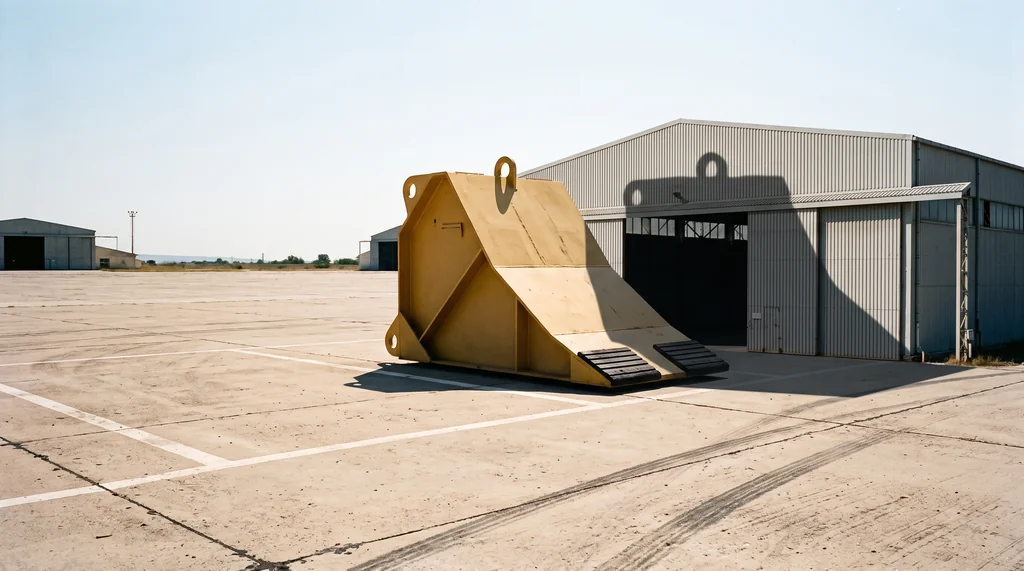
Bulgaria’s advance towers over the military equipment still awaiting contracts.
Kompożizzjoni tal-immaġni · tobriefThe European Commission transferred €489.3 million to Bulgaria on 28 August, the country’s first payment under SAFE, the EU defence-loan programme (Club Z, Economic.bg). SAFE, or Security Action for Europe, allows the Commission to borrow €150 billion on the markets using the EU’s credit rating, then lend the money on to member states at rates many of them could not secure alone (EUR-Lex, Consilium).
For Maltese readers, the mechanism matters more than the headline figure. This is Brussels using its balance sheet to help member states rearm without each government going separately to the markets. Malta is not Bulgaria, and its defence needs are not those of the Black Sea flank, but the precedent is familiar: EU-level borrowing turns a European priority into domestic fiscal policy.
Bulgarian media presented the payment as money for missiles, howitzers and radars. That is ahead of what the record shows. The transfer is pre-financing, not a grant. Sofia has received the first 15% of a €3.26 billion repayable loan, and still has to convert that money into signed contracts, production slots and equipment actually delivered to its armed forces (Sega, The Sofia Globe).
Cheap Borrowing, Real Debt
SAFE loans can run for up to 45 years, with a grace period of up to ten. Member states choose the equipment, sign the procurement contracts and repay the Commission over time. Later payments depend on proof that the projects are moving; the Commission can cut or suspend instalments if conditions are not met (EUR-Lex, JD Supra).
For Bulgaria, the loan is still national debt. That is not an accounting footnote. Sofia’s 2026 budget already projects a deficit of 5.7% of GDP, and the SAFE borrowing sits inside the ceiling for new state debt (Focus). Cheaper borrowing lowers the cost. It does not make the spending disappear.
That distinction would be understood in Malta, where EU money is often discussed as if it arrives detached from trade-offs. Whether the issue is infrastructure, energy or security, Brussels can ease the financing problem. It cannot remove the domestic responsibility for how the money is committed and repaid.
Nine Shopping Lines, One Signed Contract
Bulgaria’s plan covers nine capability families: 3D radars, ground-based air and missile defence, self-propelled howitzers, drones, loitering munitions, rocket launchers, counter-drone systems, transport vehicles, VL MICA missiles and 155mm ammunition (Novini.bg, Otbrana.com). Only one item has a publicly traceable, signed and ratified contract: seven 3D radars under a framework agreement with a French state procurement agency, signed in Paris on 12 June and ratified by Bulgaria’s National Assembly on 30 July (The Sofia Globe). Published reporting reviewed for this article does not show how the first €489.3 million is divided across the nine lines.
That gap between list and contract is the real story. The money now has to pass through Bulgaria’s defence ministry, procurement authorities and the suppliers they select. Each stage needs political approval, technical assessment and negotiation before any system reaches soldiers rather than budget tables.
Romania shows the difference. Bucharest received a first tranche of €2.5 billion against a €16.7 billion total SAFE envelope and already has publicly signed contracts for 298 Lynx infantry vehicles, anti-drone systems, patrol vessels and ammunition. Rheinmetall has committed to deliveries between 2028 and 2030 (AGERPRES, Digi24). Romania’s advantage is not only size. It has already moved from allocation to contracts. Bulgaria has not.
The European-Content Squeeze
SAFE is also industrial policy. Contractors must generally be based in the EU, EEA or Ukraine, and components sourced outside those areas are capped at 35% of cost (CMS France). For sensitive systems, including air defence and strategic drones, the rules go further: Europe must retain the right to modify the equipment without needing permission from outside suppliers (French Senate).
France, whose firms KNDS and MBDA are well placed to benefit, argues that debt raised under the EU name should strengthen European industry rather than subsidise American or Korean competitors (Zone Militaire). The opposing case is practical. Europe’s most urgent military gaps are not always best filled by eligible European supply chains, and restrictions can slow purchases of systems that eastern-flank states have relied on since 2022 (Emerging Europe).
The European Defence Agency has already warned that bigger budgets will not, by themselves, solve the coordination failures inside Europe’s fragmented defence industry (Euractiv). That is the same EU problem Malta has seen in other sectors: money is easier to centralise than capacity, and rules are easier to write than delivery chains.
For Bulgaria, the squeeze is immediate. Its list includes both French CAESAR artillery and an American coastal missile system. Each purchase has to meet European-content rules without slowing capability that Sofia says it needs urgently. Bulgaria has moved from allocation to cash. The proof now is contracts, delivery dates and fielded systems. Until that sequence is visible, the €489.3 million is a fiscal fact, not yet a military one.
Details about this article
- Model:
- claude-opus-4-6
- Generated:
- 8/29/2026, 1:48:25 AM
- Pipeline run:
- eu_pipeline_20260829_005007
- Watermark:
- SynthID (Google's invisible watermark)
- Human review:
- None before publication