Ceuta Border Crisis Hardens Europe
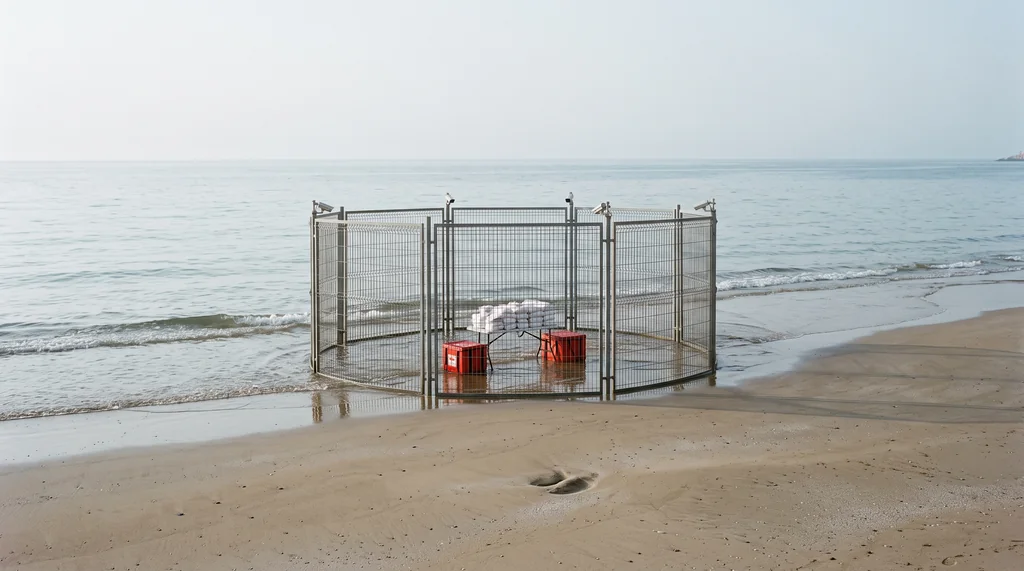
Humanitarian access becomes another border inside Spain’s own city.
Kompożizzjoni tal-immaġni · tobriefResidents of Ceuta tried this week to stop Red Cross vehicles from taking food to migrants. Protesters set fire to makeshift shelters on the enclave's beaches. What started with mass crossings from Morocco in late July (HRW) has turned into a breakdown of public order inside Spanish territory. For Spain, the immediate test is whether it can guarantee humanitarian access in one of its own cities. For the rest of the EU, the question is whether governments can justify hardening borders over Ceuta before showing the evidence for doing so.
Blocked aid and burned shelters
The facts need to be pulled away from the politics now building around them. On 27 August, protesters in the Trampolín beach area tried to physically block a Red Cross convoy carrying food. Police intervened; reports differ on whether the vehicles turned back or reached people by another route (RTVE, Euronews). The same day, protesters broke through police lines and burned shelters and belongings near the Benítez area (EFE). Separately, 12 people were detained after stones were thrown at a military vehicle, injuring four soldiers (RTVE).
The situation was already grim before this escalation. Human Rights Watch said the Red Cross was distributing 4,000 food bags a day, while the NGO Luna Blanca was providing between 2,700 and 3,500 meals, with thousands of people sleeping on beaches, in streets and in warehouses (HRW). People sleeping rough now face not only hunger and exposure, but mob violence. In practice, they depend on police protection to receive food.
Serious crimes, shaky numbers, no political cooperation
Spain's chief prosecutor, Teresa Peramato, announced 16 sexual-assault investigations involving 17 victims, mostly women, and a majority of them minors (El Español). Three mainland prosecutors were sent to support Ceuta's overloaded courts (Faro de Vigo). These are grave cases. But only three suspects' nationality was publicly known, so collective blame is not supported by the record.
The number of unaccompanied minors keeps moving. Spain's Interior Ministry revised its figure from more than 2,900 to roughly 1,475-1,500 after finding IT duplications, while Ceuta's child-protection officials were still citing numbers close to 3,000 (Cadena SER). Madrid approved €25 million for reception, shelter and legal aid (La Moncloa). The money has not bought political cooperation: Aragón, Castilla y León and Extremadura boycotted a coordination meeting and wrote to oppose transferring any minors to mainland Spain (Infobae/Europa Press, El Mundo). Madrid can finance reception. It cannot easily make its regions share responsibility.
EU law also blocks quick removals. The Return Directive and the CJEU, the EU's top court, require authorities to check each unaccompanied minor's case before return: family ties, guardianship, or adequate reception in the country of return must be verified individually (Return Directive, CJEU C-441/19). The European Commission has backed returns in principle (To Brief), but that political endorsement does not remove the safeguards. Spanish courts have already struck down summary removals of minors from Ceuta when individual assessments were skipped (Público).
Border controls built on thin evidence
Other EU governments moved on Ceuta before this week's violence. Italy reintroduced temporary border controls with Spain for August, citing the risk that people could move onward from Spain into other EU countries (European Commission Schengen register). Il Post described Italy's controls as largely political (Il Post). France deployed up to 334 police and gendarmes at the Spanish border, using drones and transport checks (France 24). France's own La Cimade said it did not have interception data broken down for the Spain border (La Cimade). In the Netherlands, FVD and JA21 filed parliamentary questions asking whether girls transferred to mainland Spain could reach Dutch territory, although verified reporting showed only internal Spanish transfers (NRC, Tweede Kamer).
The pattern is familiar to smaller member states like Malta, where EU border and migration decisions quickly become domestic politics. Governments are taking real border measures, but the evidence of actual onward movement remains thin. Ceuta is already partly outside Schengen, Europe's passport-free travel area, and checks are required before anyone moves to mainland Spain (tagesschau).
Ceuta matters because a local emergency is being converted into wider European border policy. Spain's Interior Ministry and the Commission now owe the public the secondary-movement figures on which those decisions are supposed to rest.
Details about this article
- Model:
- claude-opus-4-6
- Generated:
- 8/28/2026, 2:03:18 AM
- Pipeline run:
- eu_pipeline_20260828_005006
- Watermark:
- SynthID (Google's invisible watermark)
- Human review:
- None before publication