Rijeka Rail Tunnel Targets Adriatic Cargo
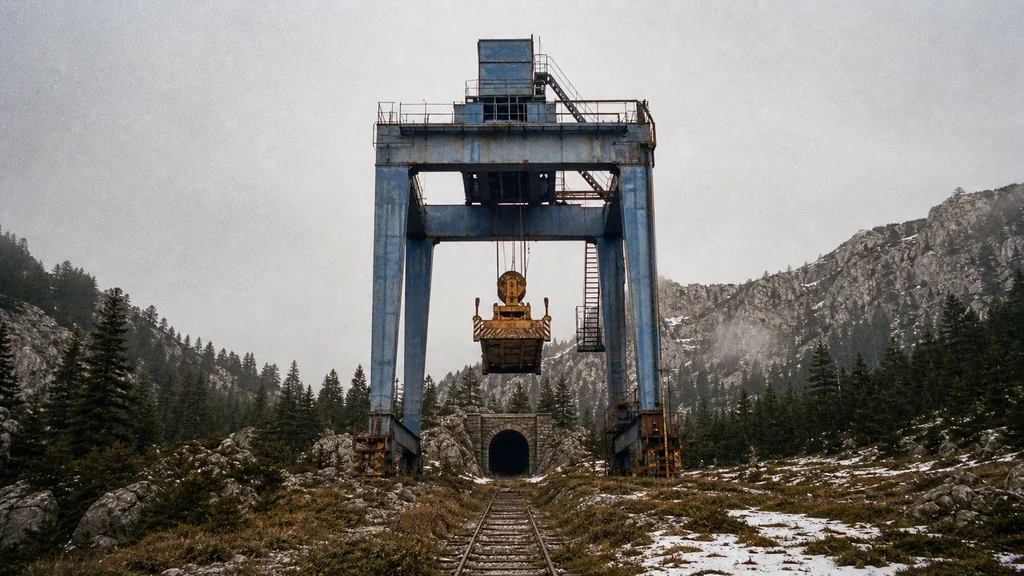
The capacity of the Adriatic is measured in the mountains of the interior.
Kompożizzjoni tal-immaġni · tobriefCroatia wants Rijeka, its main port, to take cargo business from Koper and Trieste on the route into Central Europe. The obstacle is not the quayside. It is the railway behind it, which climbs through difficult mountain terrain before freight can move towards Zagreb and beyond.
HŽ Infrastruktura, Croatia's state rail manager, has received two offers for technical advisers on a planned "lowland" Zagreb-Rijeka railway: a double-track, electrified line that would shorten the existing route by roughly 56 km and include a 14 km tunnel through the Velika Kapela range (Index, Croatia Week). This is still the stage before construction. Croatia is hiring advisers to shape the procurement, not yet builders to dig the tunnel.
Why 56 Km Changes the Freight Maths
A container ship can choose any of the northern Adriatic ports. The real competition begins once the box is unloaded. If freight then crawls along a single-track mountain railway, with trains waiting for each other and steep gradients limiting load, the port's position on the coast loses much of its value.
Shippers care about the full journey to Budapest, Vienna or Prague. They choose the route that gets cargo there cheaply, predictably and with fewer delays. That is the same calculation Malta knows from its own dependence on ports and logistics: geography helps only when the inland and onward connections work.
The existing Zagreb-Rijeka line imposes the penalties Croatia is trying to remove. The planned lowland route would allow trains of 740-750 metres on gentler gradients, with double track (TEN-T Regulation (EU) 2024/1679). Longer trains carry more containers for each driver, locomotive and timetable slot. Double track allows trains to move both ways at the same time, increasing the number of usable paths each day.
The expected gain is simple: heavier loads, lower traction costs and more reliable schedules. TEN-T, the EU's core transport network, is designed to reward projects that remove bottlenecks across borders. The Connecting Europe Facility, the EU fund for transport infrastructure, finances precisely these corridor links (CEF Transport). Croatia's strongest case is that this is not just a national rail upgrade, but a fix to a European freight route.
The Rivals Have Their Own Problems
Rijeka is not competing in a vacuum. Koper and Trieste are also fighting the same inland rail problem.
Koper, Slovenia's only port, is investing more than €230 million to expand container capacity from about 950,000 TEU to 1.3 million TEU. A TEU is one 20-foot container, the standard unit used to count container traffic (Regional Obala). But Koper's long-delayed Divača-Koper second track remains its weak point, with Slovenian reporting alleging that rail construction projects are being overpaid by at least 30% (Info360).
Trieste has a strong customs position and long experience serving Central Europe. Italy's transport minister Matteo Salvini has pushed a Trieste-Belgrade railway to extend the port's reach into the Balkans (Trieste All News). Yet a recent closure at the Tarvisio rail crossing disrupted around 150 trains a week, a reminder that one chokepoint can quickly cut a port off from its customers (ilnordest.it).
The landlocked countries in the middle want options, not loyalty. ÖBB Rail Cargo Group has expanded its terminal at Přerov in Czechia and plans rail links to both Koper and Rijeka (ÖBB/RCG). Hungary treats Adriatic access as a strategic logistics issue for both energy and container cargo (G7/Telex). For them, the winning port is the one that offers the cheapest and most reliable corridor from ship to final destination.
Who Pays, Who Gains, What's Unproven
If Croatia delivers the railway, port operators and freight companies gain first. Inland logistics hubs in Zagreb and Central Europe gain next. Importers and exporters gain more route choice and, possibly, lower costs.
The risk sits with taxpayers, Croatian and European. EU corridor funding committed on optimistic traffic forecasts is funding that cannot be used elsewhere. So far, no verified cost-benefit analysis, construction timetable or traffic forecast has surfaced publicly. A Croatian maritime analysis describes Rijeka as the port with the largest growth potential, provided it fixes its inland rail connection (Pomorac.hr).
Croatia has advanced the paperwork for a project that makes economic sense. But Rijeka's advantage will not come from looking closer on a map. It will come only if the new railway reduces the cost and uncertainty of moving cargo inland, and only if shippers choose those trains over the alternatives from Koper and Trieste.
Until longer, heavier and more reliable trains are actually running into Central Europe, Rijeka has entered the race. It has not yet won it.
Details about this article
- Model:
- claude-opus-4-6
- Generated:
- 7/15/2026, 2:44:35 AM
- Pipeline run:
- eu_pipeline_20260715_005006
- Watermark:
- SynthID (Google's invisible watermark)
- Human review:
- None before publication