Cyprus Risks €23M Over Landfill Tax
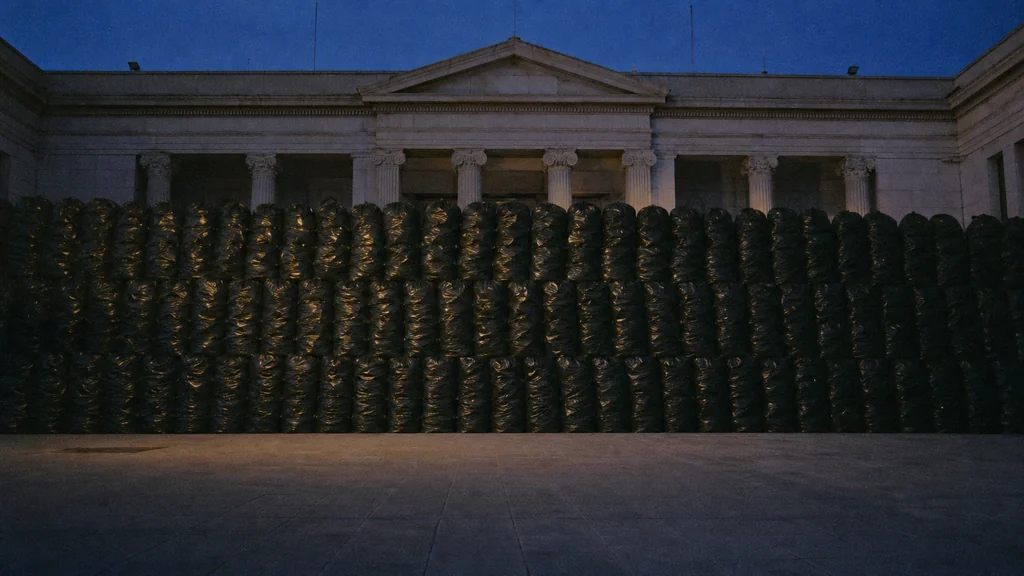
An impossible wall of untreated waste stands between Cyprus and its recovery milestones.
Kompożizzjoni tal-immaġni · tobriefCyprus's parliament voted 26 to 19 on 14 July to reject a proposed tax on municipal waste sent to landfill (Cyprus Mail). The vote may now cost the country EU recovery money. The landfill tax was written into Cyprus's Recovery and Resilience Plan, the binding agreement through which Brussels releases post-pandemic reform funding, and its rejection could freeze €23 million in EU payments (Politis, SkalaTimes).
The issue is familiar to any small island that has had to turn an EU commitment into domestic law. The government promised Brussels a reform before it had secured its own parliament. That political gap has now become a funding problem.
How EU Recovery Money Creates the Bind
The Recovery and Resilience Facility, the EU's €724 billion post-pandemic fund, works less like a grant and more like a contract for delivery. Governments list reforms and investments. The European Commission, the EU's executive arm, checks whether each step has been completed before releasing the next payment. All remaining milestones must be finished by August 2026 (Regulation (EU) 2021/241).
Cyprus included a municipal landfill tax in its plan as a green-tax reform. The proposed charge was €10 per tonne, with all revenue earmarked for local recycling programmes, according to Department of Environment director Kostas Konstantinou (SkalaTimes). The government says it had already reduced the rate from an original €35 to soften the impact.
The timing on 14 July exposed the problem. On the same day that parliament rejected the tax, the Commission approved Cyprus's sixth recovery payment of €120 million (European Sting). Brussels was clearing one tranche of money while Nicosia's legislature was blocking the next condition for payment.
Why Parliament Said No
The opposition argument was not simple Euroscepticism. Cyprus sends about 68% of its municipal waste to landfill, while the EU target is 10% by 2035 (Politis). Akel, Elam, Alma and Direct Democracy voted against the tax, arguing that households should not face higher costs before the recycling infrastructure exists. Local authorities have made the same point. "The public should not pay for the state's waste management failures," one municipal position warned earlier this month (Cyprus Mail).
The argument would resonate in Malta, where waste policy is never abstract. On a small island, a landfill decision is not hidden somewhere far from daily life. It affects councils, household bills, collection systems, and the political pressure that lands quickly at the door of a kunsill lokali.
Without sorting centres and recycling capacity, a landfill charge risks raising municipal costs without changing where the rubbish ends up.
The government's position also has a logic to it. If the tax revenue is meant to pay for the recycling infrastructure that municipalities lack, rejecting the tax blocks both parts of the policy: the financial signal meant to discourage landfill use and the funding stream meant to help communities move away from it.
Six Weeks to Close a Self-Made Gap
Cyprus has until 31 August 2026 to adopt the legislation. The same pressure is now visible across the recovery fund. Romania, among others, still has plan-linked reforms outstanding before the August cutoff (European Commission).
The RRF strengthens accountability by tying money to actual delivery. That is the point of the mechanism. But when a government places a politically costly reform inside a binding EU plan without first securing parliamentary support, or without building the infrastructure needed to make the reform fair, Brussels does not create the crisis. It exposes it.
Cyprus now has six weeks to close a gap of its own making: it convinced Brussels before it convinced Nicosia.
Details about this article
- Model:
- claude-opus-4-6
- Generated:
- 7/15/2026, 2:50:58 AM
- Pipeline run:
- eu_pipeline_20260715_005006
- Watermark:
- SynthID (Google's invisible watermark)
- Human review:
- None before publication