Cyprus Cable Lacks Its Ship
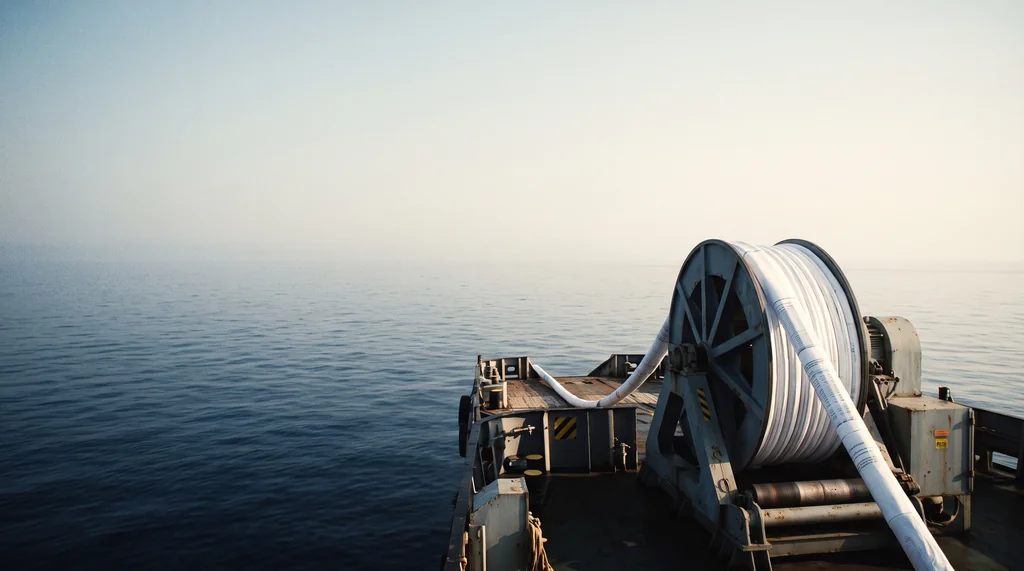
Europe’s promised connection remains stronger on paper than at sea.
Kompożizzjoni tal-immaġni · tobriefMeridiam's arrival has made the cable linking Cyprus to mainland Europe look easier to finance. It has not yet returned a survey vessel to the sea.
No NAVTEX, the formal maritime notice needed before survey work can begin, has been issued. No ship has been named. No coordinates have been published. Cyprus remains the only EU member state without an electricity connection to the continental grid, and the project meant to end that isolation is still, three weeks after its biggest ownership change, moving by announcement rather than by work at sea.
What the new money changes
The French infrastructure fund now holds a majority stake in the GSI project company, while Greece's ADMIE, the national electricity transmission operator, keeps technical leadership and is expected to operate the cable once built (EUalive, Balkan Green Energy News). The exact ownership split has not been made public.
Nexans, the cable manufacturer, has signed on as contractor and completed a world-record 3,000-metre depth test for the type of undersea power cable this route requires (Nexans). That answers one question: the cable can physically be built. The harder issues are who carries the cost, who recovers it through electricity bills, and whether the surveys can proceed without a confrontation at sea.
Greek Prime Minister Kyriakos Mitsotakis called Meridiam's entry "a very strong vote of confidence" (Economix). The wording suits Athens: it presents private capital as a political signal.
But Meridiam is not the French state. No sovereign guarantee, no export-credit instrument and no French government statement backing the GSI has appeared in the public record. The French fund spreads the financial risk among more investors. It does not make the risk disappear.
Three gates the cable still has to clear
The first gate is the tariff formula. This is the mechanism that determines how much investors can recover from consumers through electricity bills once the interconnector operates. Greece's energy regulator has opened a public consultation, running until 11 September, on the revenue methodology (OT).
ADMIE wants the financing formula to assume less debt during construction, which would increase the return it can charge consumers later (iEnergeia). For Maltese readers, the point is familiar from other EU infrastructure debates: "strategic" projects still end up somewhere on a bill. The unresolved question is which consumers pay, and how much.
The second gate is Nicosia. Cyprus is waiting for the European Investment Bank to finish its economic assessment before committing more money (Politis). That review has no public completion date. It also gives the Cypriot government political cover: it can delay a decision while pointing to the bank's work.
Cypriot opposition parties have demanded full disclosure of the Meridiam-ADMIE agreement before any further public financial participation (Kathimerini Cyprus). The spending gap between the two sides is already visible. ADMIE has declared roughly €251.4 million, while Cyprus has recognised about €82 million (Proto Thema).
The third gate is the sea itself. About 40% of the seabed surveys remain, concentrated in the stretch between Kasos and western Cyprus, where Turkey claims it must be notified before any work proceeds. The European Commission's own Türkiye report confirmed that Ankara impeded survey activity connected to the project (Commission Türkiye report, Euronews).
The GSI has EU status as a Project of Common Interest, a priority label that unlocks funding and faster permitting under the bloc's cross-border energy rules (TEN-E Regulation). Brussels has committed roughly €657 million so far. That matters financially and politically. It does not protect a survey ship if naval pressure starts around it.
The test is specific
Greek officials present French corporate involvement as a deterrent: Turkey would no longer be dealing only with Greek and Cypriot actors, but with a project carrying major French exposure (Ekathimerini). That is a plausible political calculation. It is not a security guarantee.
ENTSO-E, the body coordinating Europe's grid operators, identifies the GSI as the only planned interconnector connecting Cyprus to the continental system (ENTSO-E). For an island state like Malta, the strategic logic is easy to understand: interconnection changes the balance between isolation, price exposure and supply security.
The project now has stronger investors, a credible cable contractor and EU strategic status. The proof to watch for is narrower: a NAVTEX with dates and coordinates, a named vessel, and survey work that continues without accepting Turkish pre-approval. Until then, the cable is stronger on paper than at sea.
Details about this article
- Model:
- claude-opus-4-6
- Generated:
- 8/27/2026, 1:52:01 AM
- Pipeline run:
- eu_pipeline_20260827_005006
- Watermark:
- SynthID (Google's invisible watermark)
- Human review:
- None before publication