Cyprus Carries Cable Cost Burden
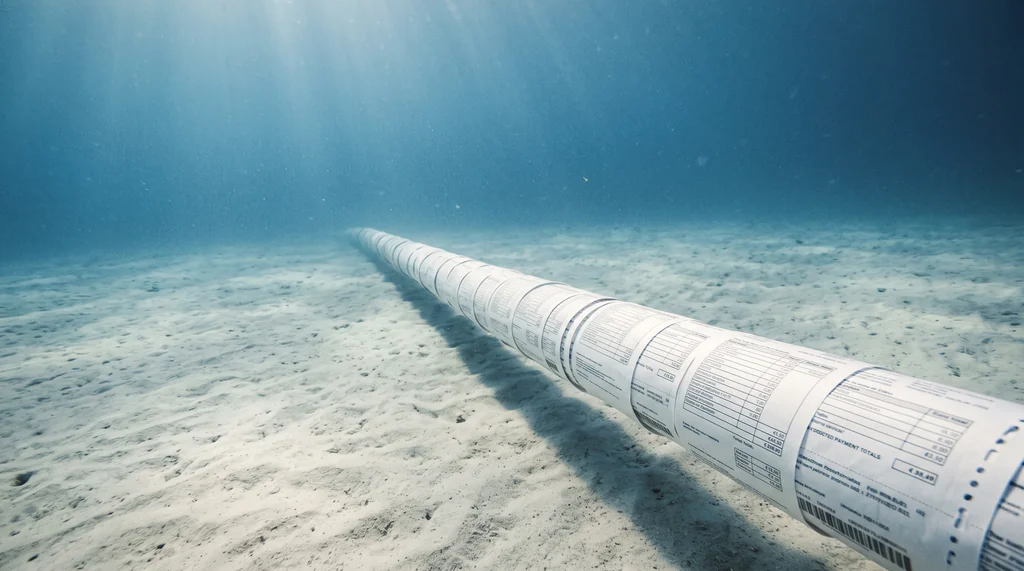
The cable promises power, but consumers may receive the bill first.
Kompożizzjoni tal-immaġni · tobriefA bipartisan group of US lawmakers has asked Secretary of State Marco Rubio and DFC chief Ben Black to put the Great Sea Interconnector higher on Washington's agenda, the planned undersea electricity cable linking Greece, Cyprus and Israel (Schneider House, Protothema). The letter gives the project political oxygen. It does not give it money, a loan guarantee, or a permit to build. From here to the day electricity actually moves through the cable, the real issue is who pays. That answer is still missing.
The project is not short of powerful backers. Brussels has treated it as a priority cross-border project and committed roughly €657 million in grants (CINEA, EUR-Lex). French infrastructure investor Meridiam signed for a 66% majority stake on 5 August (Greek Prime Minister). Greece's grid operator ADMIE, which keeps 34% and the technical lead, filed the Cyprus-Israel investment request with regulators on 13 August (ADMIE). As we reported last week, that filing started the clock on the approvals needed before a final investment decision. The weak point is not political endorsement. It is whether electricity users, mainly in Cyprus, will accept the bill.
Why the Cable Makes Economic Sense
Cyprus is one of the last EU member states with no physical connection to a neighbouring electricity grid. Maltese readers know what that means: an island system has to manage faults, demand peaks and backup capacity largely on its own. That keeps costs high and limits how much solar and wind can be absorbed without destabilising the grid.
The cable would connect Cyprus first to Greece, and then to Israel. Its planned capacity is 1,000 MW, over roughly 1,200 km (ADMIE, OT). Cyprus could import cheaper electricity when local supply is tight and export surplus renewables when production exceeds demand. The case becomes stronger after 2029, when the island could lose a significant share of its conventional generating capacity (Cyprus Mail).
The economics are understandable. The difficulty sits between the spreadsheet and the socket.
The Bill Comes Before the Electricity
The main dispute is cost recovery: which costs can be passed on to electricity users, and when. The Greece-Cyprus leg allocates 63% Cyprus, 37% Greece. In practice, Cypriot consumers carry most of the regulated burden. Cyprus's energy regulator, CERA, is resisting that transfer. Of the €251 million ADMIE says it has already spent, CERA has recognised only 32% as recoverable through network charges (Protothema, Politis). In plain terms, CERA is refusing to let ADMIE load most of its claimed spending onto bills. Nicosia says it will make no further payments beyond a €125 million intergovernmental deal before the cable is operating (Capital.gr).
Private investors have reportedly been offered an allowed return of 8.3% plus a 3.7% premium, locked in for 17 years (Kathimerini, Les Echos). Those returns are funded through the same network charges paid by electricity users. Cheaper bills are therefore not guaranteed by the cable itself. They depend on regulators allowing enough cost recovery to finance the project while leaving enough import-price benefit to reach households.
The financing is also not settled. Cyprus Energy Minister Michael Damianos described Meridiam's entry as a vote of confidence, but said any state equity participation depends on the European Investment Bank's due-diligence study (Marine Cyprus, Sigmalive). Days after Meridiam signed, the acquisition price, equity commitment and allocation of cost overruns remain unpublished. Cypriot opposition parties AKEL and DISY have demanded disclosure before Cyprus takes on further obligations (PafosNet, Philenews). The deal has not been formally notified to the European Commission for merger review (CNA).
There is a separate construction risk. Nexans holds a cable contract reportedly worth around €1.43 billion plus VAT, with €251.4 million already paid and 160 km of cable produced by end-2024, but no full notice to proceed (Capital.gr). Seabed surveys have still not restarted, and reports of a maritime notice authorising survey work remain unconfirmed (Cyprus Mail). The European Court of Auditors has warned that cross-border electricity projects often face delays (European Court of Auditors). The practical danger is clear: consumers may begin paying network charges for construction before the cable delivers cheaper or more secure electricity.
The US congressional letter points to the DFC, America's development finance agency, but no DFC board action, term sheet or due-diligence process has been disclosed (Schneider House). The political signal is real. The financing signal is not.
Who Gains, Who Loses
If the cable works as designed, Cypriot electricity users gain supply security and the option to import power when local generation is expensive or strained. Greece becomes the EU-side bridge for Eastern Mediterranean electricity flows. Meridiam and its investors get a regulated infrastructure asset with guaranteed returns for nearly two decades.
The coalition behind the Great Sea Interconnector is now wider than ever: Athens, Nicosia, Brussels, Paris, Washington, ADMIE, Meridiam and Nexans. The decisive actors, however, are the regulators. They will determine whether this becomes a strategic electricity link or another Mediterranean infrastructure project where the politics moved faster than the bill.
Stocks in this story
Details about this article
- Model:
- claude-opus-4-6
- Generated:
- 8/18/2026, 1:43:46 AM
- Pipeline run:
- eu_pipeline_20260818_005006
- Watermark:
- SynthID (Google's invisible watermark)
- Human review:
- None before publication