DAX Profits Rise As Jobs Go
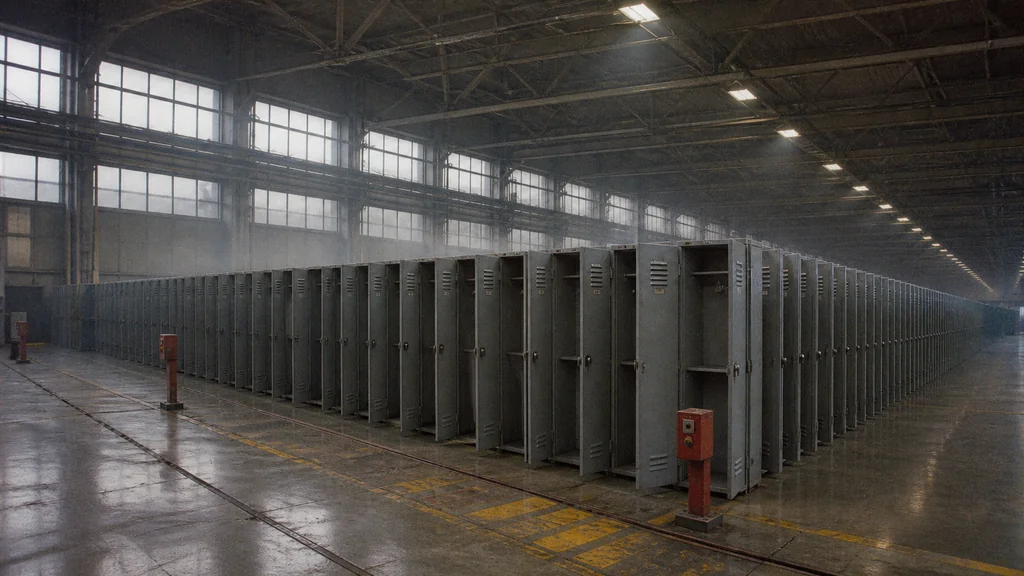
Record profits rise as Europe’s industrial workforce quietly disappears.
Kompożizzjoni tal-immaġni · tobriefGermany's 40 largest listed companies made a record €52.6 billion in operating profit in the second quarter, almost 16% more than a year earlier. Over the same period, they employed 41,000 fewer people (Tagesschau, Handelsblatt). Those figures should be read together. Germany's largest companies can still generate strong profits abroad while reducing their workforce at home, and the split is now large enough to matter for industrial jobs well beyond Germany.
Where the Profit Comes From
The DAX, Germany's main blue-chip stock index, is not a simple measure of the country's factory floor. It includes telecoms, insurers, defence companies and pharmaceutical groups. The biggest earner in the quarter was Deutsche Telekom, with €6.9 billion in operating profit, much of it coming from T-Mobile US. Allianz, the insurer, followed with €4.9 billion (Handelsblatt). As FAZ noted, the profit boom says little about the health of German manufacturing. A growing share of the money is being made in activities that do not depend on German production workers.
The factories are telling another story. Employment in the car industry fell 5.8% over the year to 691,500, the lowest level since 2005. Manufacturing as a whole lost 2.7% of its workforce, falling to 5.29 million (Tagesschau). Auto parts suppliers shed 7.6% of their workers (DW). That last figure matters because suppliers are where Germany's industrial weakness starts moving across borders, from Bavaria and Baden-Württemberg into the production networks of Central Europe.
Germany Is Replacing Less Than It Wears Out
German companies are no longer investing enough at home to replace the equipment that wears out. The Bundesbank said in May that net fixed investment, meaning spending on new machinery and equipment after depreciation is deducted, turned negative in 2024 and 2025. That had not happened since reunification (Bundesbank). Price-adjusted business spending on machinery has been falling since 2019.
The retreat points to a competitiveness problem. The Bundesbank estimates that roughly three-quarters of Germany's recent loss of export market share comes from weaker competitiveness rather than softer global demand. German car exports to China virtually halved between 2021 and 2025 (Bundesbank). Industrial electricity prices were 4.2% lower year on year by June (Destatis), which has eased part of the 2022-23 energy shock. But cheaper power alone has not made Germany an obvious place to build the next production line.
The Pressure Travels into Central Europe
Germany sits at the centre of Europe's industrial supply chains. Almost 28% of Polish exports go to Germany (PAP Mediaroom). Around a third of Czech exports go the same way (Novinky). The ECB, the European Central Bank that sets monetary policy for the eurozone, has warned that cost pressures and weak demand move quickly through these links (ECB).
Romania is already showing what that means in practice. Vehicle output fell 12.7% in the first half, while more than 18,000 auto workers lost their jobs between January 2025 and April 2026 (PSNews, ZF). Some plants are still winning work. Czech car production rose 4.5% in the first half, with Škoda operating at full capacity (iROZHLAS). Hungarian vehicle manufacturing rose 21% in June (HVG). These are real gains, but they sit inside a European car sector that is becoming smaller overall.
For Malta, this is not a distant German labour story. The island does not host the same heavy industrial base, but it lives inside the same European economy, through imported goods, logistics, shipping, financial services exposure and EU policy choices made in response to industrial weakness. When Germany's largest companies protect margins through foreign earnings, cost cuts and sector mix, the pressure does not stop at German borders. It moves through suppliers into Poland, Czechia, Slovakia and Romania, and then into the wider single market that Malta depends on every day.
Central European plants may still benefit when production is shifted from one country to another. That is not the same as secure employment. The companies making these decisions are profitable, global and under pressure to keep margins high. Their next factory, battery line or supplier contract will go where costs, regulation and demand make sense. Germany's problem is that it can no longer assume that place will be Germany. Europe’s problem is that the adjustment will not stay neatly contained there.
Details about this article
- Model:
- claude-opus-4-6
- Generated:
- 8/15/2026, 1:50:24 AM
- Pipeline run:
- eu_pipeline_20260815_005006
- Watermark:
- SynthID (Google's invisible watermark)
- Human review:
- None before publication