Schengen Checks Become Routine
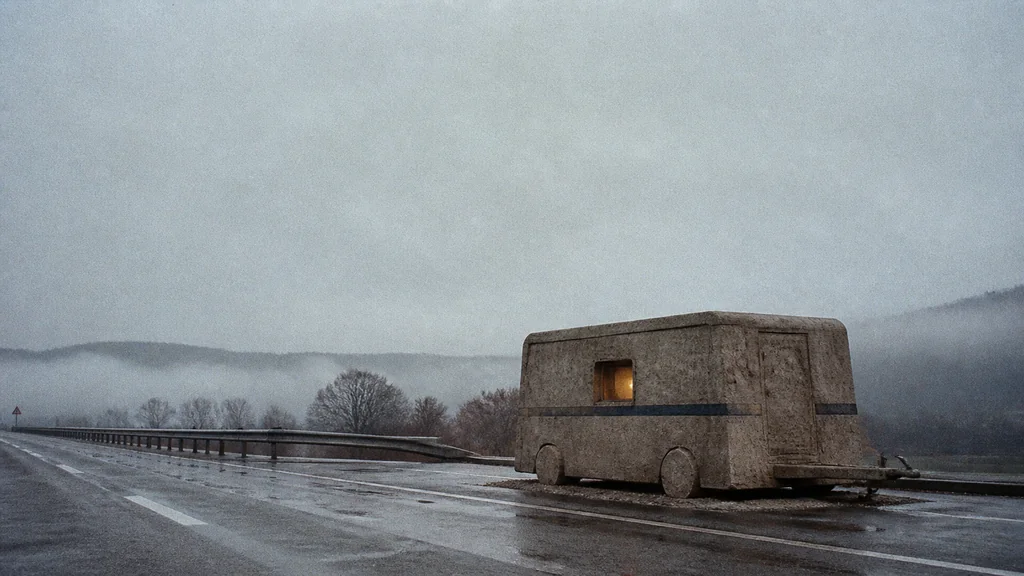
Europe’s temporary border checks settle into the landscape.
Kompożizzjoni tal-immaġni · tobriefEvery working morning, more than 200,000 people cross into Luxembourg from France, Belgium and Germany to get to work (STATEC). On the Trier-Wasserbillig route, commuters pass close to the village where five governments signed the 1985 agreement that built Europe’s passport-free travel area. Germany’s decision to keep controls on all nine of its land borders until mid-March 2027 means that promise is being suspended again, only a few kilometres from where it was first put on paper.
German Interior Minister Alexander Dobrindt notified the European Commission on 18 August, pointing to irregular migration and what Berlin describes as pressure on the EU’s external borders (Yahoo/Reuters, European Commission). The checks cover every German land frontier: Austria, France, Belgium, the Netherlands, Luxembourg, Denmark, Switzerland, Czechia and Poland. They have been in place since September 2024. They affect roads, trains and coaches. This is not about visas. It is about the everyday freedom of movement that Schengen was meant to make unremarkable.
Eight governments, one pattern
Germany is not an outlier. Eight Schengen states now have internal border controls in place: Austria, France, Germany, Italy, the Netherlands, Norway, Poland and Sweden (European Commission). Austria has renewed checks continuously since the 2015 migration crisis. France has kept them since the November 2015 attacks.
For Malta, Schengen is usually experienced through the airport gate, not a daily drive across a land frontier. But the principle is the same. A Maltese passport or ID card is supposed to carry the same practical freedom whether the traveller is flying out of Luqa or crossing by train from Germany into Luxembourg. When internal controls become normal among the larger states, small member states lose part of the legal certainty on which the whole system depends.
Poland shows how the logic feeds itself. Warsaw runs its own controls on the German and Lithuanian borders, extended until October 2026 (ddb24). Prime Minister Donald Tusk’s government does not defend Schengen in the language of open borders; it presents secure borders as one of the pillars of national security. Poland is both affected by Germany’s extension and part of the same political pattern. That makes resistance inside the Council, where EU governments negotiate legislation, very difficult. The states most likely to complain are often running checks of their own.
What the Commission can say, and what it can stop
The Schengen Borders Code, the EU regulation that governs passport-free travel, allows temporary internal controls only as a "last resort" against a serious threat to public order or internal security (EUR-Lex). A 2024 reform extended the maximum duration to two years in six-month blocks. That gave governments more room to keep controls alive while still calling them temporary.
The Court of Justice has already warned against that kind of manoeuvre. In cases linked to Austria’s long-running controls, it ruled that states cannot escape time limits by rolling forward the same threat through repeated renewals. "Temporary" has to retain legal meaning.
The Commission’s problem is that its tools move slowly. It can assess notifications, issue proportionality opinions and eventually launch infringement proceedings, the formal process used to force a member state to comply with EU law. It cannot stop a national decision on the first day. EU migration commissioner Magnus Brunner urged Germany in early August to phase out its checks. The Commission also recommended that France gradually lift its controls in a June 2026 opinion. Opinions are pressure, not orders.
Germany’s strongest argument is that the controls produce results. Bavarian border police reported 21,647 unauthorised entries detected and 1,068 smugglers arrested between September 2024 and July 2026 (Presseportal/Bundespolizei). Those numbers matter. They do not, by themselves, prove that the controls are proportionate.
Fewer crossings at checkpoints may mean people are changing routes. They may reflect agreements further upstream, or changes in asylum policy, rather than the checkpoints themselves. A fall in detections can be used to argue both ways: that controls are working, or that they are no longer needed.
The Schengen Borders Code still says internal controls must be exceptional. Eight governments are treating them as ordinary. Unless the Commission uses infringement proceedings to test the Court of Justice’s own warning that "temporary" must mean something, Schengen’s exception will keep becoming routine by renewal. The cost will be carried by commuters, hauliers and border towns first. But the signal reaches every member state, including Malta: one of the EU’s most practical freedoms is being narrowed not by treaty change, but by habit.
Details about this article
- Model:
- claude-opus-4-6
- Generated:
- 8/19/2026, 1:46:28 AM
- Pipeline run:
- eu_pipeline_20260819_005007
- Watermark:
- SynthID (Google's invisible watermark)
- Human review:
- None before publication