Estonia’s €1.2 Billion Defence Gap
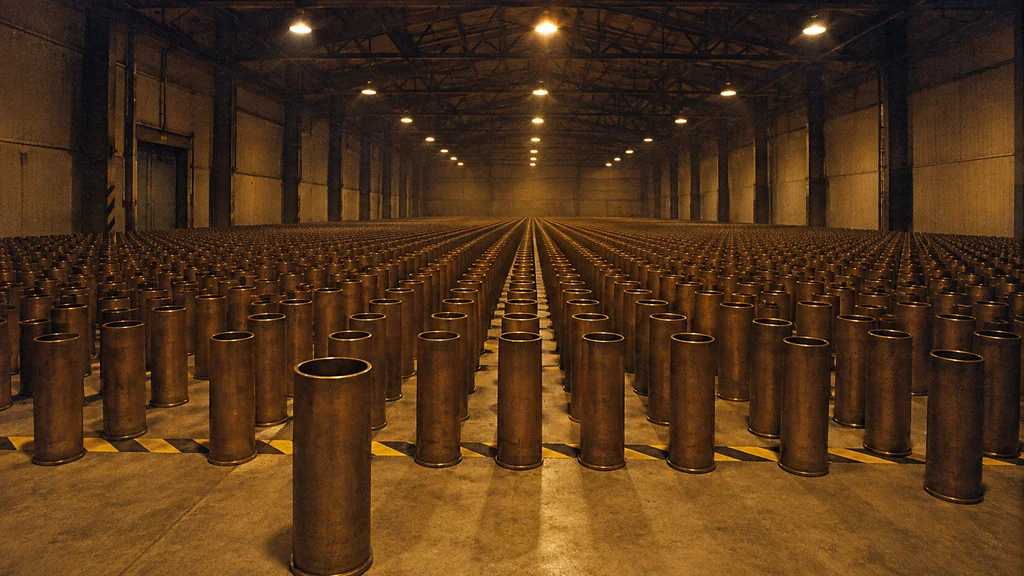
Estonia can count the casings, but not prove what arrived.
Kompożizzjoni tal-immaġni · tobriefHanno Pevkur left Estonia's defence ministry this week after two procurement failures landed on the same uncomfortable point: a frontline EU state bordering Russia could not clearly show where key defence money had gone. Estonia's national auditors say the records cannot be trusted. For Malta, where EU funds and national administration often meet inside small ministries and agencies, the lesson is familiar enough. Brussels may provide the money or the political cover, but the proof still has to be kept at home.
As To Brief reported when Pevkur first announced his departure, the scandal began with advance payments and weak accountability in urgent defence contracts. The fuller picture involves two separate failures. Taken together, they are more damaging than either would have been on its own.
The ammunition that didn't arrive
Estonia's Centre for Defence Investments, known as RKIK, is the state agency responsible for military procurement. It contracted Datasel S.R.L., an Italy-registered company linked to India's Neco Defence Munitions, to supply artillery ammunition for Ukraine. The company had no visible previous record in selling this kind of ammunition (ERR News, Euractiv).
Estonia paid large sums in advance. The ammunition either did not reach Ukraine or was rejected as incomplete or below standard (Breaking Defense). Auditors looked at €72.1 million in supplier advances and found problems with €71.6 million of it. The largest problematic supplier had received €59.8 million (Riigikontroll).
Datasel rejects Estonia's version. It says it invoiced €58 million for material supplied and that Estonia ended the contract too early (ERR News). The dispute is now in arbitration. The public record still does not establish whether the goods were never delivered, delivered but substandard, or rejected without a solid contractual basis. If Estonia fails to recover the money, around €70 million will fall on the Estonian state budget (Kyiv Independent).
Responsibility is still being fought over. Pevkur says a minister sets policy but does not choose suppliers. Former RKIK chief Magnus-Valdemar Saar says major decisions had approval from ministry leadership (ERR). No public document explains why Datasel was judged to be an acceptable supplier for such a contract.
The inventory no one can verify
The second failure is separate, but it makes the first harder to dismiss as a one-off. Estonia's National Audit Office, Riigikontroll, said it could not verify the correctness of €1.2 billion in defence inventory balances. The Defence Forces' stock accounting did not reliably show which items, quantities and values were recorded, or which had been left out without justification (ERR News, Riigikontroll).
This does not mean €1.2 billion in military equipment disappeared. It means auditors could not confirm that the books matched reality. Once that happens, every other claim about readiness, supplies and spending becomes harder to believe.
Estonia has built much of its European authority on support for Ukraine and on the seriousness of the EU's eastern flank. Yet it could not show that one urgent ammunition supply chain was properly controlled, or that its own defence stocks were auditable.
EU money, national proof
The scandal matters beyond Estonia because EU defence money still runs through national systems. National ministries choose suppliers, verify deliveries and keep the records. Brussels does not select contractors or inspect warehouses.
The European Peace Facility, an off-budget fund managed by the Council where member-state governments sit, can reimburse countries for weapons donated to Ukraine or for procurement carried out on Ukraine's behalf (Council). According to ERR News, the Commission is examining whether Estonia must return EPF-linked money over the failed ammunition deal. Estonia also has a €2.34 billion agreement under SAFE, the EU's new defence loan instrument, with a first €351.6 million payment already disbursed (European Commission DG DEFIS).
Both schemes leave the difficult work at national level. If a supplier fails, the contracting state must recover the money through its own courts and procedures. Czechia's ammunition initiative offers a useful contrast: Prague's model places donor governments inside the verification chain, and donor auditors have not found the corruption that critics predicted (CT24). Speed can work when the paperwork, inspection and political accountability move with the money.
Estonia's case does not prove that EU defence procurement is corrupt. It shows the weak point in Europe's largest new spending commitment. Who selected the supplier? What checks were carried out? What arrived? Who accepted it? Those questions were still unanswered when auditors found that almost all the money paid upfront was problematic, after the minister had already resigned. The Commission and member states need those answers before more EU-backed defence money is pushed through the same national systems.
Details about this article
- Model:
- claude-opus-4-6
- Generated:
- 9/4/2026, 6:36:40 AM
- Pipeline run:
- eu_pipeline_20260904_005006
- Watermark:
- SynthID (Google's invisible watermark)
- Human review:
- None before publication