EU parcel duty shifts the trade
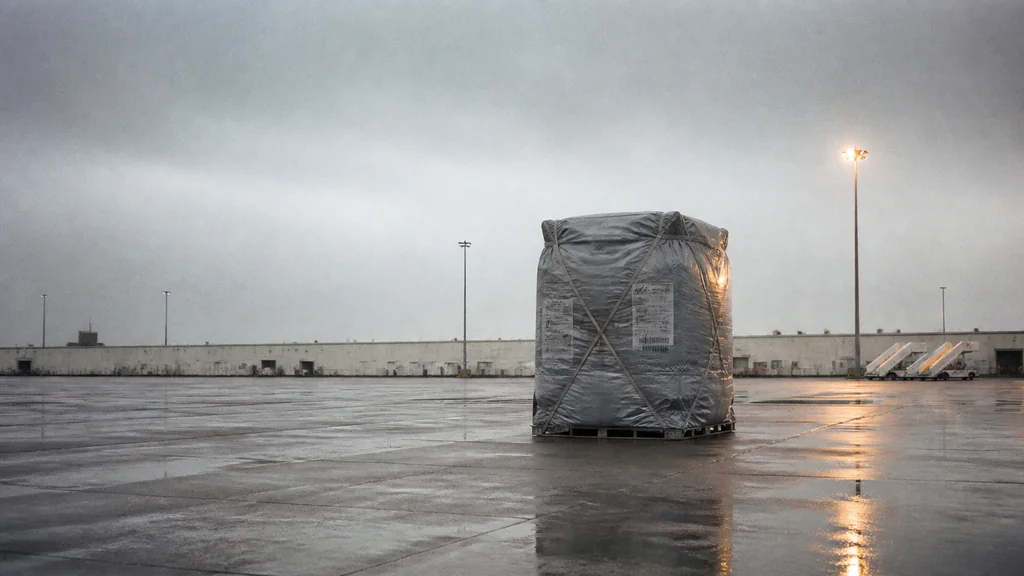
Fewer parcels cross the border, while the goods find another form.
Kompożizzjoni tal-immaġni · tobriefSlovenia's customs authority processed 8,955 low-value import shipments in July, roughly 40% fewer than in June (24ur). Belgium, a much larger logistics gateway, saw almost the same fall: e-commerce parcels through Liège Airport dropped 41% month on month, while customs declarations in the Liège zone were down 67% compared with June (RTBF, La Libre). These are among the first solid figures showing what changed after the EU began charging a flat duty on cheap imports.
The rule is straightforward, which is why it bites. Since 1 July, every parcel worth up to €150 sent from outside the EU to a buyer inside the bloc carries a flat €3 customs duty per product category — in practice, per type of item in the box (EUR-Lex, Ship24). Five identical T-shirts mean one charge. A box containing a phone case, a charger and sunglasses means three (CEC Spain). The duty comes on top of import VAT, the sales tax already due when goods enter the EU, and replaces the old exemption that allowed these low-value goods to enter duty-free.
For Maltese buyers used to ordering small items from Shein, Temu or AliExpress, this is EU customs policy turning up directly at the doorstep. It is also another example of Brussels treating e-commerce as domestic economic policy, not as a distant border issue. The measure is meant to run for two years while the EU builds a broader customs data system (EUR-Lex), as we covered when the duty and France's separate environmental surcharge came into force (To Brief).
Fewer parcels, not necessarily fewer goods
Belgium's figures make the story less tidy. While small e-commerce parcels fell sharply at Liège, total cargo tonnage rose 4%. Shipments valued above €150 increased 10% (Breakbulk News, L'Avenir). Fewer cheap parcels crossed the EU border, but more goods appear to have entered in other ways.
One likely mechanism is bundling. Sellers can group orders into larger consignments, clear customs once, and then split the goods for final delivery inside the EU. Another is warehousing: platforms such as Shein and Temu can move stock into European warehouses, so the last delivery to the consumer becomes an intra-EU shipment and disappears from these customs counts (Business Insider Polska).
That matters for Malta because the island sits at the end of these distribution chains. A parcel that once arrived as a direct low-value import may now come through a continental warehouse before reaching a Maltese address. For the buyer, the difference may be invisible except in price and delivery time. For customs data, it changes the whole category.
Polish users, however, seem to have pulled back. Temu's Polish user base fell from 16.68 million in June to 13.6 million in July, a drop of more than 20%. AliExpress lost more than 15% (RMF24, Puls Biznesu). These are audience figures, not transaction records, but they suggest some of the disruption at the border reflects a real change in demand. Germany, the EU's largest consumer market, has not published comparable data.
A flat fee that hits cheapest purchases hardest
Belgium collected €42.5 million from the new duty in July alone (RTL, L'Avenir). EU-based retailers are the clearest winners. The old exemption let non-EU sellers bring goods in duty-free while European competitors carried the full weight of tax, compliance and product-safety rules. That gap is now narrower.
The losers are buyers of the cheapest goods. On a €5 item, a €3 duty adds more than half the price before VAT and delivery are considered. Shein has already indicated that it will raise prices in Europe (Cinco Días). Because the charge is flat rather than based on value, it falls hardest on the smallest purchases — the sort of low-cost orders that make these platforms attractive in the first place.
Large platforms still have room to move. Shein and Temu can stock European warehouses and turn dutiable imports into duty-free deliveries within the EU. A small cross-border merchant is far less able to absorb that cost or redesign its logistics (DHL). The policy reduces one advantage non-EU sellers enjoyed, but it may also strengthen the platforms big enough to work around it.
The first month shows that the duty changed how goods cross the EU border. It does not yet show that demand has collapsed. To answer that, customs declarations are not enough. The missing evidence is in platform transaction records, carrier volumes and consumer spending data — figures that customs authorities, carriers and platforms have, but have not yet released.
Details about this article
- Model:
- claude-opus-4-6
- Generated:
- 8/17/2026, 2:03:42 AM
- Pipeline run:
- eu_pipeline_20260817_005006
- Watermark:
- SynthID (Google's invisible watermark)
- Human review:
- None before publication