EU’s €3 Duty Cuts Temu Orders
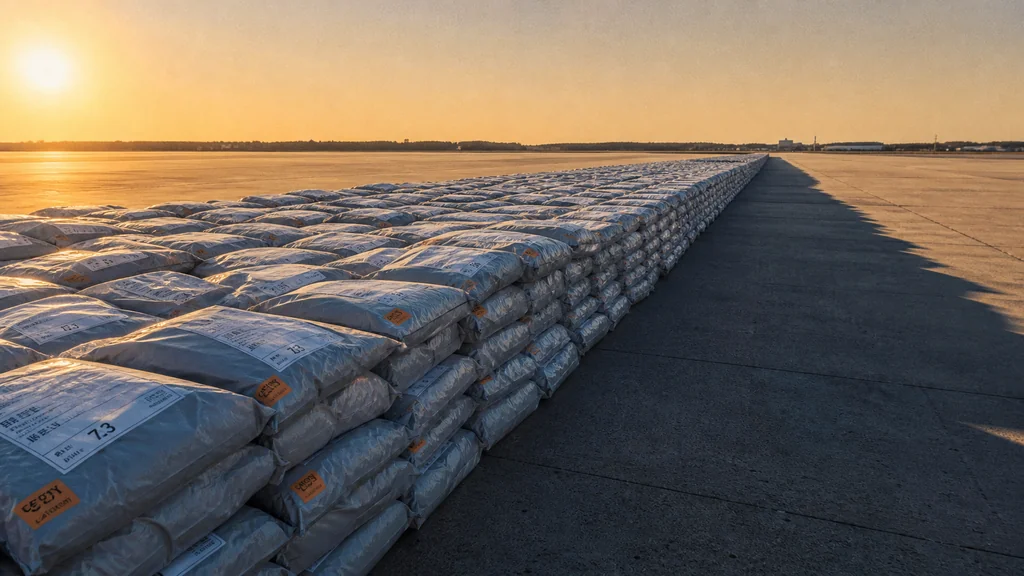
Europe’s parcel stream consolidates, but the goods keep crossing.
Kompożizzjoni tal-immaġni · tobriefFrench spending on Temu fell 32% in value and 50% in volume between June and July, the first month after the EU changed the customs treatment of cheap parcels sent from outside the bloc. Shein was hit less hard, down 16% in value and 15% in volume. The figures come from Joko, a purchase-tracking app that monitors 1.5 million French consumers (Le Figaro). Temu’s decline had already begun before the duty came in, so the charge looks more like an accelerant than the whole explanation (E-commerce Nation).
France shows what shoppers did. Customs data from at least six EU countries shows what changed on the other side of the transaction: the business model built on millions of low-value parcels is being pushed towards consolidation.
What the charge actually does
Until 1 July, parcels worth up to €150 sent directly to EU buyers from outside the bloc entered without customs duty. That exemption has now gone. The EU charges €3 for each product category inside a low-value parcel (Council Regulation (EU) 2026/382, HKTDC).
The charge is not per parcel. Five identical T-shirts from one seller count as one category, so the duty is €3. A T-shirt, a phone case and a watch count as three categories, so the duty is €9. This comes on top of VAT, the sales tax that has applied to these imports since the EU closed a separate exemption in 2021 (Ship24, CEC Spain).
That design hits mixed baskets hardest, which is exactly the kind of impulse shopping Temu and AliExpress encourage. Shein, selling mainly clothing, naturally generates orders with fewer categories. That probably helps explain why its sales held up better, though none of the cited data isolates the cause cleanly.
Finland’s customs data shows how quickly both buyers and sellers adjusted. Chargeable item categories inside parcels dropped 66.5% month-on-month, while actual shipments fell only about 20% (Yrittäjät, Aamuset). People did not simply stop ordering from China. They started grouping purchases in ways that reduced the number of chargeable categories per parcel.
For Maltese consumers, the mechanism matters. This is not a blanket ban on cheap online shopping, nor a simple price rise at checkout. It is a customs lever that makes the old habit of filling a basket with unrelated €2 and €3 items less attractive.
From parcels to pallets at Liège
The logistics data points in the same direction. At Belgium’s Liège Airport, one of Europe’s busiest e-commerce cargo hubs, parcel flows fell 41% from June and customs declarations dropped 67% (RTBF, Aviation Business News). Yet total cargo tonnage rose 4% year-on-year, and shipments valued above €150 grew 10% (Breakbulk News).
The goods are still coming. They are arriving more often as larger consolidated shipments, rather than as millions of individual parcels moving straight to doorsteps.
Platforms are adapting quickly. AliExpress is promoting bundle deals to reduce chargeable categories per order. Temu and Shein are steering shoppers towards "EU warehouse" options, which avoid the charge because goods already inside the bloc are not being imported again when resold (Business Insider Polska).
That distinction will be familiar to anyone in Malta who has watched EU rules become local market structure almost overnight. Whether the parcel lands in Ħal Luqa as a direct import or has already entered through a warehouse elsewhere in the EU can change what the buyer pays.
When sellers do not collect the duty at checkout, buyers face the charge at delivery: €3 per category, plus a separate courier handling fee. That layering of small costs has already drawn complaints in Ireland (Extra.ie).
Who gains, who pays, what's next
The immediate losers are price-sensitive consumers who relied on cheap mixed-category orders, and the platforms built around that pattern. European retailers gain as the old price advantage narrows. Belgium reportedly collected €42.5 million in new customs revenue from the charge in July alone, though no official methodology was published (L’Avenir). Lithuanian customs gave the necessary warning: one month is too early to know whether this is a lasting shift (LRT).
The duty has made the direct small-parcel route visibly more expensive. The test now falls to European customs authorities: whether they can stop the same goods from being routed through EU warehouses, or whether the tariff barrier simply becomes another logistics workaround.
Details about this article
- Model:
- claude-opus-4-6
- Generated:
- 8/22/2026, 2:03:58 AM
- Pipeline run:
- eu_pipeline_20260822_005006
- Watermark:
- SynthID (Google's invisible watermark)
- Human review:
- None before publication