French Pay Ranges Await Parliament
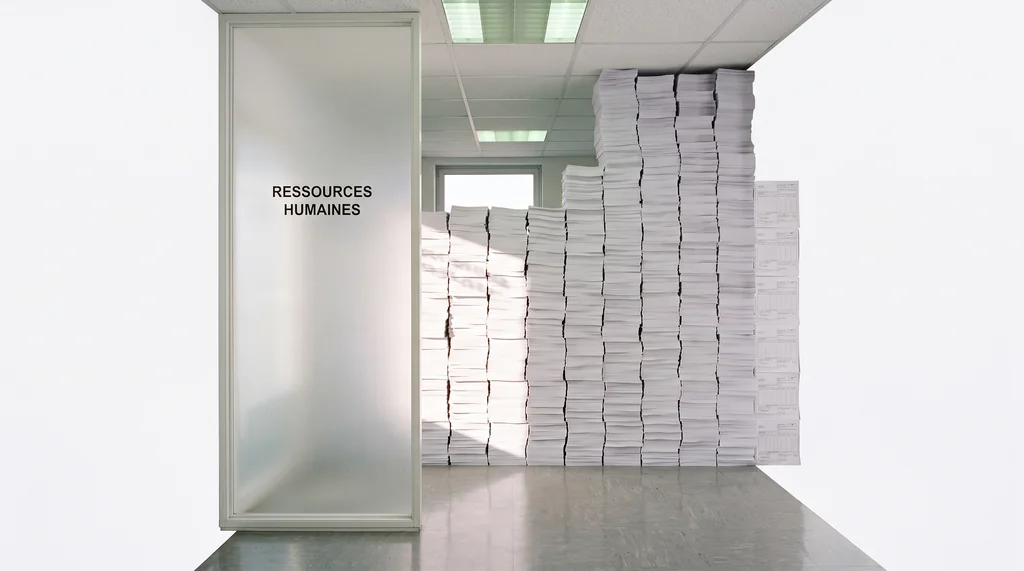
France guarantees equal pay while the evidence remains stubbornly blank.
Kompożizzjoni tal-immaġni · tobriefFrench jobseekers will have to wait before they can see a salary range before applying for a job. Workers in France still cannot ask their employer for a breakdown, by sex, of what people in comparable posts are paid. Labour minister Jean-Pierre Farandou said on 25 August that the bill bringing the EU Pay Transparency Directive into French law will go before the Council of Ministers, France's weekly cabinet meeting for approving draft laws, on 9 September 2026. That is almost three months after France missed the EU's 7 June deadline (Boursorama/AFP, Les Echos).
The point is not that France has no equal pay law. It does. The gap is in the machinery. Workers may have a legal right to equal pay, but without access to salary information they often cannot know whether that right is being breached until a dispute has already reached court.
What French law covers, and where it goes quiet
France is not building this system from zero. Employers must guarantee equal pay for equal work. Companies with at least 50 employees already publish an annual professional equality index, scored out of 100, with corrective duties when the score falls below 75 (Éditions Tissot, Legifrance).
Workers can also challenge pay discrimination in court. French law eases part of the burden of proof: the claimant must present facts suggesting discrimination, after which the employer has to justify the difference (Service-Public).
What is missing is the information that makes those rights usable. Employers do not have to show applicants a salary range. They are not banned from asking candidates what they currently earn. Employees do not have a general right to request average pay data, broken down by sex, for comparable roles (Ogletree Deakins France, Entreprendre.Service-Public). The right exists, but the evidence is hard to reach.
What the directive would change
The EU directive, agreed by member states in 2023, changes what workers can demand at two moments: before hiring and once they are inside the workplace (Directive (EU) 2023/970).
Before recruitment, employers must disclose a pay range for the advertised post. They also cannot ask candidates about their salary history. That matters because pay would be anchored to the value of the job, rather than to what the worker was previously earning (European Commission).
Inside the workplace, any employee can request aggregated pay data, broken down by sex, for people doing equal work or work of equal value. This does not mean access to named colleagues' payslips. It means category-level averages.
If those figures show a gap of at least 5% in any worker category, and the employer cannot justify it objectively, a joint pay assessment becomes mandatory. Management must then sit down with employee representatives, identify the causes and agree corrective measures (Dairia Avocats).
The French draft may go beyond the EU minimum by applying some duties from 50 employees, below the directive's reporting floor of 100 workers. Unions welcomed the lower threshold, but criticised slower calculation cycles for smaller firms (TPE Actu).
Who is exposed, and who can act
The missed deadline does not mean every French employer became non-compliant on 8 June. EU directives usually need national legislation before they bind private companies. Until France passes its law, the new transparency duties cannot be enforced directly against private employers (Morgan Lewis, Noerr).
The legal risk is on the French state. The European Commission can take France to the EU Court of Justice for missing the deadline and ask for financial penalties in the same case. It used that route in July 2026 against France, Ireland, Spain and the Netherlands over late transposition of the NIS2 cybersecurity directive (European Commission).
The process now moves through Paris. Farandou presents the bill to cabinet on 9 September. If approved, it goes to Parliament, where both the Assemblée nationale and the Sénat must pass it. Only after enactment will a French employee be able to invoke the new information right against a private employer. Brussels can punish France for delay, but it cannot directly force a French company to publish a salary range.
For Malta, the lesson is familiar. EU social rules are often treated as Brussels policy until they land in domestic systems: in HR departments, tribunals, collective agreements and small workplaces where everyone knows who earns what, but not always on paper. Transparency law only bites when workers know the right exists, job categories are classified honestly, and enforcement bodies have the capacity to act.
Germany's existing pay transparency law shows the weakness. According to the IAB, Germany's federal labour-market research institute, only 4% of eligible workers ever used its information right. Researchers found no measurable effect on pay inequality in covered firms (IAB-Forum).
France's delay has not removed the right. It has delayed the evidence workers need to test whether that right has any practical meaning.
Details about this article
- Model:
- claude-opus-4-6
- Generated:
- 8/26/2026, 1:50:25 AM
- Pipeline run:
- eu_pipeline_20260826_005007
- Watermark:
- SynthID (Google's invisible watermark)
- Human review:
- None before publication