Lithuania Clears Land for Klaipeda
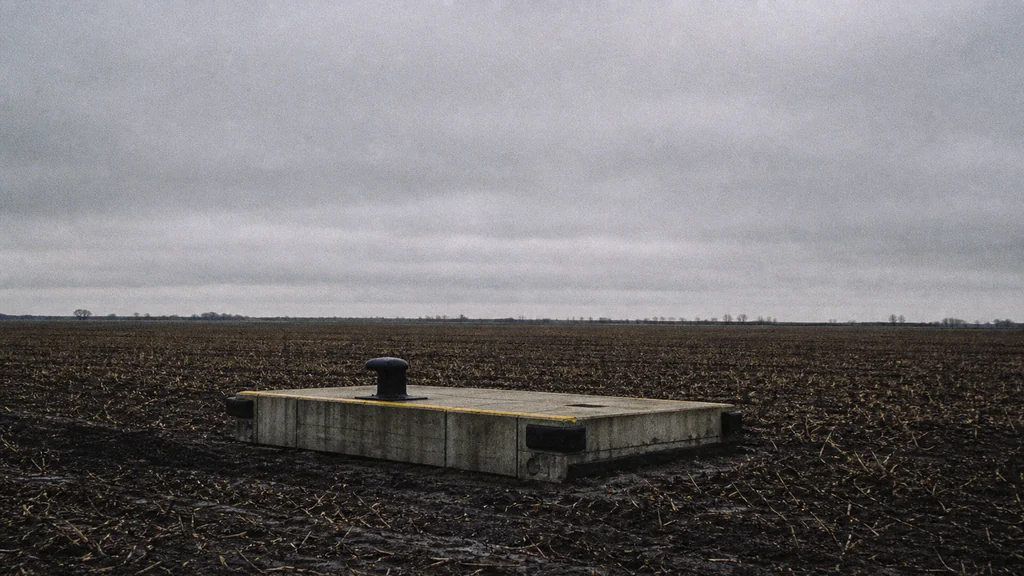
A maritime endpoint stands ready in a landscape where the connections remain missing.
Kompożizzjoni tal-immaġni · tobriefLithuania’s parliament has opened the way for roughly 100 hectares of new port territory south of Klaipeda, the country’s only seaport. The Seimas approved the expansion last week for cargo, logistics, green energy and what officials call military mobility: infrastructure built for business, but usable by armed forces if a crisis comes (lrytas, Atvira Klaipeda). The commercial case is clear enough. The defence case is plausible, but still missing the kind of costed logistics plan that would make it more than a useful label.
For Malta, the idea is familiar in another form. A port is never just a port when a small state’s geography carries strategic value. Klaipeda sits on NATO’s eastern flank, on a narrow Baltic coastline where fuel pipelines, rail links and roads connecting Lithuania, Latvia and Estonia to the rest of Europe remain weak or unfinished. A larger harbour helps NATO only if heavy equipment can leave the quay and move inland quickly. Those connections are not yet ready. The project is therefore a test of whether the EU’s new appetite for dual-use investment creates real military capability, or whether commercial infrastructure simply learns to speak defence.
What the expansion delivers
The southern extension would add around 1.3 km of deepwater quays and dredged channels towards the Curonian Lagoon (LRT). Port chief Algis Latakas says Klaipeda has run out of land for major investors. He says 14 global investors have shown preliminary interest, though none has yet signed a binding commitment (LRT).
Private capital would move first. Investors would put in at least €300 million and lease territory for up to 50 years, while the port authority would pay roughly €600 million for basic infrastructure (Atvira Klaipeda). The full public and private bill is estimated at €1.4 billion (lrytas). Lithuania’s Transport Ministry says the expansion would generate about €7 billion in economic benefit over 25 years, but it has not published the method behind that figure.
The security label and its missing pieces
Lithuanian officials have linked the project to defence. The new government programme reportedly places Klaipeda alongside Rail Baltica and military-mobility works as national priorities. The EU and the European Investment Bank now treat dual-use port infrastructure as eligible for defence-related financing, which makes the label financially useful (EIB).
Lithuania’s funded military infrastructure, however, is elsewhere. The EIB has completed a €290 million financing package for the Rudninkai military base south of Vilnius, which is designed to permanently host a German Bundeswehr brigade (EIB, Klaipeda.diena). Germany’s defence ministry has confirmed the brigade’s target of full readiness by 2027 (BMVg). A permanent heavy brigade needs a maritime entry point for vehicles, ammunition and supplies. Klaipeda is the only credible candidate. The logic holds, but no public document ties the port expansion to a specific German-Lithuanian logistics requirement.
The inland gaps show the same problem. NATO’s CEPS fuel pipeline network, the alliance system for moving jet fuel and diesel across Europe, still effectively stops in Germany. Poland is building around 300 km of new pipelines to extend it eastwards, but the Baltic states remain outside the network (Defence24, WP). Rail Baltica, the European-gauge railway meant to connect the Baltic states to Poland, is facing delays on the Polish Białystok-Ełk section (Suwalki24) and slow progress in Latvia (Garaza.lv). Any reinforcement heading for Lithuania would also pass through the Suwalki corridor, the narrow land bridge between Poland and Lithuania squeezed between Belarus and Russia’s Kaliningrad exclave. In a crisis, fuel and heavy equipment would still depend on tankers, rail cars and trucks.
Lithuania is building the endpoint before the corridor behind it is complete. Klaipeda’s commercial case can stand on its own: the port is close to capacity, land for new terminals is limited, and investor interest appears real. The military-mobility claim remains a statement of potential. The documents that would make it testable — an independent demand study, a military-use concept, published concession terms — have not surfaced. Klaipeda’s expansion is a major commercial bet, wrapped in a security narrative that the eastern flank makes easy to sell and harder to verify.
Details about this article
- Model:
- claude-opus-4-6
- Generated:
- 7/15/2026, 2:28:51 AM
- Pipeline run:
- eu_pipeline_20260715_005006
- Watermark:
- SynthID (Google's invisible watermark)
- Human review:
- None before publication