Paris Pact Hits Production Wall
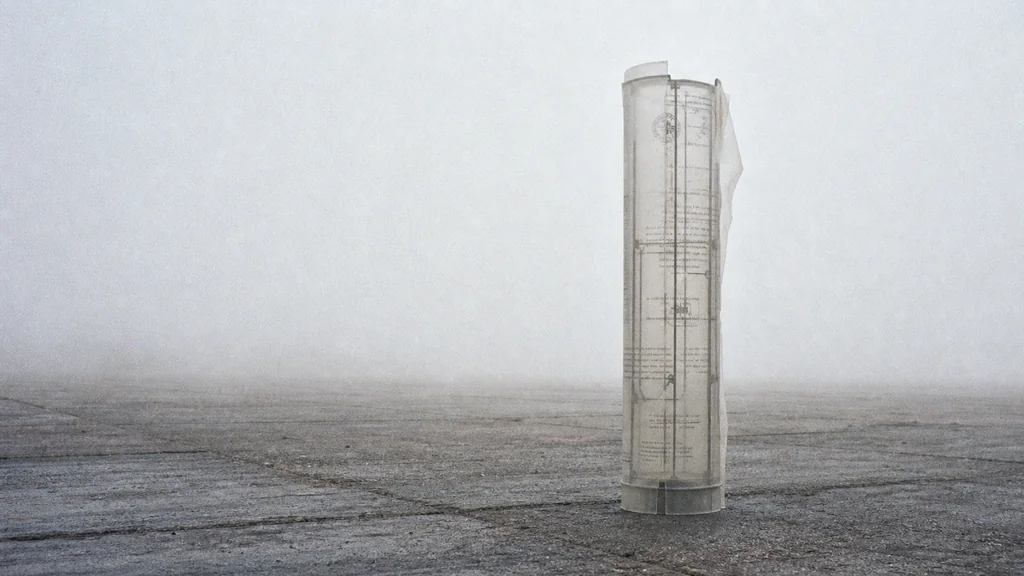
The European air-defense architecture remains a blueprint of vellum in a world of steel.
Kompożizzjoni tal-immaġni · tobriefNine European governments and Ukraine met in Paris on 13 July and signed a joint declaration setting up an anti-ballistic missile coalition (NATO, French government). The declaration lists the usual serious-sounding ingredients: common requirements, joint technical groups, a governance structure and a roadmap. What it does not list is more revealing: no budget, no signed industrial contract, no delivery schedule and no target for producing interceptors.
The same participants said the Multinational Force for Ukraine, a reassurance and training arrangement involving troops from several coalition states, would hold exercises in neighbouring countries in the coming months. French reporting pointed to autumn, but no public source named the host state, the units involved or the chain of command (TF1 Info).
For Malta, watching this from outside NATO but inside the EU, the distinction matters. European security announcements often arrive wrapped in institutional language. The test is whether they turn into production, financing and legally binding commitments. On air defence, Europe’s problem is not a shortage of meetings. It is money, contracts, technology control and the slow production of interceptors.
A Real Planning Structure, Not a Procurement Order
The joint declaration creates committees and a roadmap. German outlets noted that no reliable timetable or concrete delivery quantities had been made public (ZDF, Tagesschau).
France used the coalition launch to announce something more tangible with Kyiv: Ukraine intends to order four SAMP/T NG systems, the Franco-Italian air-defence platform built by Eurosam, a Thales-MBDA consortium. The deal also envisages licensed production in Ukraine of Aster 30 interceptor missiles (Ukrainian presidency, Reuters). That Franco-Ukrainian roadmap is real. It is also bilateral. It does not show that the ten-country coalition has placed an order.
The deeper European problem is volume. Germany is building a Patriot GEM-T missile line, but Reuters via Berliner Zeitung reports that the first German-made missiles are expected no earlier than early 2027. Talks on the more advanced PAC-3 have stalled. SAMP/T NG itself is projected for 2027; the next-generation IRIS-T SLX is not expected until 2029 (DW).
Poland shows the harder wall: control over technology. Polish experts cited by Money.pl described licensed Patriot production in Ukraine as technologically and legally unlikely. Warsaw’s own push focuses on servicing and components, not full missile manufacturing, because US companies and export authorities still control intellectual property and certification (Rzeczpospolita).
The Coalition Has No Treasury
No EU or NATO body can force these governments to pay, export or deploy. Each capital keeps control under its own constitutional rules (UK government). That is why the format appeals to some governments: it can move around the EU’s unanimity rule, where one state can block a foreign-policy decision. It is also why the format is weak. It has no shared budget, no enforcement power and no oversight mechanism.
The national messages show how limited the common ground remains. France presents Paris as a moment of European strategic awakening. Italy sent Defence Minister Guido Crosetto, not Prime Minister Giorgia Meloni; Corriere della Sera described her absence as a calculation to avoid overcommitting to a format she still sees as insufficiently concrete.
The Netherlands tied the coalition to more practical work: missile co-production and joint procurement of Stinger, AMRAAM and PAC-3 missiles. It also pointed to its existing Patriot deployment in Poland, protecting a logistics hub for Ukraine (Defensiekrant). Germany already has another preferred route, the 21-nation ESSI network built around Patriot, IRIS-T and Arrow systems. Paris is therefore one track among several, not the European answer by itself.
Coalitions of this kind can move faster than EU procedure. They cannot, on their own, buy missiles. As the Centre for European Reform argues, Europe still needs formal instruments if it wants to scale defence production across borders.
Paris has created a coordination layer. It has not created an air-defence system. The defence ministers and procurement chiefs of the nine signatory states now need to answer the questions that matter: who pays, when deliveries start, and how many interceptors will be produced. So far, they have given no figure for any of the three.
Details about this article
- Model:
- claude-opus-4-6
- Generated:
- 7/15/2026, 2:13:43 AM
- Pipeline run:
- eu_pipeline_20260715_005006
- Watermark:
- SynthID (Google's invisible watermark)
- Human review:
- None before publication