Digital euro free under Parliament draft
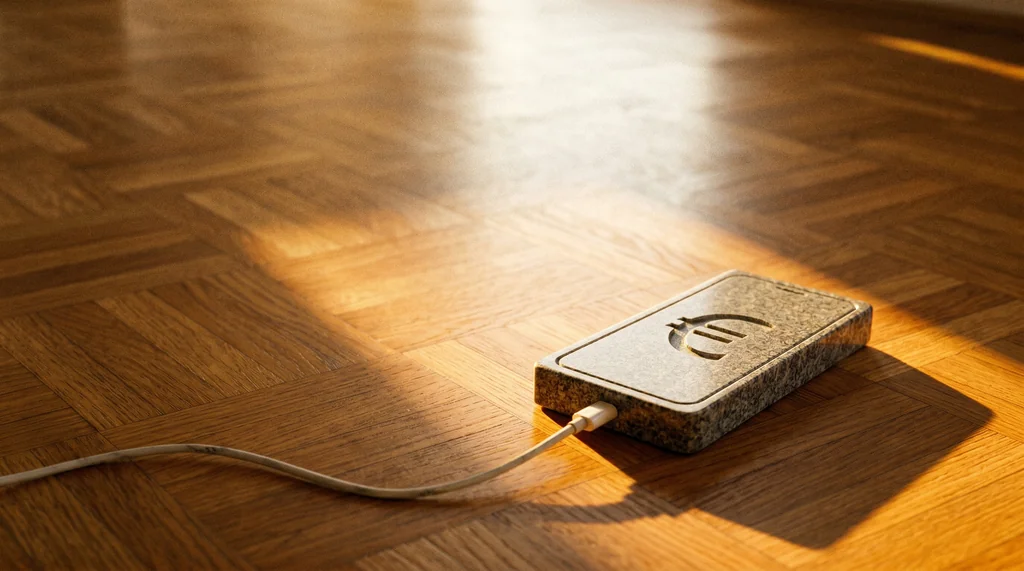
Europe seeks to anchor digital convenience in the heavy permanence of public sovereignty.
Kompożizzjoni tal-immaġni · tobriefDigital cash is the easy part of the pitch. Parliament’s reported draft would make basic digital euro services free, extend access beyond people with bank accounts, and limit automatic exclusion linked to third-country sanctions, according to Il Fatto Quotidiano. For Malta, this is not some distant Brussels experiment. Payments are daily infrastructure for households, small shops, banks, fintech firms and the wider services economy. Europe wants a public payment system that citizens trust, private firms distribute, and someone else ultimately finances.
The draft spells out the bargain behind the digital euro. The Commission’s proposal created the legal framework for a new public form of digital money, while Parliament’s procedure file shows the text is still being negotiated. The attraction is clear enough: more European control over a basic service that now relies heavily on banks, card schemes, digital wallets and networks often headquartered outside the EU.
Digital cash changes who controls the payment
Public money already exists in the form of cash. The digital euro would carry that same public backing into phones, cards and online checkout. The ECB keeps saying it would exist alongside cash in its national material (ECB Germany, ECB France). That promise matters in Malta, where cash still sits beside contactless cards, Revolut transfers and bank apps in ordinary life, from a corner shop to a festa collection.
The real shift is in distribution. Banks and payment firms would still open wallets, verify identities, handle customer support and connect merchants to the system. The central bank would issue the money, but the Commission’s proposal keeps private operators between the Eurosystem and the user.
That protects the banks’ customer relationship, while changing the power balance. Today, private networks shape much of the cost, access and user experience of digital payment. A public option gives Europe a fallback if those networks become too expensive, too exposed to foreign pressure, or too dominant for small markets to bargain with.
Free for users means paid somewhere else
The strongest promise to consumers is that basic service would be free. That could matter for people without bank accounts, people poorly served by commercial apps, and anyone needing a simple payment method that works across borders. But access only counts if it is practical. A legal right to a wallet means little if the real entry point is a smartphone, a smooth identity check and a provider willing to serve you.
Free service still costs money. Banks and payment firms would have to pay for technology, fraud controls, identity checks and support. Merchants may face integration costs. Public authorities may have to fund fallback access where private firms see no commercial return. The draft can make the wallet free at the front door, but the bill moves to banks, merchants, taxpayers or a compensation system.
That division decides who benefits. Consumers win if the wallet is easy to use, widely accepted and available when commercial systems fail. Merchants win if it gives them leverage against card fees and platform rules. Banks lose if they carry the operating burden while public money competes for customer balances.
Bank deposits are the money households and firms leave in bank accounts, and banks use them to finance lending. The Commission proposal allows holding limits so the digital euro remains mainly a payment tool. The ECB makes the same point in Lithuanian and Dutch material (ECB Lithuania, ECB Netherlands). If a public wallet became a savings account by another name, banks would have to work harder to keep deposits.
Higher bank funding costs, meaning the price banks pay to finance lending, can feed into more expensive credit for households and firms. In a market as small and concentrated as Malta’s, that cap is where consumer convenience meets the balance sheets of banks that still matter for mortgages, business loans and everyday liquidity.
Sovereignty depends on ordinary use
The sovereignty argument only works if people and shops actually use the system. The ECB’s work on the international role of the euro treats payments as part of Europe’s ability to run its own money system. The everyday test is simpler. Can someone pay rent, buy groceries or settle a small invoice without being forced back into the same private networks?
The sanctions language in the reported draft shows the point. Il Fatto Quotidiano says Parliament wants safeguards against automatic exclusion linked to third-country sanctions. The issue is whose law governs basic access to money inside Europe.
Privacy is the other test of trust. The Commission proposal promises strong safeguards and offline use. Offline matters because it can make a digital payment behave more like cash at the point of sale. Online payments will still involve identity and compliance checks, so the final rules need to show which data is seen, by whom, and for how long.
The digital euro could give Europe a public floor under digital payments. It could also become an expensive layer that citizens ignore if banks resent it, merchants find it clumsy or vulnerable users cannot reach it. Europe is selling digital cash as convenience. It will work only if the people with the least market power can use it without paying for it somewhere else.
Details about this article
- Model:
- gpt-5.5
- Generated:
- 6/15/2026, 2:38:29 AM
- Pipeline run:
- eu_pipeline_20260615_015007
- Watermark:
- SynthID (Google's invisible watermark)
- Human review:
- None before publication