Romania Dredges Danube for Nuclear Power
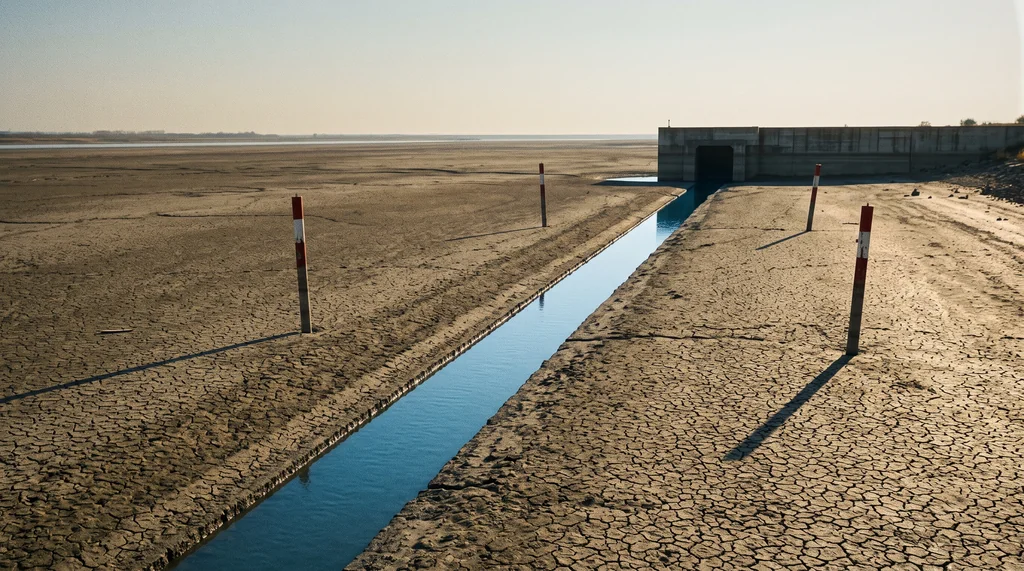
Romania bends a shrinking river to keep its reactors alive.
Kompożizzjoni tal-immaġni · tobriefRomania has had both nuclear reactors at Cernavodă out of service since mid-August. To bring them back, the state is now doing something unusually physical for an electricity crisis: blasting rock under the Danube and releasing reservoir water to push enough flow towards the plant's cooling intake.
The missing power is not marginal. Cernavodă normally provides 1.4 GW of steady, relatively cheap electricity, the kind of generation that runs through the night and anchors a national grid. When it disappears, the cost does not stay in Romania. It moves through import markets, industrial contracts and regional electricity prices, including the same Balkan and central European corridors Malta watches whenever energy security becomes a European, not just national, problem (World Nuclear Association).
How a river shuts down a reactor
Cernavodă supplies about a fifth of Romania's electricity (World Nuclear Association). The mechanism is simple enough. The reactor turns water into steam, the steam drives turbines, and the Danube cools that steam back into water so the cycle can start again. If the river falls too low for the intake pumps, the station cannot produce power. This is not a nuclear safety incident. It is a cooling problem.
Unit 1 was taken offline on 28 July. Unit 2 followed on 13 August, after the Danube's flow at Baziaș fell to roughly 1,350 m³/s, about a third of the usual August average (Agerpres, Digi24). Nuclearelectrica's Romeo Urjan told the BBC he did not expect a restart within ten days (BBC). Romanian reporting on 21 August said a restart before September looked unlikely (Recorder).
Romania had already tried emergency works. Underwater blasts and barges filled with rock raised the water level by about 8 cm, enough to keep Unit 2 running for another nine days before it too had to stop (HotNews). On 22 August, the emergency committee approved a further round: more dredging and extra releases from Olt reservoirs at 50 m³/s for five days (Agerpres, News.ro). That water is not free. Reservoir releases mean less water for irrigation or downstream hydro. Romania is buying time from the margins of its infrastructure, not ending the drought.
Who pays for the missing power
The lights stayed on, but the replacement power came at a price. On the first evening without nuclear generation, imports covered about 1,839 MW at peak, or 27.4% of consumption (Curs de Guvernare). On OPCOM, Romania's day-ahead exchange, where electricity is bought for delivery the next day, evening peak prices on 13 August passed 1,700 lei/MWh (Gândul). Romania also restarted a ~300 MW coal unit at Rovinari to reduce dependence on imports (Romania Insider).
Nuclearelectrica invoked force majeure, the legal argument that an extraordinary event prevents a company from honouring its contracts. It warned customers that it might not meet delivery obligations (ZF). The next risk sits with large industrial consumers. Romania's emergency rules allow the state to curb industrial demand and suspend exports if the system needs protection (Balkan Green Energy News).
The winners are those with power available to sell. Bulgarian and Hungarian traders sought 3,500–4,000 MW of cross-border capacity, meaning the right to move electricity through interconnectors, as Romanian and Hungarian nuclear output fell. Bulgaria's Kozloduy plant suddenly became one of the region's most valuable generators (Mediapool). On 17 August, regional day-ahead prices ranged from €153/MWh in Greece to €173/MWh in Romania and about €184/MWh in Hungary (Newmoney).
The same drought, different borders
Hungary's Paks plant is facing the same physics. MVM began reducing output on 27 July when its Danube gauge reached -106 cm. By 2 August, only one of eight turbogenerators was still running (MVM Paks, MVM Paks). Hungary's daily net import bill rose from about HUF 0.6 billion in late July to nearly HUF 4 billion by early August (Telex/G7). In France, Le Monde's analysis of EDF data found that environmental constraints peaked on 16 August, with 12.8 GW of nuclear capacity unavailable (Le Monde).
Each country found a workaround: dredging, coal restarts, reservoir releases, imports. Romania's coal restart now runs into its EU recovery-fund commitments to close those same plants. Bucharest has already told the European Commission it wants to delay those closures (HotNews). The Commission's Electricity Coordination Group said the wider system remained stable (European Commission).
That stability has a price. Europe's grid can absorb a climate shock of this kind, but it does so by paying more for imports, coal, gas and scarce interconnector space. For Malta, which knows what it means to depend on a narrow energy system and an interconnector when the margin tightens, the lesson is familiar: resilience is not the same as comfort. Every emergency fix draws on someone else's reservoir, coal allowance or export surplus.
Details about this article
- Model:
- claude-opus-4-6
- Generated:
- 8/23/2026, 1:55:26 AM
- Pipeline run:
- eu_pipeline_20260823_005006
- Watermark:
- SynthID (Google's invisible watermark)
- Human review:
- None before publication