Romania’s Wage Bill Meets EU Deadline
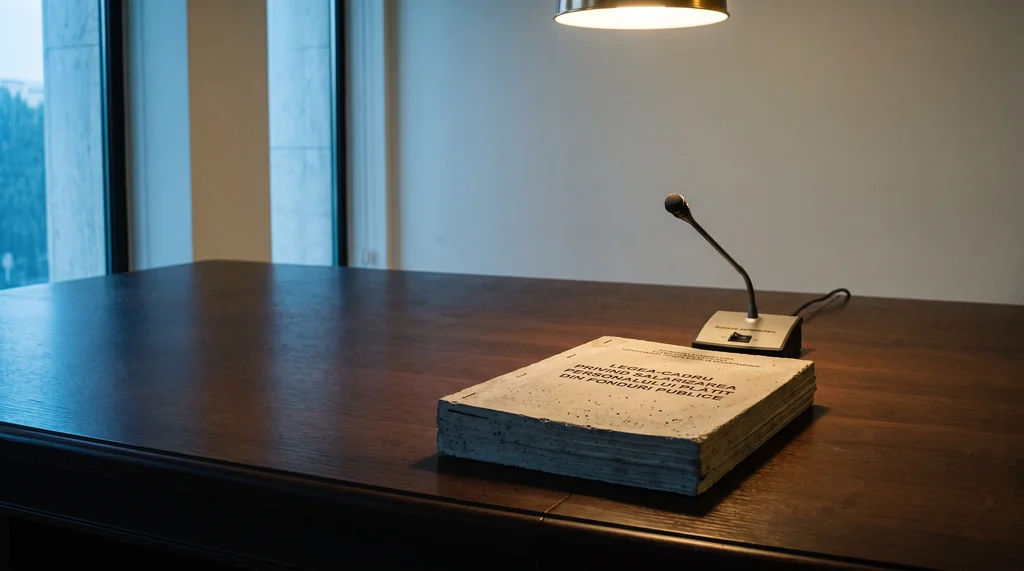
Romania’s new wage promise lands heavier than its strained budget can carry.
Kompożizzjoni tal-immaġni · tobriefRomania has six days to pass a public-sector wage law that Brussels can live with, or risk losing roughly €770 million in recovery-fund grants (Bursa, Romania Insider). The deadline is 31 August, and the issue is not a technical quarrel over pay scales. Bucharest is trying to make a permanent increase in state salaries fit inside a budget already carrying the EU’s largest deficit.
The money comes from the EU’s Recovery and Resilience Facility, the post-pandemic fund that pays out only when governments complete reforms and investments they had already agreed with Brussels (European Commission, EUR-Lex). Malta knows this mechanism well: once a reform is written into a national plan, it stops being a domestic promise and becomes the key to unlocking EU money. Romania promised a unified pay law. The Commission is now asking whether the draft law matches the country’s fiscal commitments.
The RON 4 Billion Gap
Romanian outlets cite an official Commission communication setting out three problems with the draft law (Gândul, Digi24). The main one is the annual cost. What began as a cautious scenario of about RON 8 billion a year has moved towards versions closer to RON 12 billion. Brussels wants the missing RON 4 billion covered before the law is adopted (Mediafax, RFI Romania).
There is another unresolved bill: Romania owes back pay to the judiciary and has not yet explained how it intends to settle it. For a country already under close EU fiscal monitoring, that matters because the Commission is looking at the full wage burden, not only the text of the new law.
Interim prime minister Ilie Bolojan said Brussels had not rejected the proposal but had "raised questions and asked for clarifications" (Agerpres). That is more than diplomatic wording. The Commission’s role here is to test whether Romania has delivered what it promised under its recovery plan, not to decide whether every salary coefficient is politically fair.
Why Permanent Spending Changes the Calculus
A wage increase is not like building a motorway. A road is paid for, delivered, and then maintained. Higher public-sector pay becomes a recurring cost every year, and future budgets start from that higher base. That is why the Commission is treating the RON 4 billion gap as a structural fiscal problem, not as a one-off accounting issue.
Romania has very little room to absorb that kind of permanent pressure. Eurostat data published in July put government debt at 60.1% of GDP (Agerpres, Actmedia). That figure activates a domestic rule blocking measures that increase total personnel or social-assistance spending.
The deficit has come down, from 9.3% of GDP in 2024 to 7.9% in 2025, but the Commission still expects it to stand at 5.8% in 2027 (HotNews). Romania remains under the EU’s excessive deficit procedure, the formal process used when a member state breaches the bloc’s fiscal rules. Brussels has suspended further steps only because it judged that Bucharest had taken enough corrective action so far (European Commission).
One possible offset is to extend a 10% health-insurance contribution on the part of pensions above RON 3,000, which is currently due to expire at the end of 2027 (Mediafax). Interim European investments minister Dragoș Pîslaru has stressed that this would be Romania’s own fiscal decision, not a tax order from the Commission (Digi24).
Who Pays for a Cheaper Law
If Romania passes a stricter version of the law, the immediate winners are the projects financed through the remaining €2.58 billion in final-request grants: hospitals, motorway segments and schools (Mediafax). Creditors and rating agencies would also welcome restraint. The Commission correspondence explicitly linked compensatory measures to rating-agency expectations (Gândul).
The cost would land elsewhere. Public-sector workers expecting larger raises would get a slower path. Pensioners could face an extended health levy. Pîslaru says no current income will fall, but capped bonuses and a lower reference value, cut from RON 4,100 to RON 4,000 at the Finance Ministry’s request, point to years of weaker pay growth once inflation is taken into account (DigiEconomic).
The threat from Brussels is not theoretical. On Romania’s third payment request, the Commission allowed €458.7 million to lapse permanently after reforms on special pensions and state-enterprise governance were not resolved in time (Agerpres, Romania Insider). Bucharest can protect the grant money by making the wage law cheaper, finding a durable offset, or pushing the adjustment onto pensioners and public workers through slower real pay growth. Those are the choices. The coalition has not yet agreed which one it can survive.
Details about this article
- Model:
- claude-opus-4-6
- Generated:
- 8/25/2026, 2:04:50 AM
- Pipeline run:
- eu_pipeline_20260825_005008
- Watermark:
- SynthID (Google's invisible watermark)
- Human review:
- None before publication