Romania’s Pay Deal Hits Debt Cap
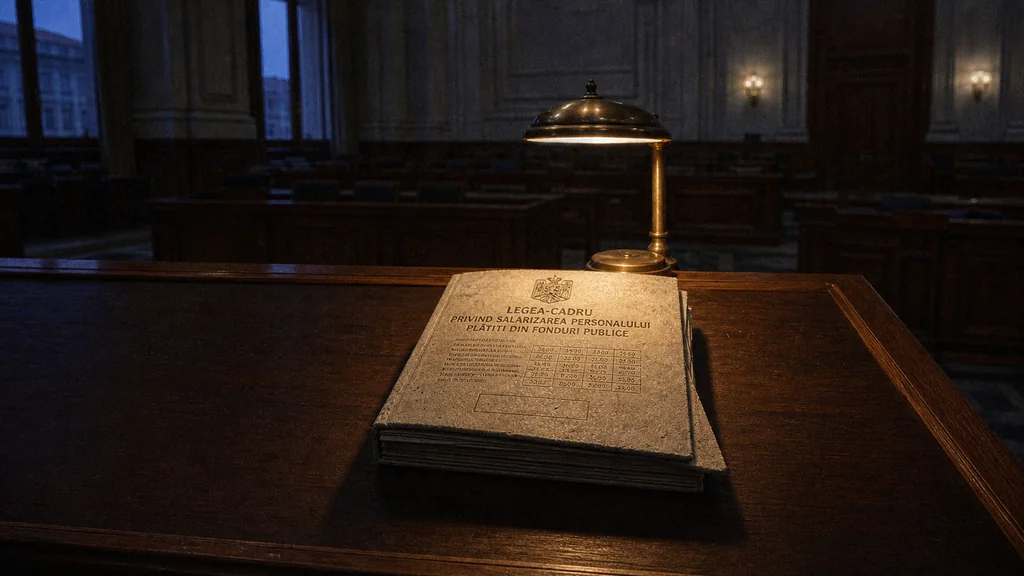
Romania’s wage law reaches Parliament heavier than its budget can carry.
Kompożizzjoni tal-immaġni · tobriefRomania has until 31 August to pass a new public-sector wage law linked to €770 million in EU recovery money (Digi24, Romania Insider). The European Commission has asked Bucharest to explain parts of an earlier draft, but it has not rejected the law (Agerpres). The sharper problem is domestic.
Finance Minister Alexandru Nazare said on 19 August that Romania’s public debt reached 60.1% of GDP in the first quarter (Eurostat). That is not just a political warning. Under Romania’s Fiscal-Budgetary Responsibility Law, once debt passes 60%, the government cannot approve measures that raise total wage or social spending (Agerpres). Bucharest is trying to write a pay rise that its own fiscal law may stop it from signing.
A cheaper draft, still possibly too expensive
The version sent to party leaders on 20 August cuts the reference value to 4,000 lei, down from 4,100 lei in the July draft (Adevărul, ZF). The reference value is the base figure multiplied by a job coefficient to calculate each salary. Cutting it is the quickest way to lower the cost of the whole public pay grid without reopening every post and grade.
The draft also limits bonuses, allowances and prizes to 20% of each budget authority’s total (Știrile ProTV). That matters because, as in many public administrations familiar to Maltese readers, the headline salary is only part of the story. Add-ons can push take-home pay well above the official wage. Employees in agencies where bonuses have quietly become part of normal income could lose out, even if their basic salary rises.
Labour Minister Dragoș Pîslaru says no income will fall and more than two-thirds of public employees will get a raise (G4Media). Nazare’s objection is that wages are not a one-year expense. Once granted, they return in every budget. He warned that anything above the agreed yearly ceiling of about 8 billion lei becomes a permanent obligation for the state (Digi24).
Media reports citing political sources say the scenarios discussed with Brussels cost 12 to 16 billion lei in 2027 (RFI România, Adevărul). If the final bill lands there, it overshoots the ceiling and leaves every future budget to absorb the difference. Infrastructure, health and public investment then compete with a wage bill that cannot easily be unwound.
High rates make the bill worse
Romania is already under the EU’s excessive deficit procedure, the corrective process for governments spending beyond the bloc’s fiscal limits (European Commission). That procedure restricts how fast state spending can grow.
Markets are adding their own pressure. Romania pays among the highest borrowing costs in the region, with 10-year yields around 6.7%–7.4% according to market data. Fitch is also reviewing the country’s BBB- rating under a negative outlook (SeeNews). A permanent wage increase funded at those rates is expensive twice over: the state pays more to borrow, while the salary obligation stays on the books.
Ten days, no owner
Pîslaru wants to send the law to Parliament for an extraordinary sitting around 25–26 August, with adoption before the end of the month. No party has formally endorsed the text. He said "final responsibility now lies with the parties and Parliament" (News.ro).
The €770 million is part of a wider €2.84 billion payment request Romania has already filed under the EU’s Recovery and Resilience Facility, the post-pandemic fund that releases money when reforms are delivered (Radio Romania). Missing the deadline would not automatically make the money disappear. The Commission can hold back the part it considers unproven and give a government time to correct it, as it did with Spain’s recent sixth recovery payment (EUR-Lex, RTVE).
Romania’s draft has to pass three tests at once. Brussels and lenders must believe the country can keep paying it. Coalition parties must accept a text they have not yet owned. And the government must adopt it before Romania’s own debt rules close the door. The EU money is still recoverable. The harder task is producing a wage bill the state is legally allowed to carry.
Details about this article
- Model:
- claude-opus-4-6
- Generated:
- 8/21/2026, 2:06:42 AM
- Pipeline run:
- eu_pipeline_20260821_005006
- Watermark:
- SynthID (Google's invisible watermark)
- Human review:
- None before publication