Slovakia Risks Russia Blacklist Lapse
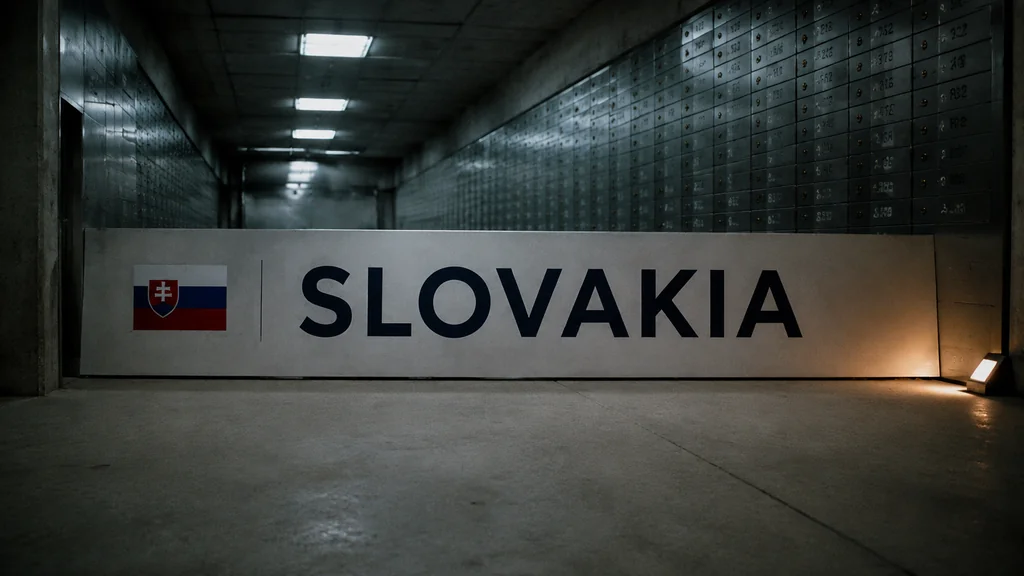
One capital holds thousands of frozen fortunes behind a six-month vote.
Image composition · tobriefEU ambassadors failed on 2 September to renew the bloc's blacklist of Russian individuals and entities before the 15 September deadline. Slovakia blocked a proposal to move the renewal cycle from six months to one year, and talks in Coreper, the committee where each member state's ambassador prepares decisions before ministers sign them off, broke down (European Pravda, cas.sk). Diplomats will try again on 9 September. If they fail, travel bans and asset freezes on the listed Russians expire. Banks would have to release frozen funds. Border authorities would have to admit blacklisted figures again (Decision 2014/145, Regulation 269/2014).
Bratislava is contesting the calendar, not formally challenging the existence of Russia sanctions. But in Brussels, calendars are power. Every renewal needs unanimity under Article 31 of the EU treaty, which means one government can block the decision. A six-month timetable gives every capital two scheduled moments a year to bargain (Article 31 TEU).
The blacklist, not the broader sanctions
The file on the table is the EU's individual-listings regime: named people and entities accused of undermining Ukraine's sovereignty, subject to travel bans, asset freezes and a ban on EU operators sending them money (Council explainer). This is not the broader package on Russian oil, gas, finance and technology. Those sectoral sanctions were already moved by EU states to a longer renewal cycle earlier this year (Telex).
The current list covers around 2,600 individuals and entities, according to the EU's March 2026 renewal, though several national outlets are now reporting more than 3,000 (EEAS, Aktuality). Slovakia also proposed removing several unnamed Russian individuals from the list (upday).
Six months means six chances to bargain
The six-month review has a legal logic. Individual sanctions restrict the property and movement of named people, so EU courts do not treat renewal as a rubber stamp. In a case involving Galina Pumpyanskaya, the General Court examined whether each listing period was separately justified (Pumpyanskaya judgment). The March 2026 renewal removed two individuals and five deceased persons, which shows that the review mechanism can do real work (EEAS).
The same mechanism also creates leverage. Every six months, one government can hold up 2,600 listings unless the other 26 give ground. In March, Slovakia withdrew last-minute demands to delist oligarchs Alisher Usmanov and Mikhail Fridman only hours before the deadline (LRT). The names Bratislava wants removed this time have not been disclosed. The next twelve days will show whether Slovakia is seeking specific delistings, concessions on other files, or simply pressure through delay.
Eastern governments read it as obstruction
Poland, Lithuania and Czechia have treated Slovakia's move as obstruction, placing it against Prime Minister Robert Fico's wider line that "Russia cannot be demonised and pushed out of Europe" (iROZHLAS, Reuters). Lithuanian Foreign Minister Kęstutis Budrys had already warned that individual member states' economic interests are increasingly bending sanctions decisions (LRT English). Hungary, usually the capital watched on Russia files, does not appear to be driving this round. The evidence points instead to Slovakia using a method Budapest normalised: turn the EU's unanimity rule from a safeguard into a bargaining tool.
The timing makes the point harder to miss. One day earlier, 11 EU countries demanded an end to "obstructive vetoes" in foreign policy (Euronews, ANSA). Slovakia's move the next morning supplied the example.
The 9 September retry will show whether Bratislava follows its March pattern and folds at the last minute, or whether it pushes the file closer to expiry. Twelve days remain before the individual-listings regime lapses. For Malta, as for every other member state, this would not be a Brussels abstraction. Banks, asset registries and border agencies would have to act on the legal consequence: unfreeze accounts and reopen entry. The decision now sits with Bratislava, and the deadline is 15 September.
How was this article?
Help us get better
Help us get better
Details about this article
- Model:
- claude-opus-4-6
- Generated:
- 9/3/2026, 2:03:57 AM
- Pipeline run:
- eu_pipeline_20260903_005007
- Watermark:
- SynthID (Google's invisible watermark)
- Human review:
- None before publication