Spectrum Opens Europe’s Launch Market
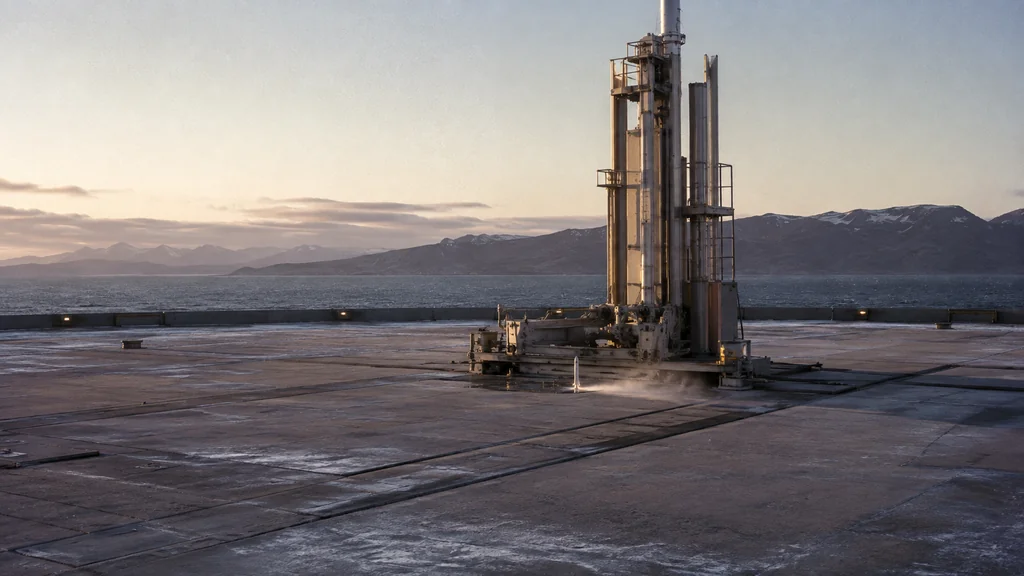
Europe’s smallest new transport route reaches far beyond its launchpad.
Kompożizzjoni tal-immaġni · tobriefYour phone's map is not magic. It works because satellites are moving above us, feeding signals back to Earth. The same is true for weather models, wildfire warnings, shipping routes, precision farming and much of the digital infrastructure that small economies such as Malta now treat as ordinary life. To put that hardware in orbit, Europe needs rockets it can control.
Until this weekend, no privately developed rocket had reached orbit from continental Europe.
On Saturday evening, Spectrum, a 28-metre rocket built by the Munich-area company Isar Aerospace, lifted off from Andøya, a Norwegian island almost 300 km north of the Arctic Circle. Seven minutes later, its upper stage was in orbit around Earth (Space.com). The European Commission described it as the first time a privately developed launcher had reached orbit from European soil (European Commission).
For Isar, this was a recovery from a very public failure. Its first launch attempt in March 2025 lasted around 30 seconds (ESA). This time the booster did its job, the second stage separated and ignited, the protective nose cone dropped away once the rocket was clear of the thick lower atmosphere, and the vehicle reached orbit.
Going fast sideways, not just high
A firework goes up. An orbital rocket has to do something harder: move sideways fast enough that it keeps falling around the planet rather than falling back to Earth. That is the difference between an impressive test and a transport service that can actually be sold. Spectrum crossed that line.
The flight carried five small CubeSats, miniature satellites often around the size of a shoebox, from universities and companies across Europe. They were selected through ESA's Boost! programme and the German space agency DLR's microlauncher competition (European Spaceflight, RocketLaunch.Live). The passengers came from TU Berlin, the University of Maribor in Slovenia, Bulgaria's EnduroSat, Norway's NTNU and TU Wien in Austria.
There is one important distinction. Reaching an initial orbit and delivering every satellite safely are not the same achievement. The upper stage still had to adjust into a circular orbit and release the CubeSats before Isar could claim full mission success (Space.com). That is not a technical quibble. A launch company is paid to deliver satellites, not simply to give them a ride upwards.
Europe's taxi problem
The politics explain why a small rocket matters so much. After Ariane 5 retired in mid-2023, Ariane 6 was not yet ready, the lighter Vega-C launcher was grounded, and Russian Soyuz flights from French Guiana had stopped after the invasion of Ukraine. For almost a year, Europe had no independent access to space (RFI).
That dependence was impossible to hide. The EU signed a €180 million deal with SpaceX to launch Galileo navigation satellites, the core of Europe's own positioning system (The Parliament Magazine). ESA's dark-matter telescope Euclid and Greek wildfire-detection satellites also went into orbit on American rockets (ESA).
The imbalance is not only embarrassing. In 2025, the United States launched 179 times to Europe's 7, while Starlink now operates two-thirds of all active satellites (Belfer Center). When one provider controls that much capacity, other space-faring regions end up waiting for a place on someone else's timetable.
Ariane 6 and Vega-C are now flying again, covering Europe's heavy and medium missions. Ariane is the long-haul truck, built to carry multi-tonne satellites into higher orbits. Spectrum is aimed at another part of the market: a booked van for smaller satellites, up to 1,000 kg, sent to the orbit the customer wants and when the customer needs it. Many small satellites today travel as secondary passengers on larger missions, accepting that rocket's date and destination. A dedicated small launcher removes that compromise.
Isar is one part of a wider European gamble on private launch companies. ESA's European Launcher Challenge has awarded €543.6 million in milestone-linked contracts to Isar, Germany's Rocket Factory Augsburg and Spain's PLD Space, with each provider required to demonstrate orbital launch before 2028 (ESA). Isar's share is €197.8 million, funded mainly by Germany, with Austrian and Norwegian contributions.
The model marks a change in how Europe buys access to space. Instead of building every launcher through a state-led programme, Europe is trying to act more like a customer: setting requirements, paying against milestones, and letting companies compete while owning the rockets they build (Astrospace).
From test flight to timetable
Customers are already making plans around Isar. Japan's Astroscale has booked a 2027-2028 launch for a debris-removal mission (Aviation Week). ESA expects demand for launches to rise sharply around 2029-2031 as Europe expands communications, navigation and defence satellite networks (RFI).
Saturday showed that Europe can produce a private orbital launcher. The harder test now is whether Isar can make launches routine: repeated flights, confirmed satellite deliveries, and dates that customers can build around. Sovereign access to space is not proved by one successful flight. It is proved by production, a reliable manifest and a price that survives contact with the market.
Details about this article
- Model:
- claude-opus-4-6
- Generated:
- 9/6/2026, 1:39:44 AM
- Pipeline run:
- eu_pipeline_20260906_005005
- Watermark:
- SynthID (Google's invisible watermark)
- Human review:
- None before publication