Three Hours, No Kremlin Shift
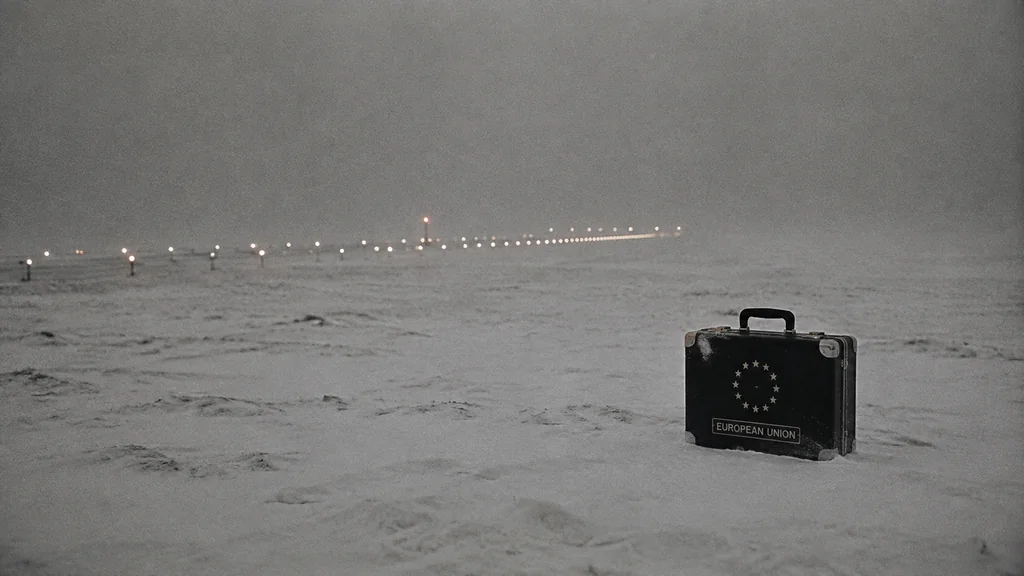
Europe carries the obligations but remains outside the negotiating route.
Kompożizzjoni tal-immaġni · tobriefSteve Witkoff and Jared Kushner spent roughly three hours with Vladimir Putin in Moscow on Saturday evening. They emerged without a joint statement, without a published plan, and without any verified Russian concession (RFE/RL, ABC News).
Kremlin spokesman Dmitry Peskov called the meeting "constructive" and said the Americans had brought "several ideas". He then told reporters there had been "no talk of new ideas" for ending the conflict. The envoys were expected in Kyiv on Sunday, their first visit to the Ukrainian capital since Trump returned to office (Axios). Washington has shown it can get a hearing in the Kremlin. Whether that hearing changes anything on the ground is another matter. Saturday produced no public evidence that it did.
The pause protects envoys, not civilians
For the shuttle diplomacy to function, both sides accepted narrow, temporary limits on the air war. Putin ordered a three-day pause in strikes on Kyiv, explicitly linked to the American envoys' planned visit (RFE/RL). Zelensky said Ukraine would stop airstrikes while the Americans were travelling, and demanded that Russia do the same (President of Ukraine).
But Peskov's pledge covered Kyiv, not Ukraine. On the same day, Russian strikes killed at least five people at an industrial site in the Dnipropetrovsk region and wounded others in the Kyiv region and Mykolayiv (RFE/RL). Russia had also hit Kyiv's Zhulyany and Boryspil airports shortly before the pause began, which Zelensky read as an attempt to unsettle the delegation's route. Moscow could restrain fire where diplomacy needed a corridor. It did not extend that restraint to the wider battlefield.
A proposal no one has seen
Trump told reporters the envoys were "bringing with them a proposal to end the war". He did not publish it, and did not say whether it required Ukraine to give up territory (Axios, Le Monde). In that silence, Russia's public position remains unchanged. Peskov described Putin's line as "unshakeable": Ukraine must hand over the full territory of four regions claimed by Russia, including large areas Russian forces have never captured, and give up NATO membership (Internazionale/Reuters).
That is the central test. Moscow is asking for land it does not control. The demand is either an opening ceiling for negotiations, or a sign that no settlement is near.
At the G20 finance ministers' meeting, Treasury Secretary Scott Bessent gave the clearest known American signal on sanctions. He told Russia's Anton Siluanov that there would be no relief while the war continued (CNBC, The Moscow Times). Whether that line survived inside the private proposal Witkoff took to Putin is something only those in the room can know.
Europe funds and enforces, but sits outside the room
The order of travel says plenty. Washington went to Moscow first. Zelensky acknowledged the sequence himself: "We will see what proposals Steve and Jared bring and what they are told in Moscow in response" (Axios). Kyiv is in constant contact with the envoys (President of Ukraine), but it is still hearing Moscow's answer through Washington. Europe is another step removed.
That matters for Malta too. EU support for Ukraine is not some distant Brussels budget line. It is paid for through the same Union budget and sanctions machinery that small member states help approve, defend and live with. EU foreign policy chief Kaja Kallas told ministers that the bloc had disbursed €8.47 billion in loans to Ukraine and approved another €6.1 billion, including air defence, while preparing up to 1,600 new sanctions listings (EEAS).
France said it was ready to contribute security guarantees through the Coalition of the Willing, a European-led defence commitment in which individual governments pledge forces and resources to protect Ukraine (French Foreign Ministry). That coalition is not a single EU instrument. Each government decides what it is willing to put on the table.
Finnish analyst Henri Vanhanen put the real test plainly: only Russian movement on the ceasefire's scope, occupied territories, or security arrangements would create a genuinely new situation (Verkkouutiset). None of the European governments expected to pay, sanction and guarantee were in the room when Putin heard the American ideas.
The authority chain is now visible. Washington controls the channel. Moscow gets the first hearing. Kyiv receives the readout. Europe supplies the money, the sanctions capacity and, if a deal ever comes, much of the long-term security burden. Saturday proved that access to Putin exists. It did not prove that Putin is conceding anything. Europe's exposure is already greater than its control over the terms it may be asked to underwrite.
Details about this article
- Model:
- claude-opus-4-6
- Generated:
- 9/6/2026, 1:39:46 AM
- Pipeline run:
- eu_pipeline_20260906_005005
- Watermark:
- SynthID (Google's invisible watermark)
- Human review:
- None before publication