Trump Ukraine plan needs Europe
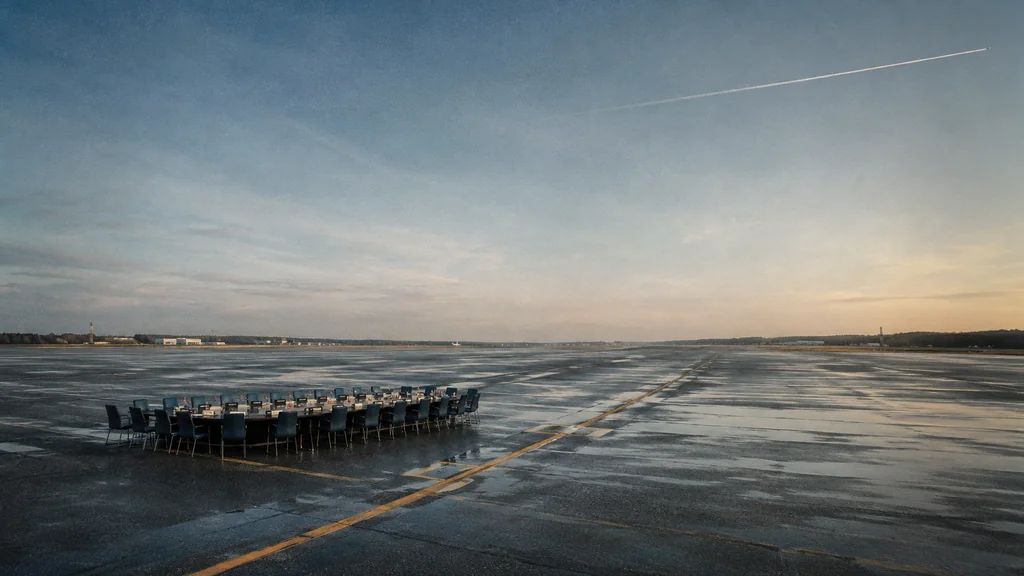
Europe holds the levers but remains outside the negotiating room.
Kompożizzjoni tal-immaġni · tobriefSteve Witkoff and Jared Kushner, Donald Trump's lead negotiators on Ukraine, are due in Moscow on Saturday for talks with Vladimir Putin, before travelling to Kyiv on Sunday to meet Volodymyr Zelenskyy (Axios). The Kyiv visit matters because it is new. The two envoys have seen Putin several times, but had not gone to Ukraine despite months of invitations from Kyiv (Kyiv Independent).
Trump said they were carrying "a proposal to end the war", without saying what is in it (RFE/RL). No text has been published. An earlier one-page ceasefire framework, agreed between Zelenskyy and US officials, was rejected by the Kremlin within days (RBC-Ukraine, Kyiv Independent). What Witkoff and Kushner are carrying now may be a revised version, a negotiating brief, or something looser.
Russia treats the shuttle as opportunity, not concession
Kremlin spokesman Dmitry Peskov said Putin's demand that Ukraine surrender all four regions claimed by Russia and give up NATO ambitions remains "unshakeable" (Internazionale/Reuters). A Kremlin-linked source told Reuters there was "no chance" of agreement on the front line until Russia finishes taking the rest of Donetsk. Moscow expects the battlefield position to improve by the end of the year (Internazionale/Reuters).
Bloomberg-sourced intelligence, reported in Lithuania, reached the same conclusion: expectations of a breakthrough are "extremely low" (Delfi). Moscow reportedly tried to block the Kyiv leg altogether (RBC-Ukraine). That tells its own story. Russia wants a US-Russia channel in which Ukraine is consulted late, or through someone else's summary.
Putin, meanwhile, spoke publicly of a "chance" for peace while also threatening large-scale attacks on Ukraine's energy infrastructure (BBC, Agerpres). The offer and the threat are not contradictory in Moscow's view. They are part of the same pressure.
Kyiv keeps the exit open
Zelenskyy did not endorse the unknown proposal. He said Ukraine would "see what proposals Steve and Jared have and what Moscow will say to them" (Liga.net). That wording gives Kyiv room to reject, amend or attach conditions to any text after hearing Russia's response.
Kyiv also has a legal brake. Ukraine's constitution requires a nationwide referendum for any territorial change. A legal analysis by OPORA, a Ukrainian civic organisation, found that no official has clear authority to sign away territory without one (OPORA). International law scholars at EJIL:Talk have separately argued that a treaty imposed through force could be challenged under the Vienna Convention on the Law of Treaties (EJIL:Talk).
Even the travel arrangements exposed the enforcement problem. Zelenskyy offered to pause Ukrainian strikes while the envoys were in Moscow and asked Russia to do the same during the Kyiv meeting (Censor.NET). Washington had to seek separate safety commitments from each side because there is no direct Russia-Ukraine channel (Delfi).
If a two-day travel pause needs guarantees negotiated through a third party, a lasting ceasefire will need something far stronger. That is where any American text runs into European reality.
Europe controls levers Washington cannot bypass
The public itinerary gives no role to any European government in either meeting (Axios). Yet the tools needed to make any settlement work sit largely in European hands. For Malta, as for every EU member state, this is not a spectator issue. Sanctions, frozen assets and security guarantees all run through European decisions.
Sanctions come first. EU restrictive measures against Russia require a decision by the EU Council, where all member-state governments must agree unanimously (Consilium). A US-Russia understanding cannot cancel that. Any peace formula that offers Moscow sanctions relief needs every EU capital, including Valletta, to say yes.
Frozen assets come next. Around €210bn in immobilised Russian central-bank funds sit mostly at Euroclear, the Brussels-based financial clearinghouse regulated under Belgian law. Belgian Foreign Minister Maxime Prévot has publicly refused to treat those funds as available for confiscation-like use (Euronews, Le Soir). If a deal assumes Russian money will fund reconstruction, Belgium alone can slow the mechanism.
Security guarantees are the third lever. The EU has approved a €6.1bn tranche for Ukraine's air defence (EEAS). A multinational Coalition of the Willing is preparing troops for post-ceasefire deployment, with joint exercises planned this autumn (UK government). Those commitments depend on individual European governments, not on Washington.
Trump's team may be able to draft a proposal. It cannot deliver EU sanctions relief, decide the future of Russian assets in Brussels, or supply European security guarantees on its own. The governments expected to pay for and enforce any settlement have not been invited to shape it.
Details about this article
- Model:
- claude-opus-4-6
- Generated:
- 9/5/2026, 1:42:34 AM
- Pipeline run:
- eu_pipeline_20260905_005005
- Watermark:
- SynthID (Google's invisible watermark)
- Human review:
- None before publication