Bezmer Chose Risk, Akrotiri Inherited It
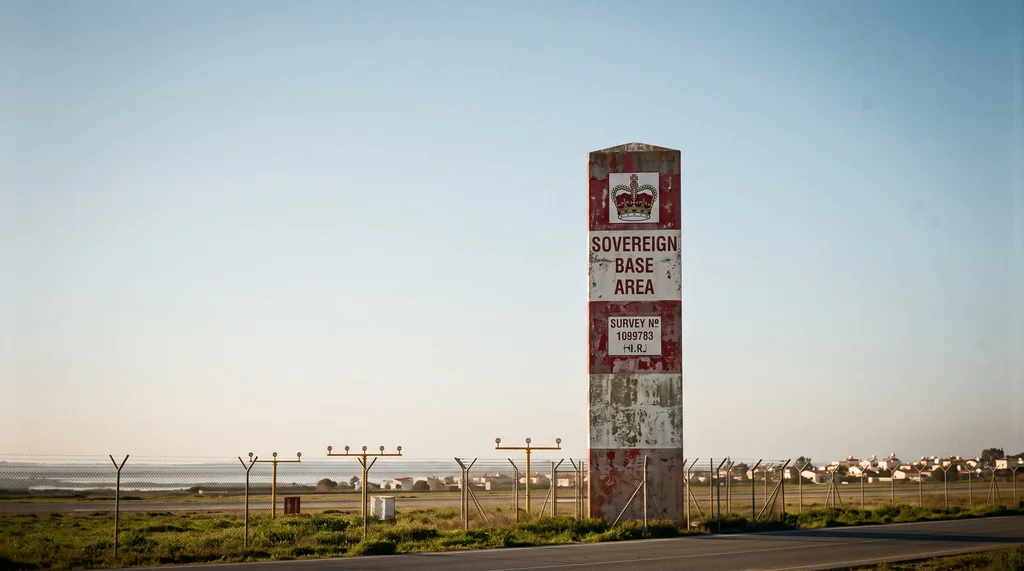
Cyprus lives beneath a military decision it never made.
Kompożizzjoni tal-immaġni · tobriefBulgaria's parliament voted to host US tanker aircraft. Cyprus did not choose to host RAF Akrotiri. Both are now named in reporting on Iranian contingency planning, and that distinction matters more than the threat itself.
According to FT reporting carried by Al-Monitor and Saudi Gazette, people close to Iran's regime said Iranian forces had examined possible strikes against US or allied military sites in south-eastern Europe if President Trump escalates the war. Two locations kept appearing: Bulgaria's Bezmer air base and RAF Akrotiri in Cyprus. No reviewed source produced a confirmed operational order or a declassified intelligence assessment to support the claim (Fakti). This is contingency reporting, not proof of an imminent attack. But it still places European territory on another state's target list.
Bezmer: authorised risk
Bezmer is the simpler case. Bulgaria's National Assembly authorised a temporary US deployment: up to eight KC-135 aerial-refuelling aircraft and around 250 personnel, from 24 July to 1 October (Stars and Stripes, Demócrata). Bulgaria is a NATO ally. An armed attack on Bezmer would fall under Article 5, NATO's collective-defence clause, which treats an attack on one ally as an attack on all (NATO).
The line of accountability is visible. Parliament voted, the deployment has an end date, and the military purpose is clear.
Akrotiri: inherited exposure
Akrotiri is different. The base lies inside the UK Sovereign Base Areas, territory Britain kept when Cyprus became independent in 1960 and still administers directly (UK Government). Cyprus is an EU member, but it is not in NATO. EU treaties deal with the base areas through a special protocol, treating them separately from ordinary Cypriot territory (EUR-Lex).
If Akrotiri were hit, London would carry sovereign responsibility. Cyprus, the country physically exposed, would have no control over the base and no direct Article 5 route into NATO collective defence.
According to Cyprus Mail, a drone suspected to be Iranian-made and proxy-launched struck the base in March. The UK has since contracted £800,000 for extra air-raid sirens around the base area (UK Defence Journal). That is adaptation after the fact, not reassurance before it.
Cyprus's government told reporters the republic was "not a target" and said it maintained channels with Tehran (Politis). The message is understandable. But it avoids the central point: the installation that makes Cyprus relevant is one Nicosia does not control.
Where accountability already differs
NATO said it was "prepared to address any threat" without announcing a new deployment or formal security consultation linked to the report (Al Jazeera). Bulgaria's Interior Minister Ivan Demerdzhiev said Sofia had taken "all possible measures" at Bezmer, beyond what current threat assessments required (A News).
Germany shows what host-state oversight can look like when a government insists on it. A 2020 Federal Administrative Court ruling found that when there are serious indications of international-law violations arising from US operations on German soil, Berlin must investigate and press Washington to comply (BVerwG). German courts can force the government to examine what happens on bases within its borders. Cyprus cannot do the same for Akrotiri, because in operational terms the base is not inside Cypriot control.
As To Brief reported two weeks ago, US weapons stocks depleted by the Iran war already raise questions about the depth of America's security guarantee. The issue now is closer to home. The Iranian contingency may never become an operation. But it has already shown that when foreign military infrastructure exposes Europeans to risk, citizens should be able to trace who authorised the function that exposed them. In Bulgaria, the risk was politically authorised. In Cyprus, the exposure is inherited from a sovereignty settlement most citizens cannot change.
Details about this article
- Model:
- claude-opus-4-6
- Generated:
- 8/20/2026, 1:49:05 AM
- Pipeline run:
- eu_pipeline_20260820_005007
- Watermark:
- SynthID (Google's invisible watermark)
- Human review:
- None before publication