Vienna Calls Out FSB Cyber-Spying
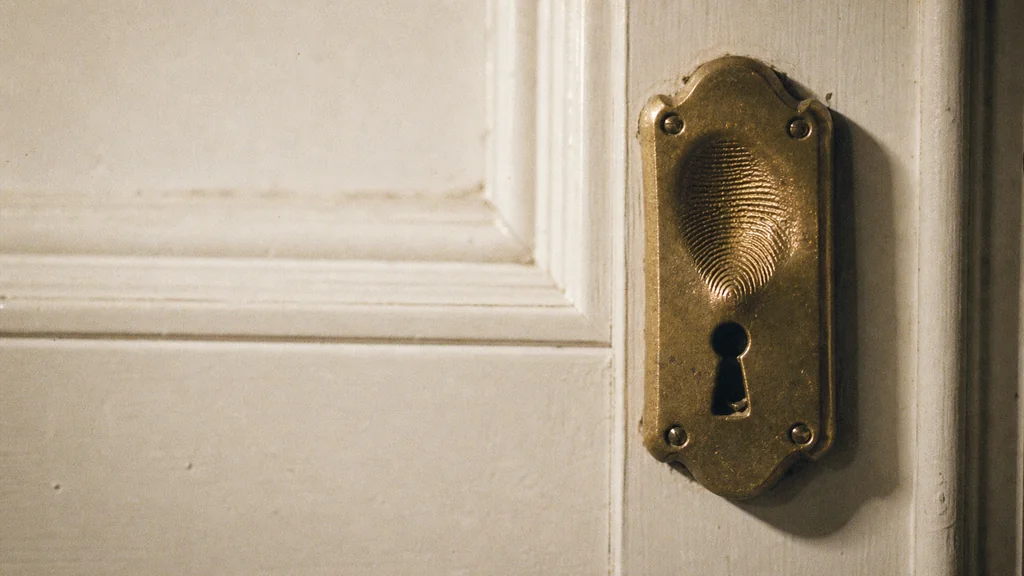
Evidence of a quiet intrusion remains etched into the physical architecture of the state.
Kompożizzjoni tal-immaġni · tobriefOn 14 July, Austria's Foreign Ministry summoned Russia's ambassador in Vienna. The issue was not gas, trade, or another vote at the UN. It was a cyber break-in dating back to around the turn of 2019/2020 (Kurier/APA).
Five years passed between the intrusion and the public accusation. That is not simply official slowness. In cases like this, governments need time to test the technical evidence, compare it with allied intelligence through classified channels, and decide whether naming the attacker is worth the diplomatic price.
A foreign ministry is not an ordinary office network. It holds embassy cables, negotiating instructions, assessments of other governments, and contact lists built over years. For an intelligence service, that kind of access shows not only what a government decided, but how it thinks, where it hesitates, and who inside the system matters. By summoning the ambassador, Vienna turned a hidden intrusion into a formal accusation between states.
The burglars who copy your keys
The attack is now publicly attributed to Turla, a group that independent threat researchers and several governments link to Russia's FSB Centre 16 (GovCERT Austria). Turla is not a ransomware gang that locks files and demands payment in Bitcoin. It works more like a burglary team serving an intelligence service: no broken window, no dramatic note, just copied keys, repeated visits, photographed documents, and as little trace as possible.
Google Threat Intelligence describes Turla as an intelligence-gathering ecosystem built for patient access to strategic targets (Google Threat Intelligence). For a small EU state such as Malta, the lesson is obvious enough. A ministry network, a regulator's inbox, or a diplomatic cable chain can become strategic ground if it reveals how decisions are made before they become public.
Austria did not move on its own. The summons formed part of a coordinated European attribution and sanctions package in which the EU, the UK and individual member states publicly named the same Russian state-linked cyber groups (CyberScoop).
France was unusually direct. Paris said its national cybersecurity agency, ANSSI, intelligence services and military cyber units had jointly investigated the intrusions and linked the espionage campaign to FSB Centre 16, also known as Unit 61240 (French Foreign Ministry). That level of institutional detail is rare. France was showing the chain of expertise behind its conclusion.
Germany also summoned Russia's ambassador over what Berlin called "destabilising cyber campaigns" (Tagesschau). Russia rejected all the accusations as unsubstantiated.
Matching fingerprints, not finding a smoking gun
No single public document proves the case. What is visible is convergence: several governments and independent researchers reaching the same conclusion through different routes.
The method resembles a criminal investigation built on overlapping evidence rather than a confession. Cyber defenders match malware "fingerprints", meaning recurring code patterns associated with a group. They check whether the same servers and domain names were reused across operations. They study when attackers were active; Turla's working hours, for instance, have long matched Moscow business time. Governments then add classified intelligence, such as intercepted communications, on top (Google Threat Intelligence, GovCERT Austria).
The caveat matters. Austria has not published a forensic report, malware chain, or infrastructure map. Outside readers cannot reconstruct the case for themselves. That is normal in intelligence-led attribution, but it means the public judgment rests on institutional credibility rather than evidence that can be checked line by line.
Slow-building pressure
The EU's legal response is Council Decision (CFSP) 2026/1713, which updates a cyber sanctions framework first created in 2019 (EUR-Lex). In practice, listed individuals face travel bans and asset freezes under EU jurisdiction. EU citizens and businesses are also barred from making funds available to them.
High Representative Kaja Kallas confirmed that the EU and UK were imposing sanctions on the wider Russian cyber ecosystem, and that a Russian representative to the EU would also be summoned (EEAS).
These measures will not make Turla disappear. Their purpose is narrower: to make participation in the network more costly, more visible, and harder to treat as deniable statecraft. The European Commission describes the wider approach as "cyber diplomacy", combining diplomatic dialogue, preventive measures and punitive financial restrictions (European Commission).
The Dutch case shows why this is not just a problem for foreign ministries. Dutch intelligence warned in July that Russian state actors had compromised internet-connected cameras across Europe for military purposes (AIVD). A hacked camera near a sensitive route can work like hidden binoculars along a supply road. The Austrian case applies the same logic to diplomacy: the attacker watches, learns, and reuses what it finds.
What has changed is not the threat itself. It is Europe's greater willingness to name the attacker, absorb the diplomatic cost, and build sanctions around that attribution. The test is whether European governments can keep coordinating often enough for Russian operators and their sponsors to pay a visible price.
Deterrence based on classified evidence will always be difficult to prove in public. But repeated consequences, one summons and one asset freeze at a time, mark a different posture from silence.
Details about this article
- Model:
- claude-opus-4-6
- Generated:
- 7/15/2026, 2:27:29 AM
- Pipeline run:
- eu_pipeline_20260715_005006
- Watermark:
- SynthID (Google's invisible watermark)
- Human review:
- None before publication