VW Plan Hits Four German Plants
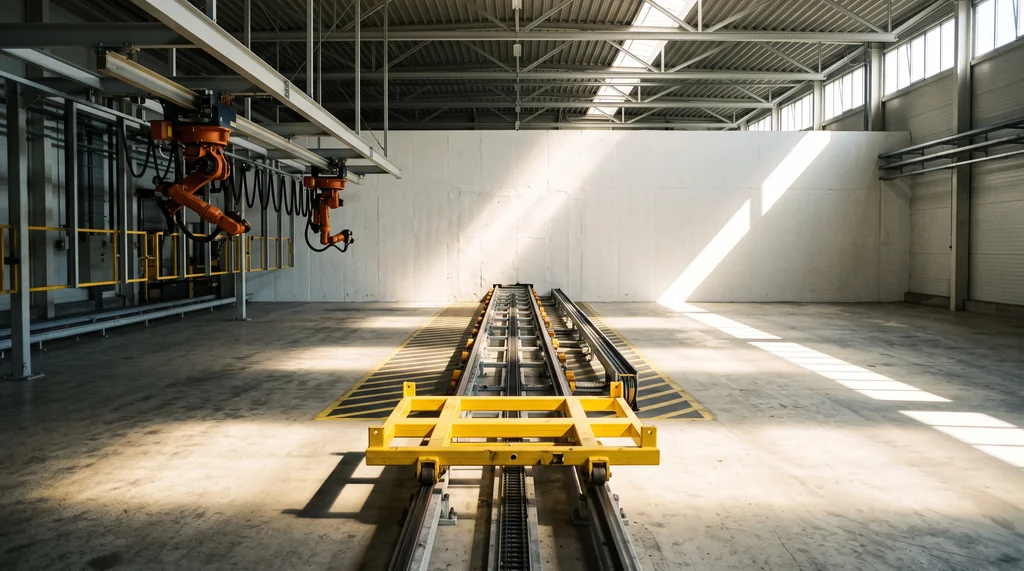
The factories remain open while their next models leave Germany.
Kompożizzjoni tal-immaġni · tobriefVolkswagen's management board has backed a plan that would end vehicle production at four German plants between 2031 and 2034. Emden and Zwickau would lose production by 2031, Hannover by 2032, and Audi Neckarsulm by 2034 (Handelsblatt, Focus). The supervisory board meets on September 3–4 to discuss the proposal. VW has not confirmed the leaked documents, saying internal papers are dealt with by "the responsible bodies" (SWR, Krone).
For Maltese readers used to Brussels regulation arriving as domestic policy, the important point is the mechanism. VW is not proposing to padlock factories tomorrow. It is proposing to stop giving them the next generation of vehicles. In car manufacturing, that can amount to the same thing, just with fewer formal triggers.
The model-allocation loophole
Each plant works around a model cycle that runs for several years. When that model reaches the end of its life, the factory needs a successor if the lines are to keep running. VW's plan would send those successors elsewhere: the ID.4 replacement to Škoda's Czech plant at Mladá Boleslav, the Q4 e-tron replacement to Bratislava, a commercial van programme to Poznań, and the A8 successor to Leipzig (Handelsblatt). No plant is formally closed. The work simply runs out.
That distinction matters because VW is not a normal listed company with a normal boardroom chain of command. Under VW's special governance statute, German law requires the supervisory board to approve "setting up or relocating production facilities" by a two-thirds majority (VW-Gesetz §4). Labour and the state of Lower Saxony therefore have blocking power. Management's opening is model allocation: it can argue that deciding where the next car is built is not the same as closing the factory that built the old one (NWZ). Whether the supervisory board, and eventually the courts, accept that argument is still open.
Why the numbers force the question
VW's financial pressure is real. Revenue stayed roughly flat at €321.9bn in 2025, but operating profit fell 53% to €8.9bn (Volkswagen Group, CNBC). That left an operating margin, meaning the share of revenue left after costs, of 2.8%. VW's own target is 6.5%, and Toyota earns roughly three times as much.
The unused-capacity problem is what turns weak profit into a factory question. German plants ran at about 81% of capacity in 2026, with that figure projected to fall to 73% by the end of the decade (Moto RP/Reuters). A factory that is one-quarter empty still carries full wages, energy bills, maintenance, and equipment costs. Those costs are then loaded onto fewer cars. Across Europe, VW has roughly 500,000 vehicles a year of spare capacity, and the leaked documents say existing structures "no longer secure long-term competitiveness" (Handelsblatt).
Who gains, who loses
Lower Saxony holds 20% of VW's voting rights, enough to block major resolutions (Volkswagen Annual Report 2025, NZZ). Worker representatives hold half the supervisory board seats under Germany's co-determination system (BetrVG §111), and works councils can force negotiations over social plans for displaced employees. That is why production run-downs in Germany happen over years, not months.
Across VW's European network, the redistribution is already visible. Škoda says VW's restructuring has "no direct impact" on its Czech plants, which are running at full capacity (Newstream). Czech suppliers, however, are already reporting order falls of "tens of percent" (Novinky). Poland has the clearest confirmed new investment: PLN 1.5bn for electric Crafter production at Wrzesnia (PAP Biznes). The same pattern runs through the network: possible opportunity, no guaranteed gain, and suppliers taking the first hit before any formal closure decision.
For Malta, this is a useful reminder of how industrial policy often moves in Europe. The formal decision comes late. The investment decision, the model allocation, and the supply contracts move earlier. The leaked documents remain unconfirmed, and VW's supervisory board has not approved the plan. But the mechanism is already doing work. Suppliers are losing orders. Lower Saxony and labour can still force a broader negotiation over jobs and transition costs. The risk for them is that the spreadsheet has already moved before the politics catches up.
Details about this article
- Model:
- claude-opus-4-6
- Generated:
- 9/2/2026, 2:03:17 AM
- Pipeline run:
- eu_pipeline_20260902_005006
- Watermark:
- SynthID (Google's invisible watermark)
- Human review:
- None before publication