Zaporizhzhia Down To Diesel
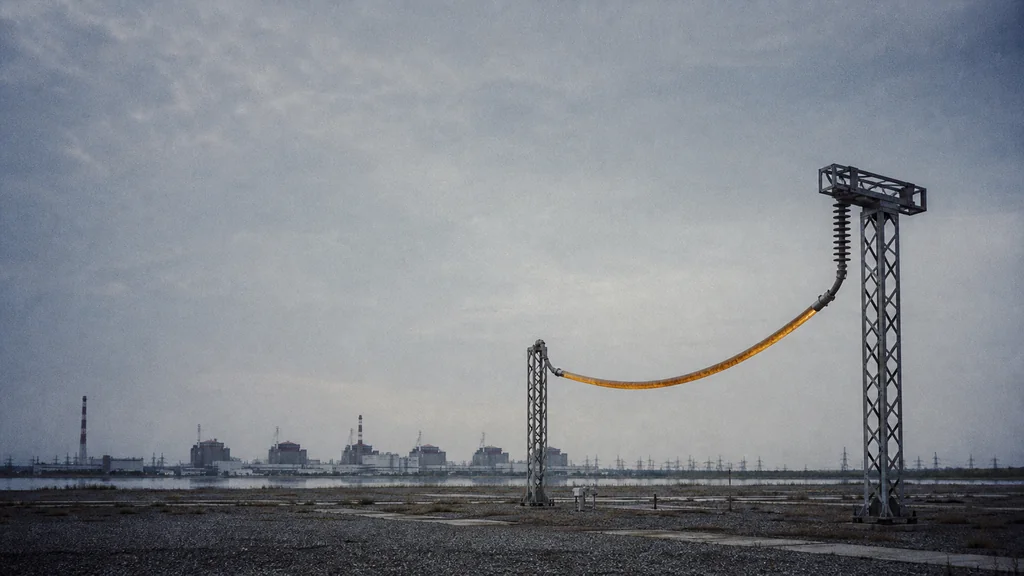
Europe’s largest nuclear plant hangs on ten days of diesel.
Kompożizzjoni tal-immaġni · tobriefEurope's largest nuclear plant lost its last link to the electricity grid on 20 August, when fighting north of the Dnipro River cut the only power line still feeding the site. Ten days later, emergency diesel generators are doing the work that the grid normally does: keeping cooling systems running at six shut-down reactors and their spent-fuel pools (LIGA, NV).
IAEA Director General Rafael Grossi put the margin at roughly 10 days. If the line is not repaired, or fresh diesel does not arrive, the plant could lose all power (Straits Times, RBC-Ukraine).
A crisis built line by line
This did not happen in one strike. Before Russia's full-scale invasion, Zaporizhzhia had 10 external power lines. They have failed one after another, until the last one, a 330 kV line called Ferosplavna-1, went down on 20 August (Ukrainian News, Rubryka). Fighting has stopped technicians from even establishing exactly what broke. The IAEA is now trying to broker a local ceasefire so repair crews can reach the site (World Nuclear News).
The reactors have not generated electricity for more than two years. But shut down does not mean harmless. Fuel assemblies and spent-fuel pools still produce heat through radioactive decay. The pumps, valves and instruments that remove that heat need electricity (Nuclear News Network, News UN). If grid power and diesel fail together, cooling stops and temperatures rise. The risk is lower than at a plant running at full power, but it is not zero.
Operators raised water levels in spent-fuel pools at all six units earlier in August, giving themselves more time before boiling if active cooling is lost (Nuclear News Network). IAEA inspectors checked most of the plant's 20 diesel generators and saw fuel trucks arriving from two nearby locations on 27 and 28 August (NV, 5 Kanal). But inspectors have not been to the main off-site fuel depot since March 2025, and fighting reportedly delayed the last scheduled delivery to that facility months ago (UNN, Rubryka). The 10-day diesel figure comes from plant staff, not from an independent IAEA stocktake.
Three drone strikes during the week added another layer of risk: one near the cooling pond injured two employees, one hit the dry spent-fuel storage site, and a third struck a sprinkler system (the IAEA said on X, Agerpres). Radiation levels remained normal. The agency did not say who was responsible.
The Rosatom question Europe keeps avoiding
European governments are reading the same warning through very different nuclear interests.
France, the EU country most dependent on nuclear power, is drawing a careful distinction. Consultant Stéphane Audrand told Le Parisien that a plant in cold shutdown is not "a new Chernobyl" simply because it has lost grid power (Le Parisien). The French concern is more practical: war turns the surrounding systems into safety risks. Substations, roads, fuel deliveries and exhausted staff all become part of the nuclear problem (Euronews). Greenpeace France is using the crisis to press for sanctions on Rosatom, pointing out that nuclear trade is still exempt from the EU's Russia sanctions packages (France 24).
Hungary is the awkward case. Government-friendly media carried the IAEA figures without linking them to Paks II, Budapest's Rosatom-financed reactor project (Világgazdaság). The reason is not hard to see. Paks supplies a major share of Hungary's electricity, and Paks II is being built and funded by the same Russian state nuclear company (World Nuclear Association). Budapest has every reason to frame Zaporizhzhia as a war-zone safety problem, not as a case for sanctioning Rosatom. As long as the EU sanctions regime leaves the nuclear sector outside its scope (Council of the EU), Hungary does not need to use its veto.
Poland is taking a different line. It presents the episode as Russian coercion while protecting public trust in its own first nuclear project. Its regulator's position is that loss of external power is a standard design scenario that diesel generators are meant to handle; Zaporizhzhia is dangerous because it is occupied and in a war zone, not because nuclear technology itself is failing (BiznesAlert).
For Malta, this is another reminder that EU energy policy is domestic policy, even when the plant is far from our shores. The immediate issue is mechanical: whether Grossi can secure enough calm around the site for repair crews to restore the line before the diesel margin disappears. The political issue is larger. Zaporizhzhia is the clearest example of Russia holding European nuclear infrastructure inside a war. The EU can treat it as a safety emergency while still choosing not to price Russia's nuclear leverage into sanctions. That is the decision foreign ministers keep leaving for later.
Details about this article
- Model:
- claude-opus-4-6
- Generated:
- 8/30/2026, 1:52:03 AM
- Pipeline run:
- eu_pipeline_20260830_005006
- Watermark:
- SynthID (Google's invisible watermark)
- Human review:
- None before publication