Europe’s Patriots Depend on Washington
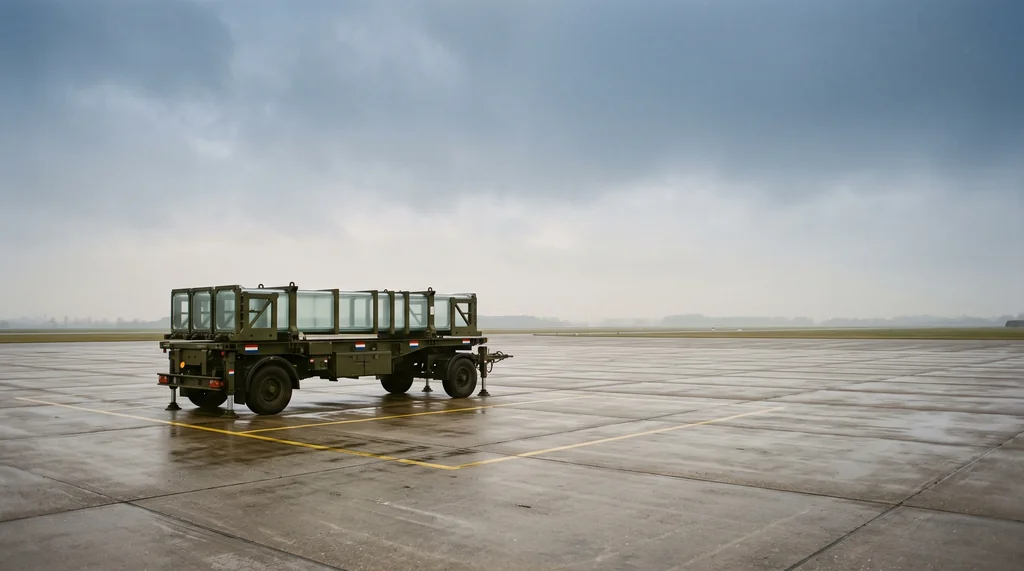
Europe owns the launchers, but Washington still controls the reloads.
Kompożizzjoni tal-immaġni · tobriefThe United States has used roughly half its Patriot interceptors and close to four-fifths of its THAAD missiles in the war with Iran, according to CSIS modelling and reporting by CNN and Reuters. These are not obscure American stockpiles. They are the same weapons European NATO allies bought, trained around and placed at the centre of their deterrence plans. A country can own the launcher and still depend on Washington for the next missile.
The Production Gap
The Trump administration denies that there is a dangerous shortfall, but it has not published actual inventory levels or the reserve thresholds the Pentagon considers acceptable. CSIS estimates Patriot stocks have fallen below 1,000 interceptors, from a pre-war baseline of about 2,200. THAAD stocks are near 250, down from 452 (CSIS).
The Pentagon’s own response tells us where the pressure lies. It has signed agreements with Lockheed Martin and Northrop Grumman to triple Patriot output and quadruple THAAD production. Northrop has announced $3 billion in acceleration contracts (Defense News, Northrop Grumman). Governments do not triple production of munitions they believe are plentiful. The problem is timing: that new capacity arrives late this decade, not in the next few months.
Ukraine, NATO’s eastern flank, the Middle East and the Indo-Pacific are all drawing on the same US-controlled production line. As we reported last week, Washington has already begun a formal review of its European force posture (To Brief). Missiles make that review less abstract. Even when the political promise holds, the physical stock may not.
Europe Pays, Washington Decides
The Netherlands shows how the dependency works in practice. The Hague became the first NATO country to put €500 million through PURL, the NATO mechanism that allows allies to finance US weapons for Ukraine. It has already donated Patriot launchers, a radar and interceptors to Kyiv (Dutch Defence).
European money entering the American pipeline does not give Europe control over what comes out of it. Washington decides which scarce interceptors go to Ukraine, which remain in US reserves, which are sent to Middle Eastern partners and which fill allied orders. As the Dutch newspaper NRC put it, only Patriot is effective against ballistic missiles. If stocks run down, Ukraine may simply have to watch Russia operate with more room.
Switzerland has already had a direct lesson in reprioritisation. Bern has been told its Patriot deliveries will be delayed because Washington is sending interceptors to Ukraine first (Reuters). No European ally has publicly reported a comparable delay. That does not mean the queue is stable. It means the queue can be reshuffled by one American policy decision.
What Europe Can and Cannot Replace
Europe has room to move on lower and middle air-defence layers. Germany has delivered IRIS-T systems to Ukraine from its own production lines (Bundesregierung). MBDA’s Aster missile, used with the Franco-Italian SAMP/T launcher, is Europe’s strongest upper-layer option. France, Italy and the UK have ordered more than 200 additional Asters and shortened delivery times (MBDA).
The gap remains at the hardest end of ballistic missile defence. No European system matches PAC-3 MSE or THAAD against fast-moving warheads. Licensed production of US missile types in Europe normally takes three to seven years after contracts are signed, according to Reuters. Ukraine’s Fire Point consortium is developing a cheaper interceptor to complement Patriot with ten European partners, but its first full ballistic intercept test is not expected before mid-2027 (Defense News).
For Malta, this is not a question of buying Patriots for Luqa or placing missile batteries around Il-Belt. It is about what European security guarantees are made of when the scarce parts are still controlled outside Europe. The near-term answer is to build enough European capacity so that US interceptors are reserved for threats nothing else can handle. European defence ministers have not yet told their publics how that shift will happen, or by when. The shortage data is public, and Moscow can read it as easily as Brussels can.
Details about this article
- Model:
- claude-opus-4-6
- Generated:
- 8/10/2026, 2:05:59 AM
- Pipeline run:
- eu_pipeline_20260810_005005
- Watermark:
- SynthID (Google's invisible watermark)
- Human review:
- None before publication